
Luxury home sales fall in Toronto and Vancouver, but $10-million-plus sales hit a 10-year high in Toronto
Luxury home sales declined in Toronto and Vancouver in 2026, while sales of properties worth more than $10 million in Toronto reached their highest level in ten years.
Translated from Arabic. Read the original بالعربية
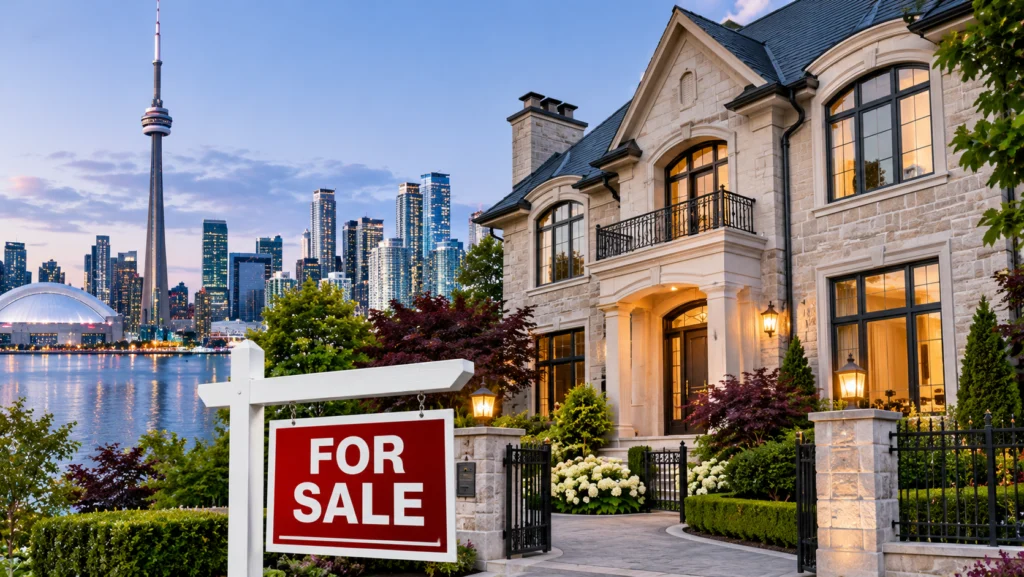
Higher inflation, borrowing costs and concerns linked to the trade war have made buyers more cautious, even among high earners.
Ultra-luxury properties in Toronto bucked that trend, recording their strongest activity in a decade, amid expectations that deferred demand will return in 2027.
Luxury sales decline in Toronto and Vancouver
A report from RE/MAX Canada found that sales of properties priced at $3 million or more in the Greater Toronto Area fell 9.4 per cent in the first nine months of 2026.
There were 841 recorded sales, compared with 928 in the same period last year.
In Greater Vancouver, sales in the same price category fell 17 per cent to 594, compared with 716 in 2025.
Oakville, Ont., also recorded a 16.7 per cent drop in luxury home sales.
Properties above $10 million go against the trend
Despite the overall decline, ultra-luxury properties showed greater resilience to economic challenges.
Sales of homes worth more than $7.5 million in the Greater Toronto Area rose 17.6 per cent.
The City of Toronto saw 15 properties sell for more than $10 million each, the highest number of sales in this category in ten years.
Oakville, for its part, recorded an increase of about 18 per cent in sales of properties worth more than $5 million.
This performance is linked to the greater financial flexibility of the wealthiest buyers and their lower reliance on traditional mortgage financing.
Canadian cities post strong sales gains
The RE/MAX report showed luxury home sales rising in seven of the 13 real estate markets covered by the study.
The main results were as follows:
- Burlington: +26.3%
- St. John's: +21%
- Calgary: +20.6%
- Edmonton: +15.9%
- Saskatoon: +15.3%
- Ottawa: +7.6%
- Winnipeg: +3%
- Montreal: -3.7%
- Greater Toronto: -9.4%
- Oakville: -16.7%
- Greater Vancouver: -17%
The price threshold used to classify homes as luxury varies from city to city.
Investment in the energy, natural resources and agriculture sectors helped support real estate demand in a number of Canadian provinces.
Homeowners refuse to make major concessions
Andrew Carus of Engel & Völkers in Vancouver said the drop in sales volume has not necessarily led to a collapse in luxury property prices.
He noted that many owners prefer to wait rather than sell at prices that do not meet their expectations.
In Vancouver, properties priced at $4 million or more recorded 17 sales for every 100 new listings between January and October.
This reflects a widening gap between sellers' expectations and buyers' willingness to pay the asking prices.
iNFOnews.ca
Taxes and restrictions on foreign buyers
An increase in the transfer tax on residential properties worth more than $3 million in Toronto took effect on April 1.
Restrictions on foreign buyers purchasing residential property also continue to affect demand in major markets.
In its 2026 budget, the federal government proposed extending the ban on non-Canadians buying existing residential properties until 2029.
British Columbia also imposes an additional 20 per cent tax on certain property transactions by foreign buyers in the areas where it applies.
Real estate professionals say these measures help shrink the pool of international buyers.
Multimillion-dollar deals
The Canadian market has seen a number of notable property deals this year, despite slower overall activity.
They include a waterfront property in Vancouver that sold for $28 million and a home in Toronto's Forest Hill neighbourhood that sold for more than $23 million.
Oakville also recorded a deal worth $18.5 million.
These deals reflect continued demand for exceptional properties with prime locations and features that are hard to find on the market.
Will Canada's real estate market recover in 2027?
Real estate experts expect a gradual return of buyers who put off their investment decisions in 2026 because of economic conditions.
However, a market recovery will remain tied to inflation, interest rates and the stability of trade relations between Canada and the United States.
The Bank of Canada raised its key interest rate to 2.5 per cent on October 28, adding a new challenge for buyers who rely on mortgages.
The current slowdown in activity may create opportunities to negotiate, but lower sales do not necessarily mean lower prices for all properties.
More from Hala Canada
- Canada is headed toward missing its Paris Agreement targets. Why won't the government say so?
- Canada expects clarity on Chinese auto investment in 2027, favours joint ventures
- New drug shows promise against pancreatic cancer in clinical trials, raising hopes in Canada
- Two people killed, third seriously injured in Scarborough shooting
- Pentagon imposes new limits on military co-operation with Canada, U.S. officials say
- Federal official says Chinese investment in Canada's auto sector will become clearer within a year