
61% of Toronto-area residents rate emergency room wait times as bad, poll finds
A new poll finds 61% of residents of Toronto and its suburbs are unhappy with emergency department waits, even though most rate their access to a family doctor positively.
Translated from Arabic. Read the original بالعربية
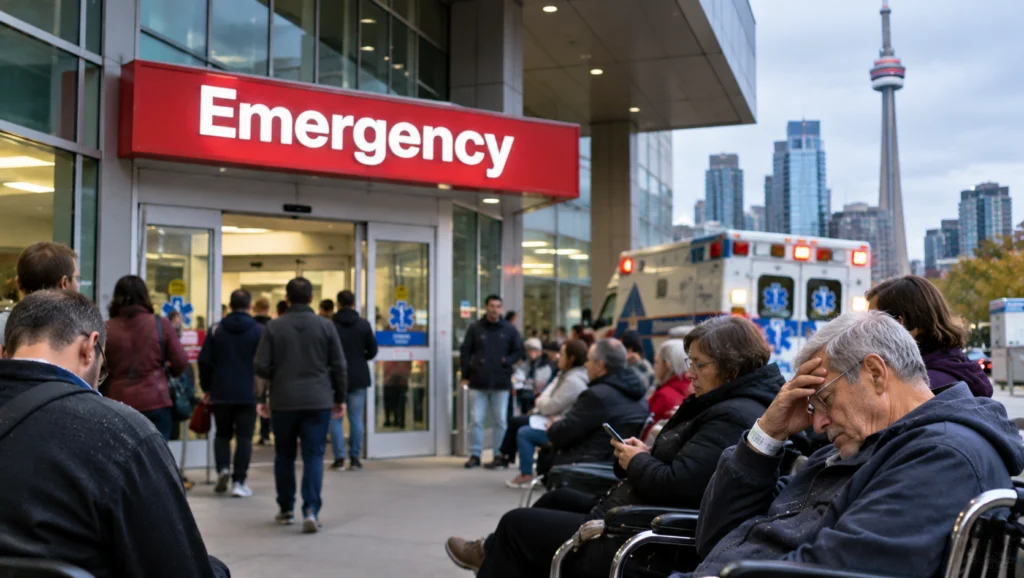
TORONTO — A new poll has found that most residents of Toronto and the Greater Toronto Area are dissatisfied with wait times in emergency departments, even though a large share of them rate their access to a family doctor positively.
The results showed that 61 per cent of respondents described the waits as bad or very bad, reflecting a gap between the experience of getting primary care and the experience of receiving urgent treatment in hospitals.
Similar results in Toronto and its suburbs
The poll, conducted by Canada Pulse Insights, found that 40 per cent of City of Toronto residents described wait times as bad, while 21 per cent considered them very bad.
By contrast, 33 per cent described them as good, while only six per cent saw them as excellent.
The picture was not much different in the GTA outside the city limits. Thirty-seven per cent of respondents rated the wait as bad and 24 per cent as very bad, compared with 35 per cent who said it was good and four per cent who considered it excellent.
The figures reflect respondents' views about services in their communities and are not a direct measure of the hours patients spend in emergency rooms.
Greater satisfaction with access to a family doctor
In a notable contrast, 73 per cent of respondents in Toronto rated their access to a family doctor as good, compared with 70 per cent in the rest of the GTA.
However, differences emerged when age groups were compared.
Only 21 per cent of people aged 55 and over described access to a family doctor as bad or very bad, compared with 34 per cent of those aged 18 to 34 and 33 per cent of those aged 35 to 54.
The results point to important differences between generations in the experience of getting regular medical care.
Immigrants face greater difficulties
The poll also revealed a gap related to place of birth: about one-third of immigrants described their access to a family doctor as bad or very bad, compared with 26 per cent of those born in Canada.
These figures alone do not explain the reasons for the difference, but they highlight the importance of studying the obstacles newcomers may face when looking for a doctor who is accepting new patients, or when trying to understand how registration and referrals work within the health system.
Government outlines its measures
The Ontario Ministry of Health responded that since 2018 the province has added about 100,000 new nurses and more than 20,000 doctors, along with 3,500 additional hospital beds.
It noted that work is under way to provide another 3,000 beds and to expand pharmacists' scope of practice so they can treat some minor conditions outside emergency departments.
The ministry also stated that it is investing $5.6 billion a year in home care and continuing a $3.4-billion plan to expand access to primary care.
It said total annual emergency department visits have fallen by about 200,000 since 2018.
Health care is not the top issue for everyone
Despite the volume of complaints, health care ranked seventh among 22 local issues in Toronto and sixth in the GTA, chosen by 18 per cent of residents among their top concerns.
The share rose to 22 per cent among those aged 55 and over.
The poll included 510 people from Toronto and 825 from its suburbs, between Sept. 14 and 25, 2026, through an online panel.
The organization that conducted it said the comparable margin of error for a similar probability sample is 4.3 percentage points for the city and 3.4 points for the suburbs.
The results follow a warning from a local emergency physician about unprecedented patient volumes, which raises renewed questions about hospitals' ability to cope with the pressure, even when many residents are able to reach family doctors.
More from Hala Canada
- KPMG Canada reports cyber incident involving unauthorized access to clients' tax documents
- Carney avoids position on Quebecor's $31-billion bid for Telus, stresses competition
- Quebec has Canada's longest emergency room stays, Montreal Economic Institute report finds
- Six outcomes of Carney's trip to Asia and Ireland, from Trump meeting to deals with China and the Philippines
- 22 chickens escape from truck in Toronto parking lot as firefighters step in to round them up
- Toronto drug checking program finds new synthetic opioid in fentanyl samples