
Toronto drug checking program finds new synthetic opioid in fentanyl samples
Toronto's drug checking program has detected a new synthetic opioid in samples sold as fentanyl, and experts say little is known about its strength or health effects.
Translated from Arabic. Read the original بالعربية
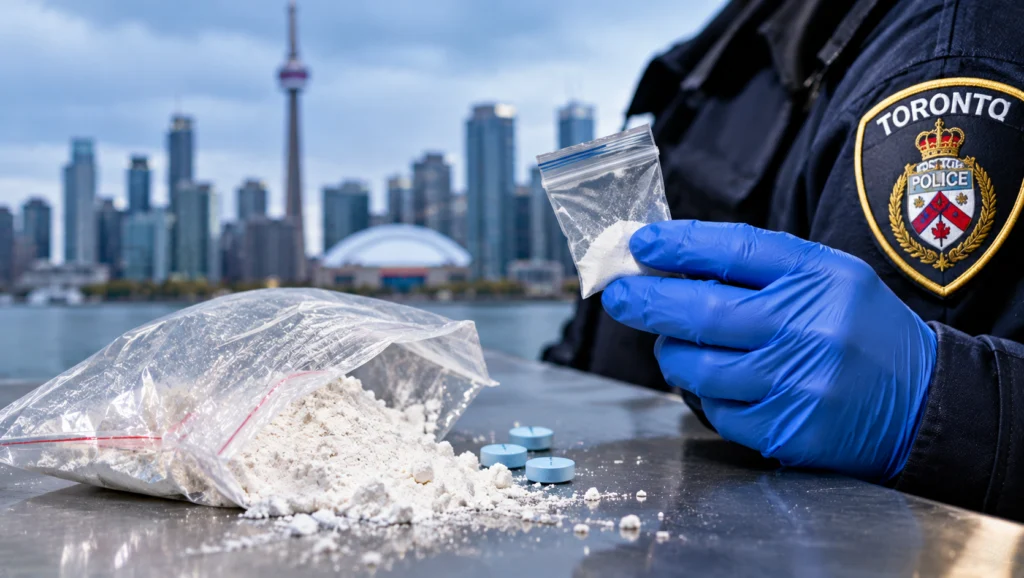
TORONTO — Toronto's drug checking program has found a new synthetic opioid in samples sold as fentanyl, a development that concerns specialists because of the safety of the unregulated drug supply.
The program said the substance was first detected in October in four samples. It is the sixth new substance found in the city's fentanyl supply since the start of the year.
A substance with no common name so far
Karen McDonald, executive director of the drug checking service at St. Michael's Hospital, said scientists do not have enough information about the substance.
It belongs to a family of synthetic opioids known as orphines, a group that specialized laboratories monitor because new compounds from it keep appearing in drug markets.
The substance has a chemical name that points to two closely related possibilities: N’-Phenethyl-5-chloro nor-orphine or N’-Phenethyl-6-chloro nor-orphine.
The service said the chemical similarity between the two compounds currently prevents it from telling them apart precisely.
The substance has also been detected in Vancouver, but there is not enough research to reliably determine its strength or health effects.
Why the discovery raises concern
McDonald noted that the formulations circulating in the illegal market change constantly, making it harder for users and health service workers to know what they contain.
The program had detected another orphine-family substance, called cychlorphine, late last year. It is believed to be about ten times stronger than fentanyl.
Experts stressed, however, that the estimated strength of cychlorphine cannot be applied to the newly detected substance, because its properties remain unknown.
This uncertainty makes laboratory analysis all the more important, particularly when several different substances are sold under a single name.
The appearance of the substance in two Canadian cities points to the importance of sharing test results between laboratories and health authorities.
However, the report provided no evidence of how widely it has spread beyond the samples in which it was detected, or of any link to specific deaths.
Troubling results from fentanyl sample testing
The latest data from the Toronto program show that 96 per cent of the fentanyl samples tested contained at least one additional non-opioid substance.
Common additives included veterinary sedatives or compounds from the benzodiazepine family, which can depress the central nervous system.
The results also showed that 83 per cent of samples contained more than one highly potent opioid. More than a quarter of the samples contained a mixture of a potent opioid, a veterinary sedative and a benzodiazepine compound.
These results show that the name of the substance being sold does not necessarily reveal its actual contents or potential dangers.
The published percentages do not mean that all samples circulating in the city contain the same mixture, because they are based on the materials that actually reached the testing service during the reporting period.
For that reason, they cannot be used to estimate the exact composition of everything sold on the street.
Rise in deaths linked to multiple substances
According to Public Health Agency of Canada data, the share of overdose deaths linked to opioids or stimulants that involved three or more substances rose from 20 per cent in 2018 to 42 per cent in 2023.
The number of deaths in this category increased from 491 to more than 1,500 over the same period.
Christiana Stefan, a laboratory official at the Centre for Addiction and Mental Health (CAMH), said the discovery of an additional compound is concerning because of the possibility that it interacts with other substances. Her team spent weeks analyzing the samples and determining the likely structure of the new substance.
Warnings about an unpredictable market
Dan Werb, a researcher specializing in the epidemiology of substance use at St. Michael's Hospital, said the spread of fentanyl in place of heroin has changed how opioids are made and made it easier for new synthetic compounds to emerge. He warned that the decline in recorded deaths in recent years does not remove the risk of an unknown substance spreading and changing the situation quickly.
Specialists stress the importance of drug checking services and awareness of overdose risks. If an overdose is suspected, people should call emergency services immediately and give naloxone if it is available, and keep seeking medical help even after the person's condition improves.
More from Hala Canada
- KPMG Canada reports cyber incident involving unauthorized access to clients' tax documents
- Carney avoids position on Quebecor's $31-billion bid for Telus, stresses competition
- Quebec has Canada's longest emergency room stays, Montreal Economic Institute report finds
- 61% of Toronto-area residents rate emergency room wait times as bad, poll finds
- Six outcomes of Carney's trip to Asia and Ireland, from Trump meeting to deals with China and the Philippines
- 22 chickens escape from truck in Toronto parking lot as firefighters step in to round them up