
Ontario to raise minimum fines for loud vehicle noise offences from $60 to $200
The Ontario government plans to introduce legislation that would more than triple the minimum fine for two vehicle noise offences, in response to requests from municipalities.
Translated from Arabic. Read the original بالعربية
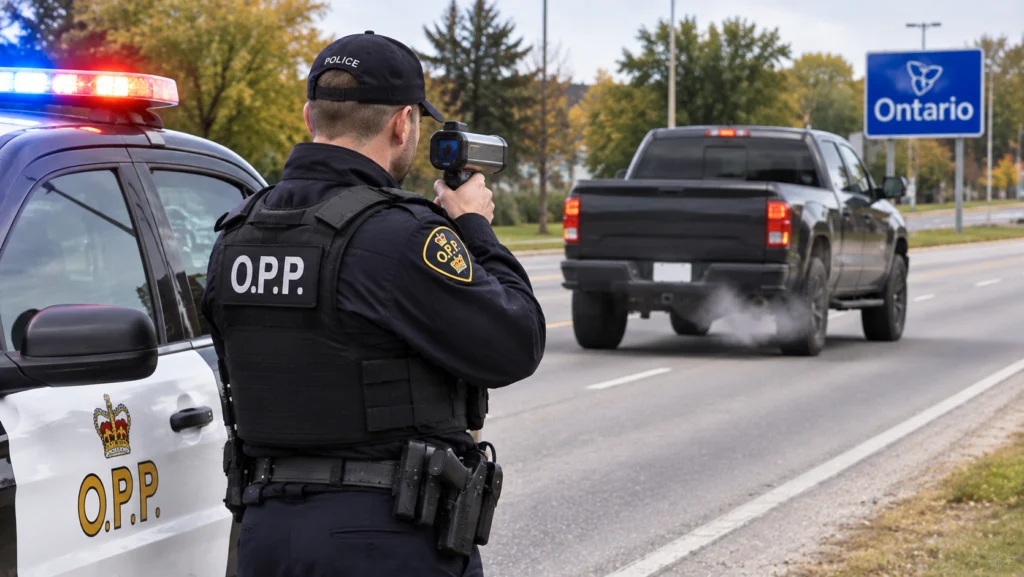
TORONTO — The Ontario government, led by Premier Doug Ford, is preparing to introduce a new bill aimed at reducing excessive noise from cars and trucks by increasing financial penalties for offending drivers.
The government is proposing to raise the minimum fine for certain vehicle noise offences from $60 to $200.
The proposed measures target drivers who deliberately make loud noises with their engines, or who use illegal exhaust systems that increase noise on streets and in residential neighbourhoods.
Fines to rise by more than three times
The proposal would increase the minimum financial penalty for two offences related to noise from vehicles.
The first offence involves deliberately revving an engine in a disruptive way, while the second involves installing or using exhaust equipment that violates the law.
Under the proposed amendment, the minimum fine would rise from $60 to $200, an increase of $140.
This means the new minimum would be more than three times its previous amount.
However, the penalties have not yet come into effect. The bill must first be introduced and the required legislative steps completed before it can be applied.
Municipal complaints prompt government action
The move responds to requests from municipalities in Ontario, which called on the provincial government to provide more effective tools to deal with noise from vehicles.
Some residential neighbourhoods have complained about loud noise from modified vehicles, particularly during sudden acceleration or when engines are deliberately revved.
The government believes current fines may not be enough to deter drivers who repeat these offences.
The proposed increases are intended to make committing the offence more costly and to encourage vehicle owners to comply with existing traffic rules.
Transportation minister warns of noise risks
Ontario Minister of Transportation Prabmeet Sarkaria expressed concern about the effects that extremely loud vehicles have on residents and public safety.
He explained that the problem is not limited to disturbing residential neighbourhoods. It can also affect the ability of drivers and pedestrians to hear the sirens of ambulances, fire trucks and police vehicles.
Louder surrounding noise can make it harder to notice vehicles that are responding to emergencies.
Sarkaria is scheduled to present details of the new legislation at a news conference on Wednesday morning, as part of the government's efforts to improve safety and reduce nuisance.
What does the current Highway Traffic Act say?
Ontario's Highway Traffic Act already gives police the authority to ticket drivers who cause unnecessary noise.
The offences include using illegally modified exhaust systems or deliberately revving an engine without justification.
The law also requires vehicles to be equipped with properly working mufflers that limit unusual noise.
It prohibits the use of certain devices that allow a muffler to be bypassed or that produce excessive noise.
The proposal therefore does not create an entirely new ban, but seeks to toughen penalties for practices that are already prohibited.
Will the measures apply to all vehicles?
The proposed legislation focuses on behaviours and equipment that cause noise in violation of the law, not on all cars and trucks automatically.
Owning a sports car or a large truck does not necessarily mean committing an offence, as long as the vehicle meets the legal requirements.
The final details on how the fines would be applied depend on the text of the legislation the government will introduce.
It is also not yet clear whether the measures will include additional changes to inspection or traffic enforcement methods.
When would the new fines take effect?
The Ontario government has not announced a final date for the proposed fines to come into effect.
Their implementation requires the amendments to be adopted through the province's legislative process.
Municipalities and police are expected to follow the details of the bill, particularly those related to how offences are detected and how repeat offenders are handled.
The government hopes the higher penalties will help reduce noise, improve quality of life in residential neighbourhoods and strengthen respect for traffic safety rules.
More from Hala Canada
- Explosion and fire in Glace Bay, Nova Scotia, collapse building and injure about 17 people
- Carney and Trump meet for about 20 minutes in China to discuss trade dispute
- Health Canada recalls four lots of PegLyte bowel preparation powder over possible foreign matter
- Rabid bat found in Quebec long-term care home; province works on urgent plan
- Carney says trade talks with China are easier than with the U.S., plans to meet Trump
- Canada tests Alert Ready emergency alert system across all provinces today