
U.S. senator says secret memo will not affect joint military operations with Canada
Republican Senator Mike Rounds said a classified memo from U.S. Defense Secretary Pete Hegseth does not change joint military operations with Canada, and Canada's defence minister said he has seen no change.
Translated from Arabic. Read the original بالعربية
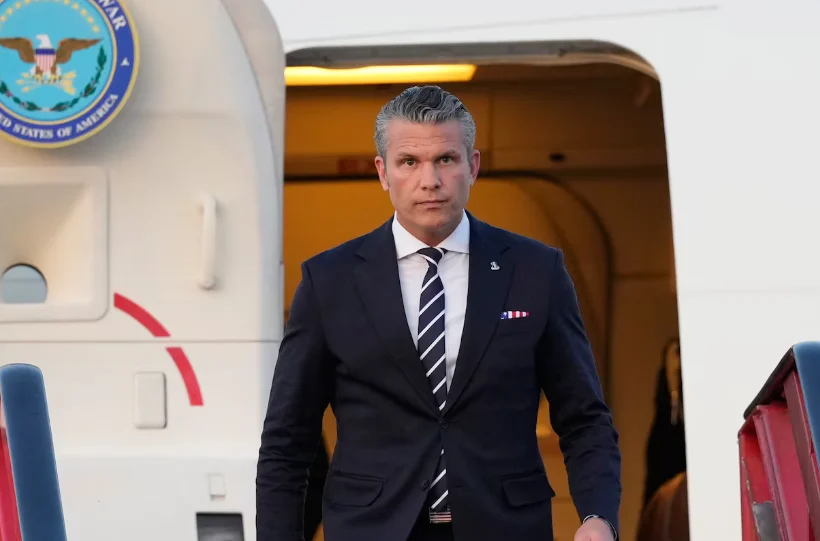
HALIFAX — Republican Senator Mike Rounds said a classified memo issued by U.S. Defense Secretary Pete Hegseth on military relations with Canada does not contain substantive changes to the two countries' joint defence operations.
Rounds made the remarks on Saturday while taking part in the Halifax International Security Forum. He was responding to media reports that raised concerns about the future of the military partnership between Ottawa and Washington.
The senator, who represents South Dakota, said the restrictions mainly concern the participation of military officials in think-tank conferences and social events.
Restrictions target informal gatherings
Rounds said the new guidance limits meetings of senior officers to gatherings that serve U.S. defence objectives.
U.S. military officials must also obtain prior approval before taking part in events held by Canadian think tanks or in social occasions.
He noted that the memo does not prevent participation in events marking the anniversary of the September 11 attacks.
He added that these measures are largely consistent with practices in place over the past 18 months.
He said the U.S. delegation at the forum conveyed these clarifications to Canadian officials during a joint meeting.
Canada's defence minister reassures Canadians
For his part, Minister of National Defence David McGuinty said he has not noticed any change in the nature of military relations with the United States.
He said he contacted senior officials in the Canadian Armed Forces to verify the effect of the American guidance on defence co-operation.
He pointed to the continuation of joint naval operations to combat drug trafficking in the Caribbean as one example of ongoing co-ordination between the two countries.
However, the minister acknowledged that he has not personally seen the contents of the classified memo, although he knows it exists.
Co-operation continues within NATO and the Five Eyes
Rounds said the U.S. guidance will not affect the duties of American service members currently in Canada.
He also said the restrictions do not cover co-operation within the North Atlantic Treaty Organization (NATO) or the Five Eyes intelligence-sharing alliance.
The alliance includes the United States, Canada, the United Kingdom, Australia and New Zealand.
Pentagon spokesperson Sean Parnell said the department seeks to prioritize initiatives that serve shared defence interests and help Canada meet its international military commitments.
NORAD continues its defence missions
The North American Aerospace Defense Command (NORAD), established in 1958, is one of the main pillars of military co-operation between Canada and the United States.
The joint command has three main missions: aerospace warning, surveillance and defence of airspace, and maritime warning.
Military officials from both countries work within this system to protect the security of the North American continent.
The command is of growing importance to Canada, particularly given security challenges linked to the Arctic.
McGuinty said Canada wishes to continue investing in this joint defence system.
Criticism in the U.S. Congress
The memo drew criticism from members of the U.S. Democratic Party, who warned of its political repercussions for relations with Canada.
Senator Tim Kaine said the tone of the guidance was neither appropriate nor necessary.
Senator Chris Coons also urged the U.S. administration to avoid measures that could increase disputes with one of its closest allies.
The criticism comes amid an ongoing trade dispute between Washington and Ottawa and tension stemming from U.S. President Donald Trump's statements about annexing Canada to the United States.
Canada plans to reduce reliance on U.S. weapons
Alongside continued military co-operation, the Canadian government is working to strengthen its independence in defence industries.
McGuinty said Canada wants to reduce its purchases of American military equipment and increase domestic production in 10 key areas.
He said the government will give priority to national manufacturing capacity, then to co-operation with countries that share Canada's strategic outlook, before turning to other procurement options.
The policy aims to strengthen Canada's ability to meet its defence needs, support local companies and reduce the risks associated with reliance on foreign suppliers.
Future of defence relations under watch
The latest American and Canadian statements reflect both sides' desire to separate political disagreements from shared security commitments.
However, the restrictions on meetings and conferences raise questions about their possible effect on future professional contact between military officials.
A full assessment of the memo's consequences also depends on more detailed information about its content and how it will be implemented.
In the coming period, Ottawa seeks to maintain its historic defence partnership with Washington while developing its national capabilities and diversifying its international military relationships.
More from Hala Canada
- CRA announces 2027 benefit payment dates: full schedule
- Canada's defence minister says military co-operation with U.S. continues despite reports of new restrictions
- Two former Montreal police officers arrested in probe into racism allegations at Station 39
- Gas prices fall across Canada, easing pressure on drivers
- One of Canada's most wanted arrested in connection with Toronto homicide
- Fog advisory for Toronto and southern Ontario as visibility drops to near zero