
Canada's defence minister says military co-operation with U.S. continues despite reports of new restrictions
Defence Minister David McGuinty said military co-operation with the United States continues, despite reports of a secret Pentagon memo imposing new restrictions on defence ties between the two countries.
Translated from Arabic. Read the original بالعربية
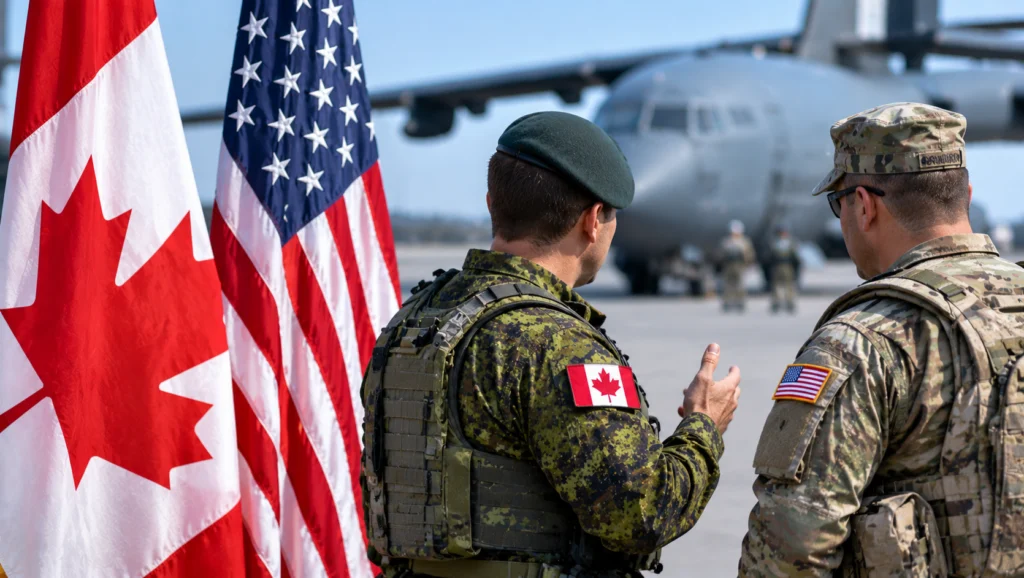
HALIFAX — Canadian Defence Minister David McGuinty said military co-operation between Canada and the United States is continuing as normal, despite media reports that Washington has imposed new restrictions on defence relations between the two countries.
McGuinty said Saturday, on the sidelines of the Halifax International Security Forum, that he had not seen the secret memo attributed to U.S. Defence Secretary Pete Hegseth.
He added that the Canadian and American armed forces continue to work closely together, with no tangible changes so far in the nature of their joint military co-operation.
Secret memo raises concerns in Ottawa
The Washington Post reported Friday that the U.S. defence secretary had issued secret directives restricting certain forms of military co-operation with Canada.
The information raised concerns about the future of the historic defence partnership between the two countries, particularly amid growing political and trade tensions.
However, McGuinty said Canadian authorities have not received official details about the contents of the document, noting that security, defence and intelligence co-ordination with the American side continues.
He stressed that military relations remain strong despite the existing political disagreements between Ottawa and Washington.
U.S. official describes the nature of the new restrictions
Republican Senator Mike Rounds, speaking at the Halifax forum, said the U.S. directives focus mainly on the participation of military officials in think-tank events and social gatherings.
He said some of these activities will require prior approval from the U.S. Department of Defense.
The senator ruled out fundamental changes to joint military operations or intelligence sharing between the two countries.
Democratic members of the U.S. Senate, for their part, criticized the content of the directives, warning of steps that could increase tension with one of the United States' closest allies.
Co-operation continues within NORAD and NATO
Pentagon spokesperson Sean Parnell said the new directives do not affect defence co-operation within the North Atlantic Treaty Organization (NATO).
He also said the measures do not cover the North American Aerospace Defense Command (NORAD) or co-operation on defence intelligence.
NORAD has been one of the cornerstones of Canada-U.S. military relations since it was established in 1958.
The joint command is responsible for aerospace surveillance, early warning and the defence of the continent.
McGuinty said Canada wants to continue investing in this system, given its importance for protecting the shared security of both countries.
Canada seeks to reduce its military reliance on the U.S.
The Canadian defence minister acknowledged that Canada must take on greater responsibility for national security, particularly in protecting the Arctic.
He said the government is working to develop its domestic defence capabilities and reduce its reliance on American military equipment.
Ottawa is also seeking to develop a national space-based communications system, which would strengthen its digital sovereignty and reduce its reliance on foreign services, including the Starlink network.
These measures are part of Prime Minister Mark Carney's government's approach to strengthening strategic autonomy and diversifying international partnerships.
The policy is not aimed at ending co-operation with Washington, but at widening the options available to Canada in the defence industry.
New investments in defence technology
At the security forum, McGuinty announced plans for Canada to join NATO's innovation fund, with an initial contribution of $100 million.
The move aims to support start-ups specializing in defence technology and to help them gain access to investment and international markets.
The Canadian government is also increasing defence and security-related spending, as part of commitments to reach 5 per cent of gross domestic product by 2035.
Ottawa aims to use these investments to develop domestic industries, create jobs and improve the readiness of the armed forces.
The future of Canada-U.S. relations
The defence minister's remarks come amid continuing trade disputes between the two countries and the controversy sparked by U.S. President Donald Trump's repeated calls for Canada to be annexed by the United States.
The Canadian government faces the challenge of maintaining its security partnership with Washington while protecting national sovereignty and strengthening the independence of its defence decision-making.
Despite reassurances from officials in both countries, the actual impact of the U.S. directives depends on the details of the memo, which has not been officially published.
Canadian political and military circles are awaiting further clarification, amid growing interest in the future of defence relations between the two historic allies.
More from Hala Canada
- U.S. senator says secret memo will not affect joint military operations with Canada
- CRA announces 2027 benefit payment dates: full schedule
- Two former Montreal police officers arrested in probe into racism allegations at Station 39
- Gas prices fall across Canada, easing pressure on drivers
- One of Canada's most wanted arrested in connection with Toronto homicide
- Fog advisory for Toronto and southern Ontario as visibility drops to near zero