
Gas prices fall across Canada, easing pressure on drivers
Gasoline prices in Canada have dropped noticeably in recent weeks, easing financial pressure on millions of drivers after months of higher costs, though analysts say the trend is uncertain.
Translated from Arabic. Read the original بالعربية
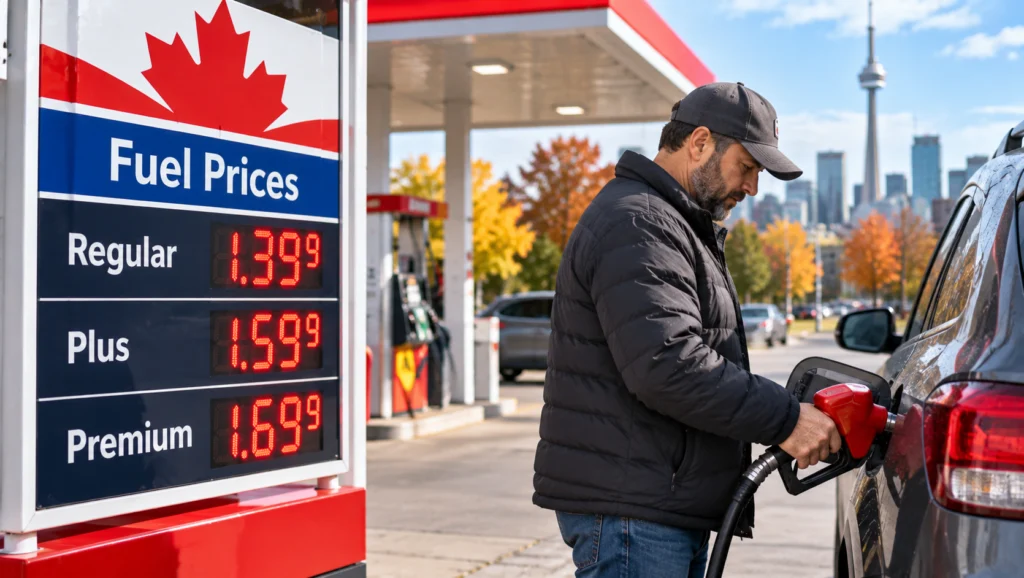
According to data from the Canadian Automobile Association (CAA), the national average price of gasoline fell to $1.44 a litre on Friday, down about 27 cents from a month earlier.
The drop follows lower global oil prices, improved supply and reduced seasonal demand for fuel.
However, continuing geopolitical turmoil in the Middle East raises questions about whether these prices can be maintained in the coming months.
Lower gas prices save households tens of dollars
The recent decline is welcome news for Canadians who rely on their cars to get to work and school each day.
A price drop of about 27 cents a litre saves roughly $13.50 on a fill-up of a 50-litre tank.
A household that fills its tank four times a month could save about $54 compared with prices a month ago.
Actual savings vary depending on the type of vehicle, the distance driven and local fuel prices.
The decline carries added significance as the holiday season approaches and heating and household costs rise over the winter.
Why have fuel prices fallen in Canada?
Energy analysts link the drop in gasoline prices to a combination of economic and seasonal factors.
Lower crude oil prices are chief among them, resulting from reduced global consumption and improved supply reaching international markets.
Alternative routes for transporting oil have also helped ease the effects of disruptions linked to the Strait of Hormuz.
The end of the summer travel season and the use of a winter gasoline blend, which is cheaper to produce, are easing pressure on prices.
Improved operating conditions at refineries have also helped boost fuel supply in some markets.
Further declines expected in coming weeks
Patrick De Haan, a fuel price analyst at GasBuddy, expects gasoline prices could fall by another five to 10 cents a litre over the coming weeks.
These forecasts depend on oil markets remaining stable and on no new military escalation in the Middle East.
On the other hand, analysts warn that disruption to maritime shipping or new damage to energy facilities could push prices up again.
Global oil markets remain highly sensitive to political and military developments, which makes long-term forecasts uncertain.
Fuel prices vary between provinces
Not all Canadian drivers benefit from the lower prices to the same degree, because taxes, transportation costs and distribution costs differ between provinces.
The average price of gasoline in the capital, Ottawa, was about $1.49 a litre on Saturday.
The capacity of local refineries and competition among gas stations also affect the final prices consumers pay.
Owners of diesel vehicles face different conditions, as diesel prices have not fallen by a similar amount in some regions.
Federal fuel tax returns in 2027
Although prices are expected to remain relatively low through the winter, the end of temporary tax measures could raise fuel costs next year.
The Canadian government suspended the federal excise tax on gasoline and diesel last April, and later extended the measure.
The tax is scheduled to be reinstated gradually according to the following timetable:
February 1, 2027: 50% of the usual tax rates restored.
April 1, 2027: tax rates fully restored.
These changes could reduce the savings drivers currently enjoy, even if global oil prices remain stable.
Will food prices fall too?
Lower fuel prices could help reduce some of the transportation and distribution costs borne by Canadian businesses.
However, it may take time for those savings to show up in food and consumer goods prices, as other factors affect production costs.
These include workers' wages, raw material prices, storage and insurance costs, and the exchange rate of the Canadian dollar.
Lower gasoline prices remain a positive development for household budgets, even as concerns about the rising cost of living continue.
Experts advise drivers to compare prices among local stations and to keep their vehicles fuel-efficient, to take advantage of the current decline and limit the effect of any future increase.
More from Hala Canada
- Two former Montreal police officers arrested in racism scandal investigation
- One of Canada's most wanted arrested in connection with Toronto homicide
- Fog advisory for Toronto and southern Ontario as visibility drops to near zero
- Navdeep Bains elected leader of the Ontario Liberal Party
- Ottawa and Ontario announce $759.1 million in support for Ford amid trade war pressures
- Alberta issues 374 new invitations to workers under its immigration program