
Carney announces progress on two Asian trade deals, with potential for 14,000 Canadian jobs
Prime Minister Mark Carney ended his Philippines visit by announcing concluded talks on a Canada-Philippines free trade agreement and a substantive deal with ASEAN, and $540 million for tropical forest protection.
Translated from Arabic. Read the original بالعربية
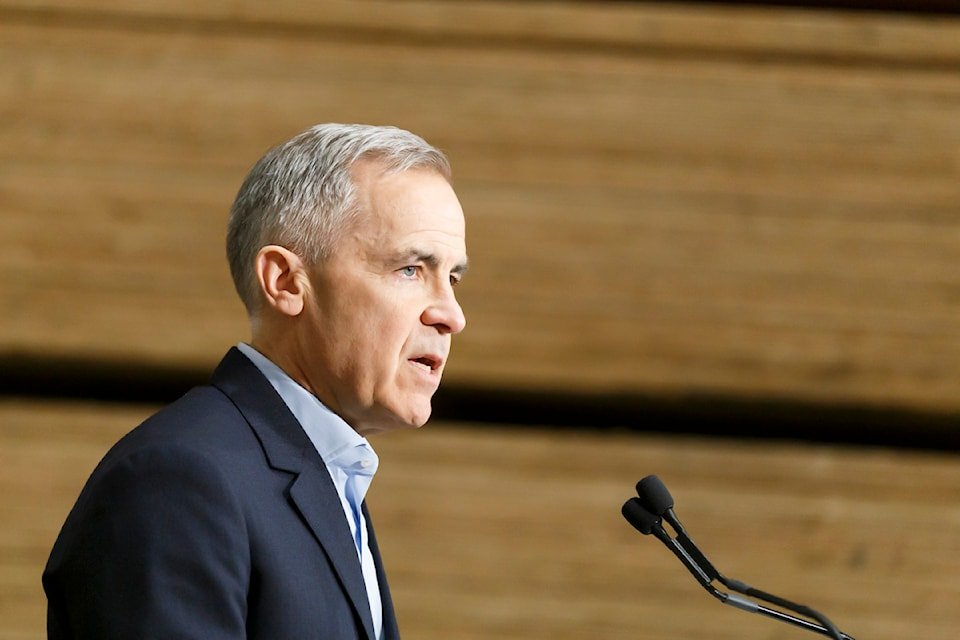
MANILA — Prime Minister Mark Carney concluded his visit to the Philippines by announcing significant progress in trade negotiations with Southeast Asian countries, as part of his government's strategy to expand international markets and reduce the Canadian economy's dependence on the United States.
The visit saw the announcement that negotiations on a free trade agreement between Canada and the Philippines have concluded, along with a substantive agreement on most provisions of a broader trade deal with the Association of Southeast Asian Nations (ASEAN).
Once signed and in force, the regional agreement is expected to open new economic opportunities for Canadian businesses in a market of about 700 million consumers, with an economy approaching six trillion dollars.
Carney left the Philippines for Cambodia to take part in the Francophonie summit, ahead of an expected visit to China this week.
New trade agreement between Canada and the Philippines
During his visit to the Philippine capital, Manila, Carney announced the conclusion of negotiations on the Canada-Philippines free trade agreement.
The announcement came during his meetings with Philippine President Ferdinand Marcos Jr., about a year after the two countries announced their intention to negotiate the agreement.
The two governments aim to complete the necessary procedures to sign the agreement and bring it into force in 2027.
Several Canadian sectors are expected to benefit from the agreement, most notably agriculture, food products, mining, energy, aerospace and technology.
Ottawa also announced investments of $26 million to strengthen cooperation with the Philippines in nuclear security, agriculture, infrastructure and food security.
A market of 700 million consumers
International Trade Minister Maninder Sidhu said negotiations with ASEAN have made significant progress, allowing the process to move on to the final steps of preparing the agreement.
The association has 11 member countries and represents one of the fastest-growing economic regions in the world.
Government estimates indicate that once in force, the agreement could add about $2 billion to Canada's gross domestic product and help create nearly 14,000 jobs.
Sidhu explained that the regional agreement opens new markets to Canadian businesses, especially in countries that do not currently have broad bilateral trade agreements with Ottawa.
He stressed the importance of combining regional agreements with bilateral partnerships to ease access for Canadian exports to Asian consumers.
The agreement with ASEAN has not yet been finally signed, as the government aims to complete the remaining steps ahead of signing in 2027.
Concerns over Canadian meat exports
Sidhu addressed the investigation the Philippines is conducting into pork imports from several countries, including Canada.
He explained that Philippine authorities are carrying out a 60-day investigation related to trade safeguard measures.
The minister expressed confidence that Canadian products are not the cause of the problems that led the Philippines to consider restricting imports.
Ottawa is following developments because of the importance of Asian markets for its agricultural and food exports.
Canada allocates $540 million to protect forests
On the sidelines of the ASEAN summit, Carney met Brazilian President Luiz Inácio Lula da Silva and announced $540 million Canadian in support of an international initiative to protect tropical forests.
Brazil and Norway co-lead the project, which aims to attract public and private investment to protect biodiversity and support forest-dependent communities.
The funding is part of an earlier Canadian commitment of $6 billion for international climate action.
The two leaders also discussed prospects for economic cooperation, amid ongoing trade negotiations between Canada and the South American bloc Mercosur.
Carney pointed to opportunities to strengthen relations with Brazil, with which trade totals about $15 billion.
Carney heads to the Francophonie summit in Cambodia
After finishing his visit to the Philippines, the prime minister travelled to the Cambodian capital, Phnom Penh, to take part in the summit of the Organisation internationale de la Francophonie.
His schedule includes attending a technology trade event, along with political and economic meetings.
Carney is scheduled to meet Quebec Premier Paul St-Pierre Plamondon, who is calling for greater provincial autonomy in managing its international relations.
Canada's trade minister affirmed continued cooperation with Quebec, pointing to the role of its trade offices located inside Canadian embassies around the world.
He also highlighted the successes of Quebec's aerospace sector through its recent sales in Asian markets.
Chinese electric vehicles enter the talks
Canada is also preparing to deepen its trade talks with China, which Carney will visit to take part in the Asia-Pacific Economic Cooperation (APEC) summit.
Sidhu said Chinese automaker Chery is among the companies seeking the certifications needed to sell its vehicles in the Canadian market.
He pointed to the possibility that some Chinese companies could receive regulatory approvals before the end of the year.
He also expressed hope that Chinese companies' investments will expand to include vehicle production in Canada, creating new jobs for Canadian workers.
He affirmed that the government encourages investors to use local supply chains and draw on Canadian industrial expertise.
At the same time, Ottawa continues to address outstanding trade issues with Beijing, including exports of meat, food and some agricultural products.
A Canadian strategy to reduce reliance on the U.S.
The diplomatic moves are part of Carney's plan to diversify Canada's trading partnerships and reduce the risks from economic tensions with the United States.
The government aims to double Canada's exports to non-U.S. markets by 2035.
Government data indicate that merchandise trade between Canada and ASEAN countries reached $52.5 billion in 2025.
Officials believe that expanding agreements with Asia and South America could give Canadian businesses opportunities to grow and strengthen the economy's ability to withstand international disruptions.
However, achieving these gains will depend on the trade agreements being signed and coming into force, and on Canadian companies' ability to actually benefit from them.
More from Hala Canada
- Two Soup Time soups recalled in Canada over undeclared wheat
- Poll: Most Canadians oppose a U.S. trade deal that keeps tariffs on Canadian goods
- Carney announces up to $560 million to protect tropical forests worldwide
- Carney arrives in Cambodia for Francophonie summit ahead of meeting with Quebec premier
- Internal government memo warns freshwater pressures threaten Canada's security and economy
- Canada to spend $433 billion on health care in 2026 as pressure on doctors and hospitals continues