
Brampton family seeks to raise $5.5 million for gene therapy that could change son's life
A Brampton family is appealing for help to raise $5.5 million for their toddler, who has a rare genetic disorder, after a request to fund his treatment in the United States was refused.
Translated from Arabic. Read the original بالعربية
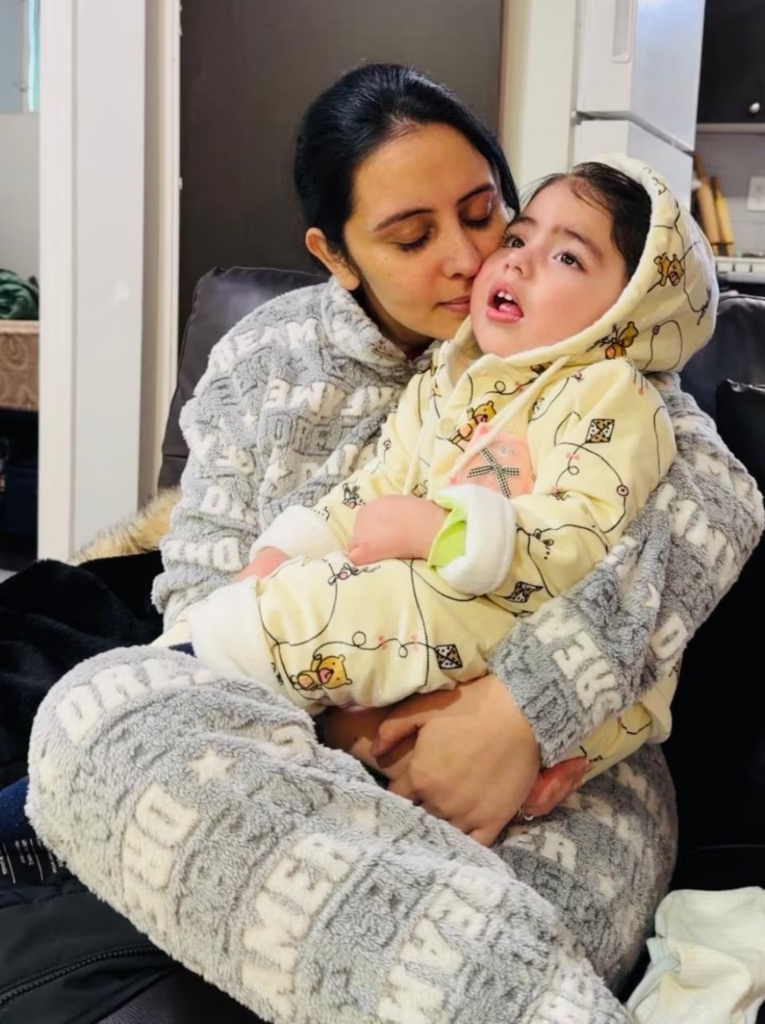
BRAMPTON — A Canadian family in Brampton, Ontario, is racing against time to raise about $5.5 million. They hope to get their two-and-a-half-year-old son specialized gene therapy in the United States after he was diagnosed with a rare genetic disorder that severely affects his ability to move and develop.
The boy, Zorawar Chandi, has aromatic L-amino acid decarboxylase (AADC) deficiency, a disease that affects the nervous system and the brain's ability to produce key chemicals that regulate movement and bodily functions.
The family hopes the treatment will offer a chance to improve his condition, despite its high cost and the lack of guaranteed results.
A two-and-a-half-year-old who cannot walk or sit
The boy's father, Mandeep Chandi, said his son has not yet reached the usual motor development milestones for children his age.
He explained that Zorawar cannot walk, sit on his own or speak, and needs constant help with his daily activities.
He added that his wife, Ramandeep, spends most of her time caring for the child and carrying him, with help from his grandmother, because of his limited control over his body.
The family has faced heavy emotional and financial strain since the disease was discovered, particularly because of the difficulty of accessing specialized treatments in Canada.
What is the genetic disease affecting the child?
AADC deficiency results from a genetic disorder that affects the production of certain neurotransmitters, including dopamine and serotonin.
These substances play an important role in controlling movement and regulating the functions of the nervous system.
A shortage of them can lead to muscle weakness, delayed motor development, and difficulty with head control, sitting and walking.
The severity of symptoms varies between patients, but serious cases can cause major disabilities and life-threatening health complications.
The disease is one of the rare genetic disorders that require specialized medical follow-up.
A U.S. treatment gives the family new hope
The family is seeking an assessment of whether Zorawar is eligible for a gene therapy called Kebilidi, which the U.S. Food and Drug Administration approved in November 2024.
The treatment works by delivering a functional copy of the gene linked to the production of the enzyme to specific cells in the brain, using a modified viral vector.
It is given during a specialized surgical procedure, with the aim of improving dopamine production and some motor abilities.
A clinical study showed improvement in motor skills in eight of 12 children assessed 48 weeks after treatment.
However, these results do not mean a full cure. Response varies between patients, and the long-term benefits are still being studied.
$5.5 million to obtain the treatment
Mandeep said the family needs more than $5.5 million Canadian to cover medical assessments, possible treatment, travel, accommodation and health follow-up in the United States.
The family hopes to travel to Boston, where specialized medical expertise in this type of treatment is available.
According to the father, the relevant authorities in Ontario rejected the family's request to fund treatment outside the country.
Kebilidi is an approved treatment in the United States, but it has not received regulatory approval in Canada, according to the available information about the child's case.
Whether he can receive the treatment remains tied to the results of the medical assessment and whether he meets the eligibility criteria.
Fundraising campaign for Zorawar's future
The family launched a fundraising campaign on GoFundMe on Nov. 2 to obtain the financial help they need.
The campaign had raised more than $23,000 by Nov. 4, according to reports published at the time.
The parents stressed that their priority is to give their child a chance to receive a specialized assessment, and then treatment if doctors decide it is suitable for his condition.
The family says it understands there are no guarantees about the results, but it is holding on to the possibility of improving its son's quality of life.
The case again highlights the challenges faced by families of children with rare genetic diseases, particularly when advanced treatments are available outside the country at costs the families cannot afford.
More from Hala Canada
- Several dead in boat incident in Squamish area amid B.C. flooding
- McGill researchers uncover network of 293 fake accounts posting AI videos aimed at Canadians
- More than 70,000 Quebec students authorized to strike over cost of living, education funding
- Provinces have 139 days to nominate tens of thousands of workers for permanent residence
- Montreal police dismantle $3.9-million gold theft network, arrest 14 including six teens
- House fire in Scarborough: person found without vital signs