
Quebec aims to halve homelessness by 2030, new report says
A report urges Quebec to take at least 20 per cent of its rental housing off the conventional market and to give anti-homelessness organizations stable funding for at least five years.
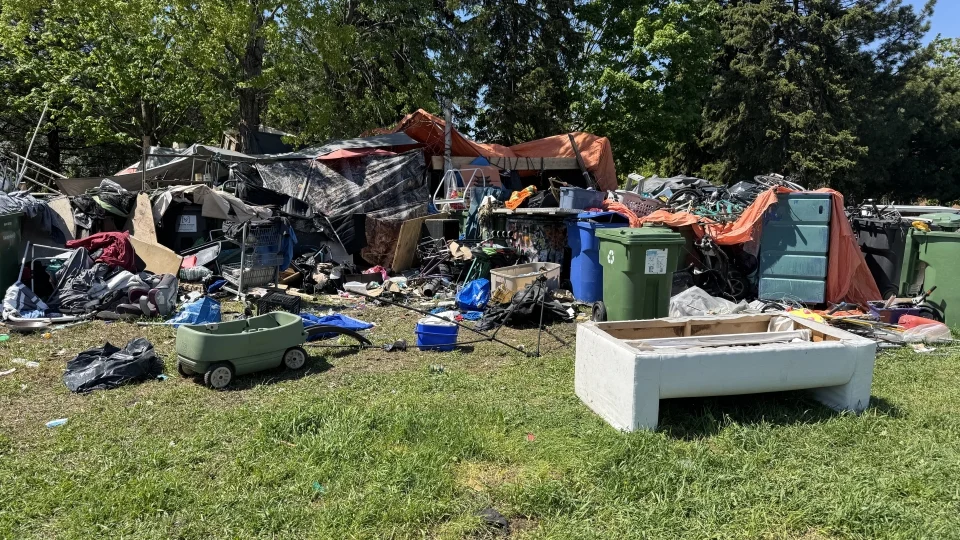
MONTREAL — A network of community organizations in Quebec is calling on the provincial government to change its approach to the homelessness crisis. It says the goal of cutting the number of people without shelter in half by 2030 is still achievable, but that reaching it requires focusing on the root causes of the crisis rather than relying on emergency measures after it worsens.
The call comes in a new report called the White Paper, prepared by the Mouvement pour mettre fin à l’itinérance à Montréal (MMFIM). The network includes 35 non-profit organizations and about 20 institutional and business members.
Michèle Chappaz, the movement's chief executive officer, said what is needed is a fundamental change in how homelessness is addressed. The response should not be limited to providing temporary shelter spaces when the crisis reaches acute levels, she said, but should include policies that keep people from losing their homes and help those who are homeless move quickly into permanent housing.
The report comes as the new Parti Québécois (PQ) government, led by Premier Paul St-Pierre Plamondon, has made fighting homelessness one of its priorities. The premier has pledged to invest $1 billion over four years to reduce homelessness by 50 per cent by 2030, and has taken direct responsibility for the file.
$28 million in emergency funding
Last week, the Quebec government announced $28 million in emergency funding to support 200 projects across 16 regions of the province, including nearly $18 million for the Greater Montreal region.
The funding is expected to help create more than 1,000 emergency spaces over the next five months, in a move meant to respond to the urgent needs of people without shelter.
However, the organizations behind the White Paper say these measures, while important for dealing with urgent cases, will not be enough on their own to end the crisis or to meet the government's target by the end of the decade.
Chappaz said authorities have dealt with repeated crises through emergency management, adding that this approach does not necessarily address the reasons people become homeless in the first place.
According to the report, the province needs to adopt what the movement calls "comprehensive prevention" by putting in place policies that keep people from losing their homes and ensure that those who become homeless get permanent housing as quickly as possible.
Chappaz explained that prevention does not only mean stopping homelessness from happening. It also means shortening its duration when it does occur, so that a person does not have to remain on the street for years. She said the goal should be that a person spends no more than one day without a home, instead of seven years.
About 20 per cent of rental housing off the market
The report contains a set of recommendations aimed at addressing the housing and homelessness crisis over the long term. Chief among them is setting aside at least 20 per cent of Quebec's rental housing stock so that it sits outside the conventional real estate market.
The proposal aims to increase the supply of housing that is not fully subject to market pressures, which could help provide more stable housing options for people who struggle to afford rent.
The movement also calls for stable and predictable funding for anti-homelessness organizations for at least five years, rather than repeated reliance on emergency assistance or short-term funding.
The organizations say financial stability is essential so they can plan and develop their services and respond to ongoing needs, rather than waiting for each new funding package to be announced as the crisis escalates.
The report stresses that addressing homelessness requires linking housing policies with social and preventive services, because providing temporary shelter does not necessarily guarantee that a person can obtain or keep permanent housing.
About 12,000 people without a home in Quebec
Estimates in the report indicate that about 12,000 people are currently homeless in Quebec.
The most recent count, carried out in April 2025, showed visible homelessness up 20 per cent from 2022, with increases recorded in all 13 regions covered by the study.
These findings indicate that the problem is not confined to one area of the province but extends across many regions, which strengthens calls for a Quebec-wide strategy rather than reliance on local or temporary solutions alone.
The report also says that 29 per cent of people who are homeless had previously been in the youth protection system, 10 per cent had been in detention centres, and 23 per cent had been evicted from their homes.
Chappaz said these figures reveal weaknesses in the social protection system and show a link between homelessness and some of the transitions people go through when they leave government institutions or face housing crises.
She said these institutions can serve as important points for preventive intervention, because the authorities involved can use available information to identify the people most at risk of losing their homes and work to provide support before they end up on the street.
According to this argument, planning the transition from an institution back into the community, and identifying housing and social needs in advance, could help reduce the risk of homelessness among the most vulnerable groups.
Rising housing costs worsen the problem
The report links the homelessness crisis to rising living costs. It says Quebec's social safety net does not necessarily keep pace with the increase in expenses facing households, while evictions and a shortage of affordable housing continue to push people out of their homes.
Sam Watts, chief executive officer of the Welcome Hall Mission, a member of the Mouvement pour mettre fin à l’itinérance à Montréal, said the relationship between housing costs and levels of homelessness is clear in North American cities.
Watts said rising housing costs are an important factor when looking at the scale of homelessness in cities, indicating that addressing the crisis cannot be limited to providing shelters but must also include increasing access to affordable housing.
This point carries particular weight given the report's recommendations to set aside a significant share of rental housing outside the market, along with long-term funding for organizations that work with people at risk of losing their homes or who are already homeless.
More Montreal


Latest from Hala Canada
- Health Canada warns of rare risk of vision loss linked to Ozempic, Wegovy
- Fire on Cairo's Ring Road in Warraq kills 30 and injures 15, Egypt's health ministry says
- Toronto braces for heavy rain Thursday, possibly half the monthly average
- New international student arrivals in Canada down 80% as permit limits test Carney's research plan
- 28% of Canadian employees would struggle to meet obligations if their pay were a week late
- Hackers breach CIA system used to analyze unclassified open-source information