
New international student arrivals in Canada down 80% as permit limits test Carney's research plan
The number of new international students arriving in Canada fell 80 per cent in the first seven months of 2026 compared with 2024, as universities warn that study permit limits could hurt efforts to attract researchers.

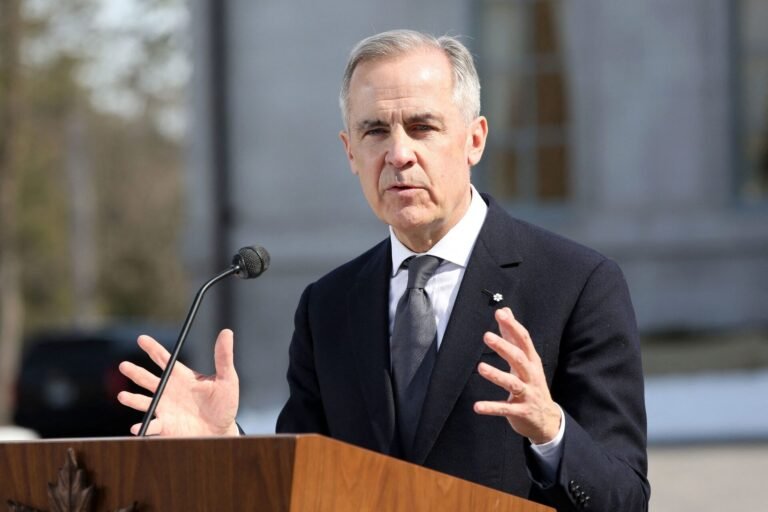
TORONTO — A new report shows a sharp drop in the number of international students arriving in Canada, amid warnings that government limits on study permits could undermine Prime Minister Mark Carney's plan to attract researchers and scientific talent from around the world.
Data from Immigration, Refugees and Citizenship Canada (IRCC) show that the number of new international students who arrived in the country between January and July 2026 fell 80 per cent compared with the same period in 2024.
The figures come after the federal government imposed successive limits on study permits, aimed at reducing the number of temporary residents and easing pressure on housing and public services.
Canadian universities warn, however, that these measures have sent a negative message to international students and researchers and raised doubts about whether they are still welcome in the country.
Canada cuts international student numbers to 150,000 a year
In its latest immigration plan, the Canadian government set a target of admitting 150,000 new international students a year from 2027 to 2029.
That is a major decrease from 2024, when the country received about 292,830 new international students.
Ottawa says the reductions are necessary to rebalance the immigration system after years of rapid growth in the number of temporary arrivals.
The government also says that reducing the numbers helps ease pressure on the housing market, public services and infrastructure.
Educational institutions, however, say that applying broad limits without sufficiently distinguishing between categories of students could affect Canada's ability to compete globally in education and scientific research.
University of Toronto warns of damage to Canada's reputation
Joseph Wong, vice-president, international, at the University of Toronto, said the limits on study permits have damaged Canada's image as a destination for foreign students.
He explained that the government's measures gave the impression that the country has begun closing its doors to international students.
He noted that he travelled to India three times over the past two years to take part in student recruitment efforts.
He said the current challenge is to convince Indian students that Canadian universities still welcome their applications.
India has been one of the main source countries of international students to Canada over the past decade.
Canadian authorities had tightened the review of study applications after discovering cases of fraud linked to some visa and admission files.
$1.7-billion plan to attract researchers
At the same time, Mark Carney's government is seeking to turn Canada into a global hub for attracting researchers and specialized scientists.
The government announced about $1.7 billion for a program aimed at attracting more than 1,000 highly qualified international researchers.
The program includes support for academic recruitment, research projects and innovation, particularly in advanced science and technology fields.
Canada has already allocated more than $625 million to new research funding programs aimed at attracting scientists.
Additional recipients of these programs are expected to be announced in early 2027.
The government hopes to attract researchers who have traditionally gone to American universities, particularly given the changes in research funding policies in the United States.
Master's and doctoral students exempted from some restrictions
Canada has taken steps to make it easier to admit graduate students, even as restrictions remain in place for other categories of international students.
As of January 1, 2026, master's and doctoral students admitted to approved public educational institutions are exempt from the requirement to submit a Provincial Attestation Letter or Territorial Attestation Letter (PAL/TAL).
The exemption is intended to make it easier to admit specialized talent and support research projects at Canadian universities.
The exemption does not remove the need to obtain a study permit or to meet eligibility, admission and funding requirements.
The government also announced measures to speed up the processing of study permit applications for some eligible doctoral students and their family members, with a target processing time of 14 days.
IRCC says these facilitation measures reflect the government's wish to keep attracting global talent, even as it reduces the overall number of international students.
Humber Polytechnic loses $40 million as student numbers fall
The effects of the limits have not been confined to the number of applicants but have extended to the finances of educational institutions.
Humber Polytechnic in Ontario disclosed that its international student numbers in the 2025-2026 academic year fell to about one-third of 2023-2024 levels.
Andrew Leopold, a spokesperson for the institution, said the decline caused a revenue shortfall of $40 million.
This led to the cancellation of some academic programs and the offering of voluntary departure packages to employees.
Other public colleges and polytechnics face similar challenges as revenue tied to international student tuition declines.
Some institutions rely on these fees to fund programs and services, so a sudden drop in enrolment affects their budgets.
Universities fear losing the global competition for talent
Robert Asselin, chief executive of the U15 group, which represents Canada's research universities, warned that repeated changes to immigration policy could push top students to choose other countries.
He said international competition for researchers and scientific talent has become intense and that Canada cannot assume it will remain attractive without stable policies.
The University of British Columbia also noted that successive changes to federal rules since 2023 have increased uncertainty among students considering studying in the country.
It added that geopolitical tensions, economic challenges and growing competition have also affected international student numbers.
Universities fear that the effect of these factors will continue even with exemptions for graduate students.
What the new measures mean for those who want to study in Canada
Recent developments confirm that opportunities to study in Canada remain available, but they are increasingly tied to the type of program, the institution chosen and immigration requirements.
Master's and doctoral students at eligible public institutions benefit from facilitation measures that do not necessarily cover all undergraduate and college programs.
Applicants should also check study permit requirements, the institution's capacity to admit international students, and the conditions for obtaining a post-graduation work permit.
The data indicate that Canada is seeking to admit fewer international students, giving greater priority to categories linked to scientific research and economic needs.
The challenge facing the government, however, is to strike this balance without damaging the reputation of Canadian universities or their ability to attract outstanding students and researchers.
The results of this policy remain tied to how stable immigration rules are in the coming years and to the ability of educational institutions to regain the trust of international students.
More Canada


Latest from Hala Canada
- 28% of Canadian employees would struggle to meet obligations if their pay were a week late
- Hackers breach CIA system used to analyze unclassified open-source information
- Groups say Carney government is behind on firearms control commitments
- Report: 47% of university-educated immigrants in Canada may work in jobs below their qualifications
- Sentencing expected for driver who killed father of three in Ontario crash
- Report: At least 29,000 people in Canada died while waiting for medical care in one year