
Toronto city manager Paul Johnson reportedly leaving as Mayor Olivia Chow reorganizes administration
Reports say Paul Johnson, the City of Toronto's top administrative official, is leaving as Mayor Olivia Chow reorganizes city administration at the start of her second term.
Translated from Arabic. Read the original بالعربية
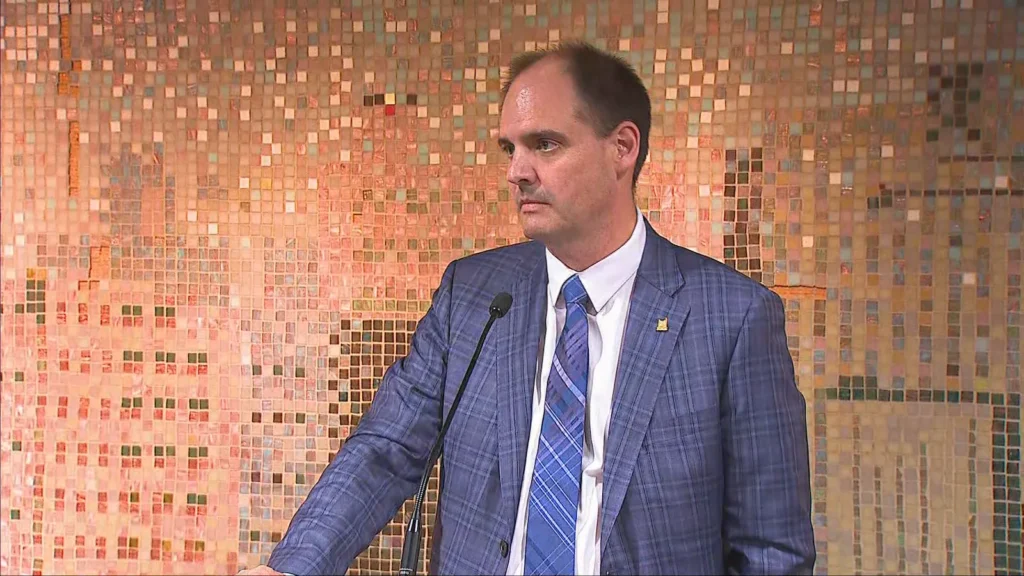
TORONTO — The City of Toronto is seeing changes in its administrative leadership, with reports that Paul Johnson, the city manager and the top official in its executive branch, is leaving as Mayor Olivia Chow prepares to reorganize the administration.
Media reports on Monday said Johnson will leave his post after nearly four years in the role, a development that follows Chow's re-election to a second term.
The move comes days after the mayor announced changes to the chairs of several city committees, as part of arrangements for the new city council for the 2026 to 2030 term.
Who is Paul Johnson?
Johnson became Toronto's city manager in December 2022, appointed by then-mayor John Tory after a selection process involving several elected officials.
He had joined the City of Toronto in 2021 as deputy city manager for community and social services, where he oversaw files related to housing and services for people in need.
Before moving to Toronto, he worked for more than 10 years for the City of Hamilton, where his administrative responsibilities included health services, fire, paramedic services and long-term care.
Why the city manager's job matters
The city manager is the most senior administrative official in the municipal government and coordinates the implementation of policies and programs approved by the elected council.
The duties include overseeing executive departments, monitoring government performance and helping prepare recommendations on the budget and public services.
The position differs from that of the mayor: the mayor provides political leadership, while the city manager oversees day-to-day administrative work and the carrying out of decisions.
A change in who holds the post may therefore affect how files are managed, but it does not automatically mean services will stop or existing programs will change.
Changes to committee leadership
The news of Johnson's departure followed meetings of the new council on Nov. 18 and 19, which assigned responsibilities to members of the city's committees and bodies.
Chow appointed Nate Erskine-Smith as chair of the Planning and Housing Committee, while Paul Ainslie was named chair of the board of the Toronto Transit Commission (TTC).
Mike Layton also became chair of the Infrastructure and Environment Committee, as part of arrangements meant to define the responsibilities of council members in the new term.
These changes concern political and oversight positions within council and are administratively separate from the city manager's post.
Housing and transit among priorities
At the start of her second term, Chow said she wants to focus on affordability, housing and strengthening services.
Her stated priorities include building affordable housing, improving public transit and developing student nutrition programs, as well as dealing with the homelessness crisis.
The administration moved the homelessness file more clearly to the Executive Committee, which the mayor chairs, a step aimed at strengthening political oversight of the issue.
However, carrying out these goals will depend on council decisions, available funding and the ability of the administrative branches to coordinate.
Financial pressures facing the city
The changes come as Toronto faces challenges related to funding services and infrastructure, an issue Chow raised in her opening speech to the new council.
Managing these files requires ongoing co-operation among the mayor, council members and administrative staff, particularly when preparing the budget and making spending decisions.
Among the files Johnson helped oversee during his years in the job were temporary shelters, social services and preparations to host 2026 World Cup matches.
His role was also tied to the city's response to weather and snow emergencies, services that require ongoing co-ordination among multiple sectors.
A change in administrative leadership may raise questions about the continuity of projects, but there is no documented information to suggest that his departure will lead to the cancellation of specific services.
What happens next
Information that could be independently verified did not make clear when Johnson's work will end or who might take over his duties.
His departure should also not be considered a dismissal over a particular dispute, absent a statement or evidence explaining the reasons for the decision.
Administrative leadership arrangements are expected to become clearer when the city issues further official announcements about the transition period.
In any case, local services will remain subject to institutional frameworks and to decisions of Toronto City Council, regardless of changes among senior officials.
More from Hala Canada
- Scientists identify new inherited retinal disease that gradually impairs night vision
- Canada to admit 150,000 new international students in 2027: requirements and funds needed
- Man, 19, arrested in killing of Malik Abbas in Toronto; police seek youth wanted in two homicides
- Canadians stranded in New Zealand for 14 months over drug-laden bags that are not theirs
- Children's Place bankruptcy filing puts 56 Canadian stores at risk
- Trump impersonator joins Mark Carney on stage at Ottawa press gallery dinner