
Canada to admit 150,000 new international students in 2027: requirements and funds needed
Canada's 2027–2029 immigration levels plan targets 150,000 new international students a year; applicants must meet study permit rules, including proof of funds and, in many cases, a provincial attestation letter.
Translated from Arabic. Read the original بالعربية
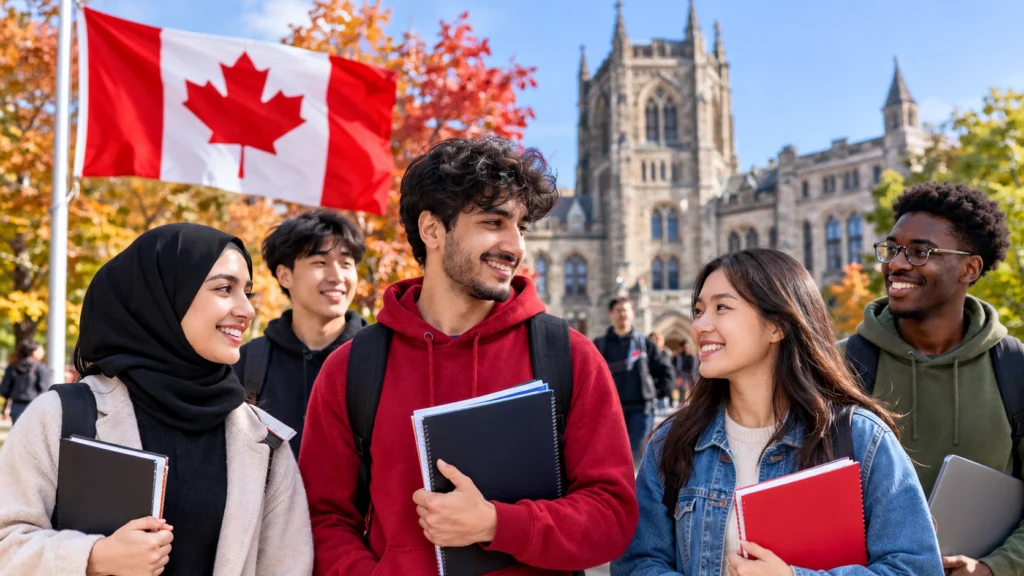
OTTAWA — The Canadian government has announced a target of welcoming 150,000 new international students in 2027, as part of its immigration levels plan for 2027 to 2029.
Immigration, Refugees and Citizenship Canada (IRCC) said the new targets are part of an effort to manage the number of temporary residents and to balance attracting international talent with the capacity of educational institutions and public services.
The plan includes the same number of students in 2028 and 2029, and future targets could be reviewed in light of government developments.
What does admitting 150,000 students mean?
The announced figure refers to new international students arriving in Canada, not the total number of foreign students already in the country.
The allocation does not include study permit extension applications, or applications submitted from inside Canada to change legal status.
Setting a target also does not mean applications are approved automatically, as every applicant must meet the immigration and study requirements in force.
The announcement follows a target of 155,000 new students for 2026.
Ottawa is seeking to stabilize the number of new arrivals, rather than return to the large increases recorded in previous years.
Main requirements for a study permit
People who want to study in Canada must first obtain an official letter of acceptance from an approved educational institution, known by the acronym DLI.
They must also provide a valid passport and proof that they have enough money to cover tuition, living costs and travel.
Authorities may request additional documents, including a medical exam or documents related to legal history, depending on the applicant's nationality and circumstances.
Applicants must also satisfy an immigration officer that they meet the conditions of temporary residence, including complying with Canadian laws and leaving the country when their authorized stay ends, unless the student obtains another legal status.
Proof of funds above $23,000
IRCC has set the amount of $23,448 to prove annual living expenses for one student, according to the schedule in effect since September 1, 2026.
This amount does not include tuition or travel costs, which applicants must show they can pay separately.
The financial requirements rise when family members accompany the student, according to the following schedule:
Number of people
Amount required per year
One person
$23,448
Two people
$29,192
Three people
$35,888
Four people
$43,572
These amounts apply outside Quebec, which has its own financial rules.
Who needs a provincial attestation letter?
Many applicants are required to submit an attestation letter issued by the province or territory, known as a PAL or TAL.
The document shows that a spot has been set aside for the student within the approved cap on study permit applications.
Some groups are exempt, most notably those enrolled in master's and doctoral programs leading to a degree at approved public educational institutions.
This exemption took effect in January 2026, while Quebec's specific requirements remain in place.
Attestation letters issued under the 2026 cycle expire on December 31, unless they carry an earlier expiry date.
Application fees and biometrics
The basic government fee to apply for a study permit is $150.
The biometrics fee is $85 per person, when biometrics are required.
Applications from outside Canada are submitted online in most cases, through the applicant's IRCC account.
After submitting, applicants must monitor their account for biometrics instructions or requests for additional documents.
Processing times vary depending on the country of residence, the type of application and the backlog of files at the department.
What students should do before applying
People who want to attend Canadian universities in 2027 are advised to verify that the institution and the program are approved before paying fees.
They should also review the conditions of the post-graduation work permit, because eligibility for that permit does not automatically extend to all institutions and programs.
It is best to prepare financial documents early and to confirm that the acceptance letter and the provincial attestation remain valid when the application is submitted.
Authorities stress that financial requirements, caps and procedures may change, so the government guidance published at the time of application remains the main reference for international students.
More from Hala Canada
- Man, 19, arrested in killing of Malik Abbas in Toronto; police seek youth wanted in two homicides
- Canadians stranded in New Zealand for 14 months over drug-laden bags that are not theirs
- Children's Place bankruptcy filing puts 56 Canadian stores at risk
- Trump impersonator joins Mark Carney on stage at Ottawa press gallery dinner
- Coyote Watch Canada urges Toronto residents to keep distance from coyotes after child injured
- New payments for Canadians between Nov. 24 and 30: amounts and dates