
U.S. trade representative says U.S. and Canada are close to a new trade deal
U.S. Trade Representative Jamieson Greer said Washington and Ottawa are nearing a new trade agreement, though disputes remain over tariffs and Chinese investment in Canada's auto sector.
Translated from Arabic. Read the original بالعربية
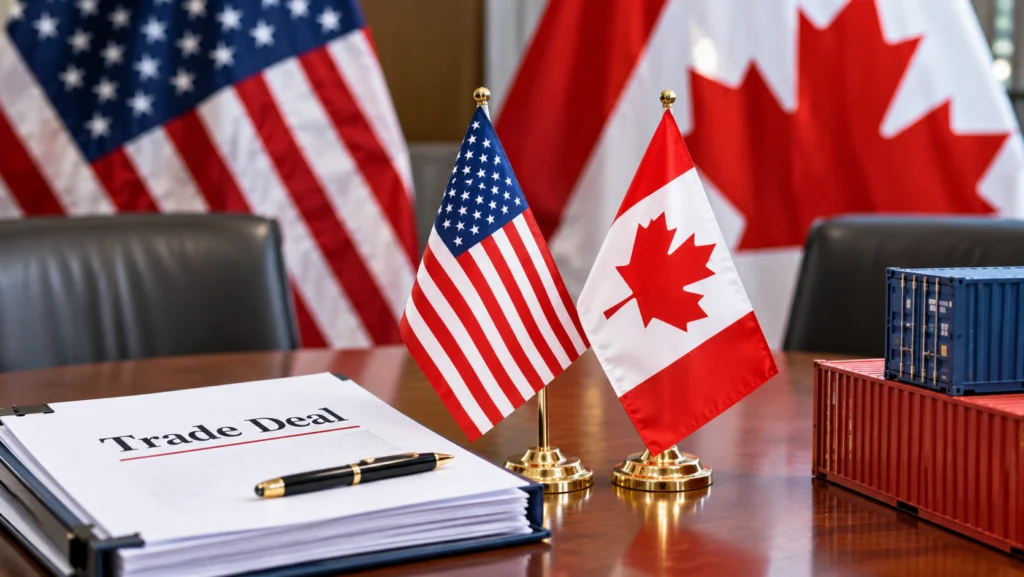
OTTAWA — U.S. Trade Representative Jamieson Greer said the United States and Canada are relatively close to a new trade agreement, after months of economic disputes and tit-for-tat tariffs.
In an interview with Fox News on Sunday, Greer said negotiations between the two countries have made significant progress, noting that constructive talks with Canadian officials are continuing.
The remarks come days after Prime Minister Mark Carney met U.S. President Donald Trump in Shenzhen, China.
Washington expresses optimism about the negotiations
Greer said trade relations between Canada and the United States are better than many people think, despite the disputes of recent months.
He said the American administration is seeking an agreement that protects the North American economy and serves the interests of both countries.
However, the U.S. official did not give a final date for signing an agreement, nor did he reveal how many concessions Washington might make on tariffs.
Greer had said last September that there was no urgent need for a deal with Canada, which reflects a change in the administration's tone in recent weeks.
Chinese vehicles raise concerns in Washington
The U.S. trade representative expressed Washington's concern about closer economic ties between Ottawa and Beijing, particularly in the electric vehicle sector.
The Canadian government had reached an agreement allowing the import of 49,000 Chinese electric vehicles a year at reduced tariffs.
Washington is seeking to resolve disputes over trade in vehicles, steel and aluminum, in a way that protects domestic industries in North America.
For its part, the Canadian government considers diversifying its economic partnerships a necessary step to reduce its dependence on the U.S. market and strengthen its ability to withstand trade disruptions.
Carney recently announced that a large Canadian trade mission will travel to China in 2027, with the aim of strengthening ties between Canadian and Chinese companies.
Disputes led to the collapse of talks in August
Trade negotiations between the two countries collapsed last August, after the Canadian government rejected American demands made at the last minute before an agreement was to be signed.
Carney said at the time that some of the American conditions affected Canada's ability to make independent economic and trade decisions.
After the talks collapsed, Washington imposed tariffs of 50 per cent on a range of Canadian products.
Ottawa responded with counter-tariffs, which increased financial pressure on businesses and manufacturers in both countries.
Auto tariffs are among the main remaining obstacles
Despite the American optimism, several trade issues remain unresolved between the two sides, foremost among them the tariffs on Canadian vehicles.
Sources familiar with the talks said the 25 per cent U.S. tariffs on vehicles are among the main obstacles to an agreement.
The Canadian government is also seeking to ease the tariffs imposed on steel, aluminum and lumber products.
These sectors are very important to the Canadian economy, as thousands of industrial jobs depend on trade with the United States.
Settling the tariff disputes could help improve the investment climate and reduce the uncertainty facing businesses.
Carney insists on protecting Canadian sovereignty
The Prime Minister's Office said that the Nov. 18 meeting between Carney and Trump addressed efforts to reach a trade agreement that serves the interests of both countries.
The Canadian side stressed that any agreement must help create jobs and improve purchasing power, while fully respecting Canadian sovereignty and the country's cultural and linguistic distinctiveness.
The two leaders agreed to continue working and to stay in touch on developments in the negotiations.
Ottawa is also continuing to strengthen its trade relations with Europe and Asia, with the aim of opening new markets for Canadian products.
Will the trade war end before the end of 2026?
Hopes are growing that a trade settlement could be reached before the end of this year, particularly as contacts between senior officials in the two countries have resumed.
However, Canadian Trade Minister Dominic LeBlanc recently said that the progress made is still not enough to conclude a final agreement.
Canadian businesses are awaiting the outcome of the negotiations, hoping for lower production costs, protection of jobs and a return to stable trade flows.
The success of the talks depends on the ability of both sides to overcome the remaining disputes without compromising each country's economic and political priorities.
More from Hala Canada
- New Brunswick selects 463 candidates for permanent residence in November draws
- Canada to issue new pension and benefit payments on Nov. 26: who qualifies?
- Luxury home sales fall in Toronto and Vancouver, but top-priced properties buck the trend
- Youth and advocates urge MPs to fast-track Bill C-34 on social media safety for under-16s
- AI model detects signs of bladder cancer up to five years before diagnosis
- Canada is headed toward missing its Paris Agreement targets. Why won't the government say so?