
U.S. defence secretary reportedly restricts military cooperation with Canada
The Washington Post reports that Pete Hegseth issued a classified memo limiting defence ties with Canada, while the Pentagon says intelligence sharing, NATO and NORAD cooperation are unaffected.
Translated from Arabic. Read the original بالعربية
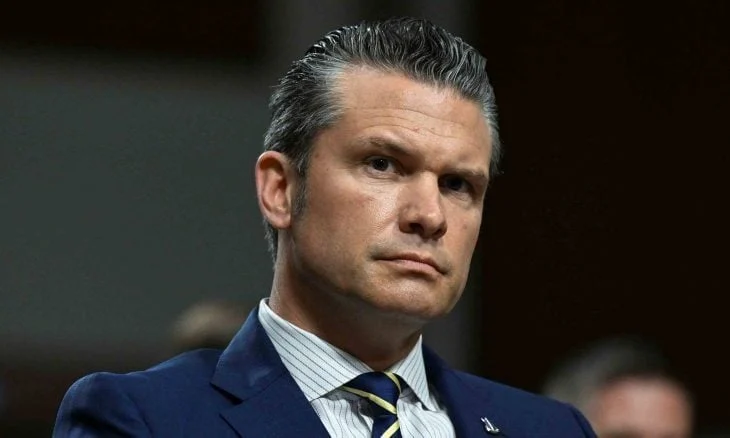
OTTAWA — The Washington Post has reported that U.S. Defense Secretary Pete Hegseth has imposed new restrictions on defence and military relations with Canada, a step that reflects rising tension between the two countries.
The newspaper, citing officials familiar with the matter, said Hegseth issued the directives in a classified memo circulated last week. The officials did not disclose details of the new restrictions.
The decision comes amid growing political and trade disputes between Washington and Ottawa, and repeated statements by U.S. President Donald Trump about annexing Canada to the United States.
Nature of the new military restrictions unclear
The Post said it had not seen the classified memo itself, and officials did not reveal the scope of the restrictions it contains.
One official familiar with the matter said the move could cause considerable displeasure on the Canadian side and raise questions about the future of coordination between the two countries' armed forces.
Pentagon spokesperson Sean Parnell said the department is reviewing forms of cooperation with Canada in a way that serves U.S. defence objectives and strengthens shared security.
He added that Washington gives priority to initiatives that help protect the territory of both countries and support Canada's ability to meet its international military commitments.
Cooperation continues within NATO and NORAD
Despite the new restrictions, the Pentagon said the directives will not affect the exchange of defence intelligence between the United States and Canada.
The measures also will not cover military cooperation within the North Atlantic Treaty Organization (NATO) or the North American Aerospace Defense Command, known as NORAD.
NORAD was established in 1958 and is one of the main pillars of the defence partnership between the two countries.
The joint command is responsible for early warning, airspace monitoring and the defence of North America.
The continuation of cooperation within this framework carries particular strategic importance given growing security challenges in the Arctic.
Canada investing billions to strengthen its military
The U.S. restrictions come despite efforts by the Canadian government to increase military spending and modernize its defence capabilities.
Ottawa announced last March that it had met NATO's target of spending 2 per cent of gross domestic product on defence in the 2025-26 fiscal year.
Canada has also committed to gradually raising spending on defence and security to 5 per cent of GDP by 2035.
Government plans include modernizing military equipment, strengthening protection of the northern border and developing the domestic defence industry.
Canada is also carrying out a program to modernize its NORAD-related capabilities, with investments of $38.6 billion over 20 years.
Trade disputes add to tension between Ottawa and Washington
Canada-U.S. relations have declined markedly since Trump returned to the White House in 2025.
The U.S. administration imposed tariffs on a number of Canadian products, prompting Ottawa to take countermeasures on trade.
The economic disputes coincided with Trump's repeated statements about the possibility of making Canada the 51st U.S. state.
Prime Minister Mark Carney has rejected these proposals, holding to the country's independence and national sovereignty.
The new military restrictions add a sensitive file to the existing disputes, at a time when the two countries are seeking an agreement to end the trade dispute.
Carney and Trump meet in China
Prime Minister Mark Carney met President Donald Trump on Nov. 18 on the sidelines of the Asia-Pacific Economic Cooperation (APEC) summit in Shenzhen, China.
According to a statement from the Prime Minister's Office, the two sides discussed efforts to reach a trade agreement that serves the interests of both countries.
The statement stressed the importance of respecting Canadian sovereignty and the country's cultural and linguistic distinctiveness, along with creating jobs and improving citizens' purchasing power.
The Carney government is also seeking to diversify international economic and security partnerships, with the aim of strengthening the independence of Canadian decision-making and reducing the risks of relying on a single market.
Future of the defence partnership awaited
The Canadian Embassy in Washington did not immediately comment on the report about the new military restrictions, while the White House referred inquiries to the U.S. Department of Defense.
Any reduction in bilateral military cooperation could lead the Canadian government to review some of its defence priorities and international partnerships.
However, the actual scale of the consequences will depend on the nature of the restrictions in the classified memo and their effect on joint military programs.
Ottawa faces the challenge of maintaining security cooperation with Washington while protecting its national interests and strengthening its sovereignty.
Canadian political and military circles are awaiting further clarification of the U.S. decision, amid concerns that trade disputes could spill over into defence and security cooperation.
More from Hala Canada
- Alberta issues 374 new invitations to workers under its immigration program
- Leaders and experts from more than 70 countries gather in Halifax for global security forum
- Canada to issue November CPP payments early, with maximum monthly benefit of $1,507.65
- 148 people fall ill with unidentified illness aboard Caribbean Princess cruise ship
- Measles returns to the Americas, with warnings of a serious health setback
- Cadbury chocolate recalled across Canada over undeclared pistachios