
Measles returns to the Americas, with warnings of a serious health setback
The Pan American Health Organization says the U.S., Mexico and Bolivia have lost their status as countries that eliminated endemic measles transmission, a year after Canada lost the same designation.
Translated from Arabic. Read the original بالعربية
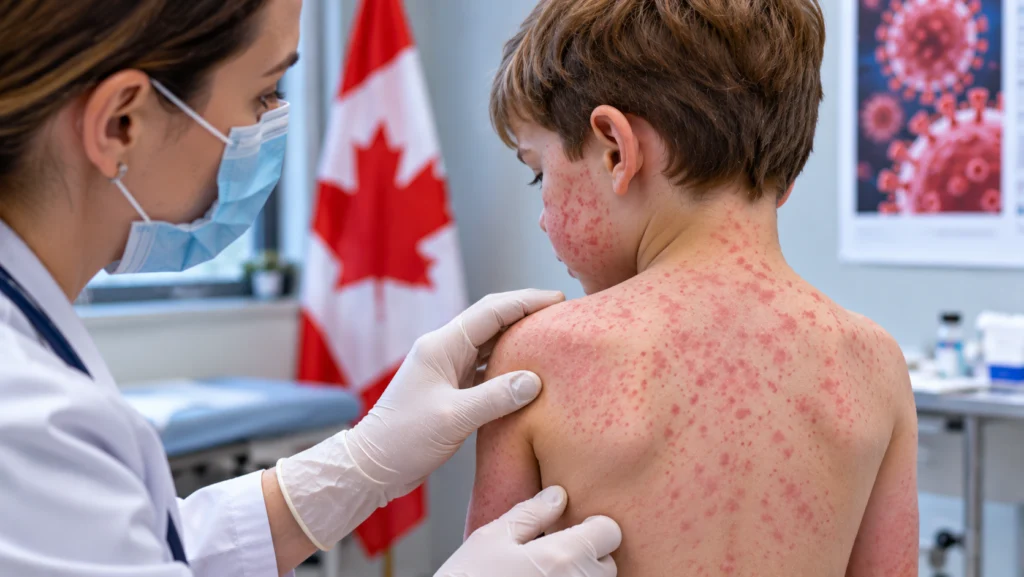
OTTAWA — The Pan American Health Organization announced that the United States, Mexico and Bolivia have lost their official status as countries that had eliminated endemic transmission of measles, a new setback for efforts to combat infectious diseases.
The announcement came on Tuesday, Nov. 17, about a year after Canada lost the same designation because the virus continued to spread within the country for more than 12 months.
The organization called on governments to intensify vaccination campaigns and strengthen epidemiological surveillance, warning that the disease is spreading more widely and threatens the health gains made over past decades.
More than 50,000 measles cases in the Americas
The Americas saw a marked rise in measles cases in 2026, after having previously brought the spread of the disease under control.
The number of confirmed cases exceeded 52,000 by Sept. 5, an increase of 3.8 times compared with the same period in 2025.
Guatemala, Mexico, the United States, Peru and Canada recorded the vast majority of cases.
Confirmed cases in Mexico exceeded 13,900 this year, while the United States recorded more than 5,400, according to data published by UNICEF on Nov. 17.
U.S. data indicate that 96 per cent of those infected were unvaccinated or had an unknown vaccination status.
Canada ends its measles outbreak
Despite the troubling developments across the Americas, Canada has made important progress in controlling the disease.
The Public Health Agency of Canada announced on Oct. 19 that the measles outbreak that began in October 2024 had ended.
The outbreak resulted in more than 6,400 cases spread across 10 Canadian provinces and territories, most of them among unvaccinated people.
Co-operation between federal and provincial health authorities helped contain the infection through contact tracing, expanded vaccination and laboratory testing.
However, the end of the outbreak does not mean Canada automatically regains its previous status, which it had held since 1998.
To regain the designation, the country must show that transmission of the strain linked to the outbreak has stopped for at least 12 consecutive months.
Why has measles started spreading again?
Public health experts link the return of measles to declining vaccination rates in a number of communities and the spread of misinformation about vaccines.
Disruptions to health services during the COVID-19 pandemic also contributed to delays in some children receiving routine vaccinations.
Communities with low immunization rates provide a suitable environment for the virus to spread, even in countries with high vaccination rates nationally.
The World Health Organization recommends vaccination coverage of at least 95 per cent with two doses of the vaccine to limit transmission of the disease within communities.
Warnings about serious complications of measles
Measles is one of the most contagious diseases. The virus spreads through the air when an infected person breathes, coughs or sneezes.
Common symptoms include fever, cough, runny nose and red eyes, as well as a skin rash.
The disease can lead to serious complications, including pneumonia, encephalitis and loss of vision, and it can result in death.
The virus can also weaken the immune system for a long period after recovery, making a person more susceptible to other illnesses.
Young children and people with weakened immune systems face greater health risks if infected.
UNICEF warns of lost health gains
UNICEF Executive Director Catherine Russell expressed concern over the return of measles to regions that had previously brought it under control.
The organization said measles vaccination has helped save about 59 million people worldwide since 2000.
It called on governments to improve access to health services, make up missed vaccine doses and strengthen public trust in vaccines.
The Americas first achieved elimination of endemic measles transmission in 2016, regained that status in 2024 and lost it in November 2025.
Health recommendations for residents of Canada
Canadian health authorities advise citizens and residents to take a number of preventive measures, chiefly:
Check that measles vaccination is up to date.
Review children's vaccination records.
Consult a doctor before international travel.
Avoid contact with others when symptoms appear.
Contact health facilities before visiting them if infection is suspected.
The authorities stress that receiving two doses of the vaccine provides strong protection against the disease.
Although the major outbreak in Canada has ended, the continued global spread of measles means new cases linked to international travel remain possible.
More from Hala Canada
- Ottawa and Ontario announce $759.1 million in support for Ford amid trade war pressures
- Alberta issues 374 new invitations to workers under its immigration program
- Leaders and experts from more than 70 countries gather in Halifax for global security forum
- Canada to issue November CPP payments early, with maximum monthly benefit of $1,507.65
- 148 people fall ill with unidentified illness aboard Caribbean Princess cruise ship
- Cadbury chocolate recalled across Canada over undeclared pistachios