
Gasoline prices fall in Canada despite the ongoing war with Iran
Canada's national average gasoline price has dropped to about $1.44 a litre as global oil supplies improve and seasonal demand for fuel declines, even as the war with Iran continues.
Translated from Arabic. Read the original بالعربية
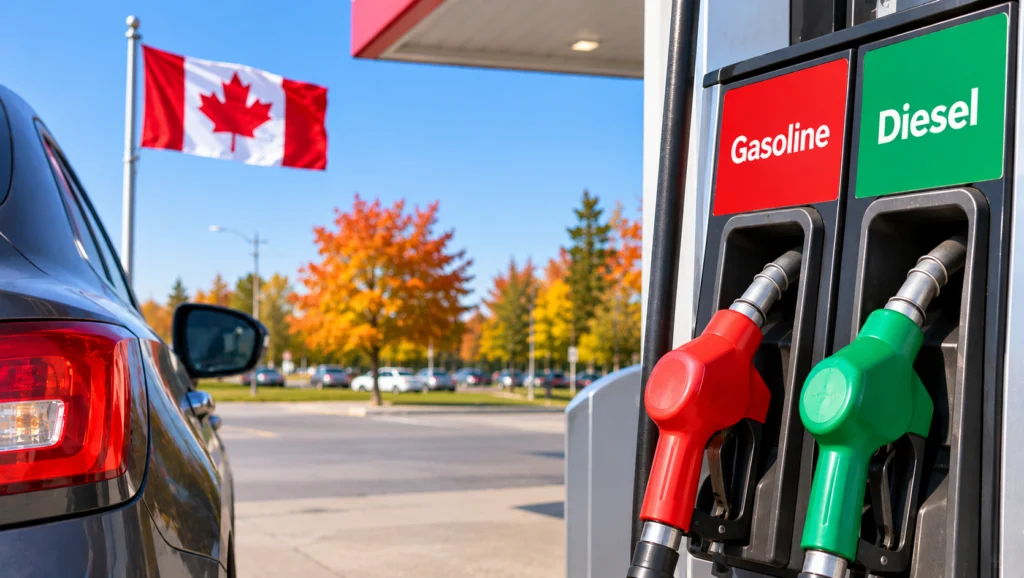
TORONTO — Gasoline prices in Canada have fallen noticeably in recent weeks, despite the ongoing war with Iran and the disruption in global energy markets since February.
The national average price on Friday morning was about $1.44 per litre, according to data from the Canadian Automobile Association.
The average was $1.71 per litre in late October, after peaking at $1.90 per litre in May.
The decline offers relative relief to Canadians who have struggled in recent months with higher fuel, transportation and living costs.
Global demand for oil falls
Jeff Rubin, former chief economist at CIBC World Markets, said oil prices have fallen to their lowest level in about two months.
He noted that lower global consumption and more diverse sources of supply have contributed significantly to the drop in prices.
He said the rise in oil prices over the past months pushed many countries and consumers to cut their energy consumption.
Rubin estimates that global oil consumption has fallen by about four million barrels a day compared with levels before the war began.
The decline has eased pressure on global markets, although concerns remain about supplies from the Middle East.
Alternative routes for oil shipments
The war has caused widespread disruption to shipping through the Strait of Hormuz, one of the most important strategic corridors for moving oil worldwide.
Oil facilities and energy processing sites have also been damaged, prompting companies to look for alternative ways to move shipments.
According to Rubin, about eight million barrels of oil are being moved through the Strait of Hormuz, while an additional five to six million barrels arrive by other routes.
These alternatives have helped reduce the shortfall in markets and eased concerns about the ability of importing countries to secure their energy needs.
Winter supports lower prices
Alongside geopolitical developments, seasonal factors play an important role in setting gasoline prices in Canada.
Demand for fuel usually declines when the summer holiday season ends and long-distance road travel drops.
The use of winter-blend gasoline, which is usually cheaper to produce, also helps ease prices at the pump.
Improved operating conditions at some refineries have also boosted the supply of petroleum products in recent weeks.
Together, these factors offer an opportunity to ease the financial burden on drivers as the holiday season approaches.
CTC News
Prices vary across Canadian provinces
Despite the decline nationally, gasoline prices still vary clearly between Canadian provinces and cities.
Manitoba and Saskatchewan recorded drops of more than 30 cents per litre compared with last month's average prices.
Some gas stations in Calgary also saw prices fall below one dollar per litre, according to energy analysts.
The differences are linked to local taxes, transportation and distribution costs, as well as competition between gas stations and their proximity to refineries.
Will gasoline prices keep falling?
Patrick De Haan, petroleum analyst at GasBuddy, expects further declines of five to ten cents per litre in the coming weeks.
However, these forecasts depend on stable global supplies and no new military escalation in the Middle East.
Any further disruption to shipping through the Strait of Hormuz could push oil prices back up.
The continuing war also leaves global markets facing uncertainty, particularly as political and military developments are hard to predict in the coming period.
Temporary relief for Canadian household budgets
Lower gasoline prices are a positive development for Canadian households that rely on cars for daily travel and getting to work.
Fuel savings could help offset some of the financial pressure from higher housing, food and basic service costs.
Transportation and distribution companies may also benefit from lower energy prices, although it may take time for this to be reflected in consumer goods prices.
However, the current decline does not mean the global energy crisis is over, or that prices will soon return to pre-war levels.
Canadian markets remain tied to international developments, as consumers wait to see whether prices keep falling through the winter.
More from Hala Canada
- Toronto Pearson ranks 32nd in TIME's 2027 list of the world's best airports
- As Trump draws closer to China and Russia, Canada and Japan move to build new partnerships
- Labour board sides with employee who said God told him not to get COVID-19 vaccine
- Canada raises required wages for temporary foreign workers in 414 occupations
- York police recover 37 stolen trucks and trailers worth $3.6 million in Brampton
- Former Ontario minister Jill Dunlop declines to answer questions on student aid fraud concerns