
Quebec to charge new fees on electric and plug-in hybrid vehicles from January 2027
Starting Jan. 1, 2027, Quebec will add a $125 annual registration fee for electric vehicles and $62.50 for plug-in hybrids, and will end some toll-free crossing privileges and a luxury-vehicle exemption.
Translated from Arabic. Read the original بالعربية
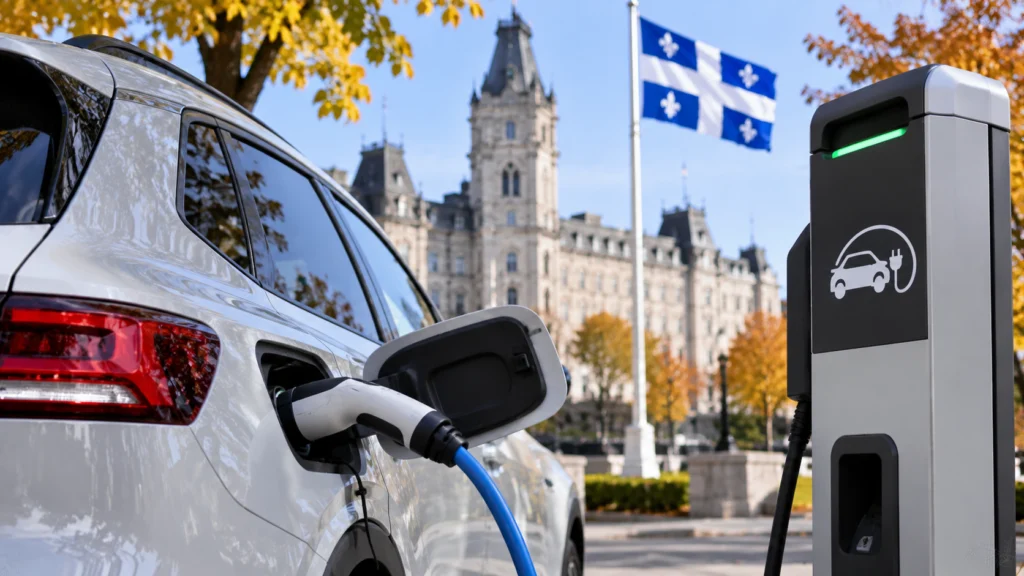
MONTREAL — Owners of electric and plug-in hybrid vehicles in Quebec will have to pay an additional registration fee starting Jan. 1, 2027, as part of government changes aimed at funding roads and public transit.
The Société de l'assurance automobile du Québec (SAAQ) confirmed that the fee will be paid when a vehicle is registered and then each year when the registration is renewed. It will not be limited to vehicles purchased after the measure takes effect.
How much will vehicle owners pay?
The SAAQ set the additional fee for 2027 at $125 for a fully electric vehicle and $62.50 for a plug-in hybrid vehicle.
These amounts are added to the usual registration costs and do not represent the total amount an owner pays each year.
This means the owner of an electric vehicle will pay an additional fee equal to double the amount charged to the owner of a plug-in hybrid.
The latter category does not automatically apply to every hybrid vehicle, as there are differences between plug-in vehicles and conventional hybrids that do not need to be connected to an external power source.
Why is Quebec introducing the new fees?
The provincial government says owners of gasoline-powered vehicles help fund infrastructure through the fuel tax, while owners of electric vehicles do not pay that tax and owners of plug-in hybrids usually pay less.
As electric vehicles become more common, the government expects fuel tax revenue to fall, even though roads still need maintenance and public transit still needs to be developed.
The new fees have therefore been presented as a way to spread the costs of the network more evenly among its users, rather than relying on fuel buyers alone.
Budget documents estimate that the new contribution will bring in additional revenue of close to $380 million by the 2029-2030 fiscal year, while the end of toll-free crossing privileges is expected to provide more than $75 million in additional revenue over the same period.
The government says this revenue is earmarked to support sustainable transportation.
End of bridge and ferry privileges
The annual fee will not be the only change facing electric vehicle owners.
Starting April 1, 2027, free passage granted to eligible vehicles with green licence plates will also end on the Highway 25 bridge, on Highway 30 and on some ferry services.
This means actual costs could rise further for people who use these crossings regularly.
People who do not use the toll routes or ferry services in question will not bear those additional charges as a result of this specific measure.
Another change affecting luxury vehicles
The start of the new fees coincides with a change to the additional registration rules for luxury vehicles.
Quebec is raising the threshold at which these fees begin from $40,000 to $62,500.
In return, it is eliminating a previous exemption from which some electric vehicles, plug-in hybrids and hydrogen fuel cell vehicles benefited.
As a result, the effect of the change on higher-priced vehicles may vary depending on the vehicle's value, its age and the conditions that apply to it.
It is important not to confuse the $125 annual fee with the luxury vehicle fees, as each has separate rules.
When will the amount appear on the bill?
The SAAQ explains that the new amount is due at registration or at the annual renewal after the decision takes effect.
A registration bill may also include insurance contributions, administrative fees and public transit contributions, depending on where the owner lives and the type of vehicle.
The province is also applying a temporary reduction to registration renewal fees for some eligible vehicles over a period running from September 2026 to August 2027, but the rules for that reduction differ from those for the new electric vehicle fee.
How can vehicle owners prepare?
Drivers should check when their vehicle registration is due for renewal, determine whether their vehicle is fully electric or a plug-in hybrid, and verify the fees for the crossings they use.
The decision does not mean all incentives are being eliminated or that a uniform fee is being imposed on all vehicles in Canada. It is a measure taken by the Quebec government within its jurisdiction.
The exact fees for each owner remain tied to the type of vehicle and to the other items added to the registration bill.
More from Hala Canada
- Six Toronto suspects on Canada's most wanted list, with rewards of up to $150,000 for two
- New drug keeps blood pressure improved for two years after treatment stops in some patients, study finds
- Pedestrian dies after being struck by vehicle in Mississauga; Peel police investigating
- Man wanted in Ontario murder case arrested hours after being named to list of Canada's 25 most wanted
- KPMG Canada reports cyber incident involving unauthorized access to clients' tax documents
- Carney avoids position on Quebecor's $31-billion bid for Telus, stresses competition