
Canadians gradually return to U.S. travel plans despite Trump-era tensions, survey finds
A new survey finds 30 per cent of Canadians are likely to visit the United States this winter, with Gen Z the most interested and baby boomers the least.
Translated from Arabic. Read the original بالعربية
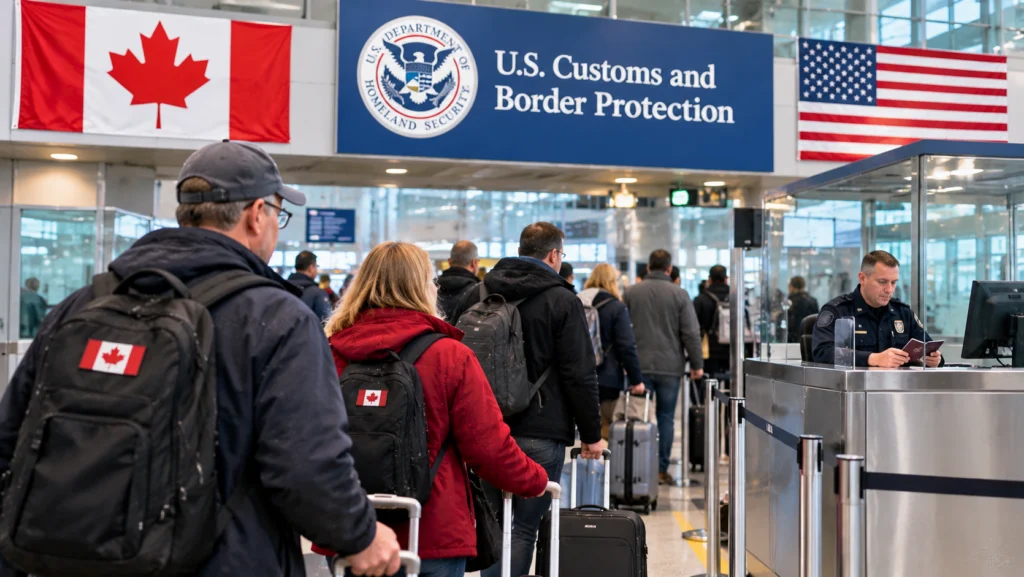
TORONTO — A new survey has found that Canadians' interest in travelling to the United States this coming winter is gradually recovering, despite continuing political and trade tensions between the two countries and concerns about rising travel costs.
Results of a survey by the Travel Health Insurance Association of Canada (THIA) show that 30 per cent of participants say they are likely to visit the United States this winter, compared with 26 per cent last year.
However, the figure remains well below levels before 2025, when 41 per cent of Canadians said they were willing to travel to their southern neighbour.
The results reflect a limited improvement in demand, without a full return to earlier levels of interest.
Young people lead the return to U.S. tourism
The study showed a clear difference between generations in their attitudes toward travel to the United States.
Fifty-two per cent of Gen Z participants said their winter plans include a U.S. destination, making them the group most interested in such trips.
By contrast, only eight per cent of baby boomers said they were willing to visit the United States, down from 10 per cent last year.
The result is notable because Canadian retirees have traditionally spent long periods of the winter in warm states such as Florida and Arizona.
The data indicate that the current improvement is driven more by young people than by older travellers.
Disputes with Trump affect travel decisions
Political relations between Ottawa and Washington remain a major factor in the decisions of Canadian travellers.
The survey showed that 37 per cent of participants consider political tensions the biggest potential obstacle to travelling to the United States.
These concerns are linked to U.S. President Donald Trump's trade policies and the tariffs imposed on Canadian products.
His repeated statements about Canada possibly becoming the 51st U.S. state have also heightened sensitivities in relations between the two countries.
These developments have affected the attitudes of some travellers, who in recent months chose alternative destinations.
Higher prices hinder holiday plans
Hesitation is not limited to political disputes, as economic pressures also play an important role.
Thirty-one per cent of participants said financial concerns are an obstacle to travel, while 28 per cent pointed to higher airfare.
Another 27 per cent said exchange rates affect their ability to afford the cost of trips.
The weakness of the Canadian dollar against the U.S. dollar raises the cost of hotels, restaurants and shopping, leading some families to review their budgets.
U.S. ahead of domestic and Caribbean destinations
Despite these challenges, the United States ranked first among participants' preferred winter destinations.
Fifteen per cent of respondents chose it as their top destination, compared with 14 per cent who prefer to spend their holiday within Canada.
The Caribbean came next at 10 per cent.
The results show the continued appeal of U.S. destinations, particularly for travellers looking for a warm climate during the Canadian winter.
However, choosing the United States as a preferred destination does not necessarily mean a final decision to book or travel.
Survey included more than 1,500 Canadians
The study was conducted in October 2026 and included 1,526 adults randomly selected from across Canada.
The survey focused on winter travel plans and the political and economic factors that influence travellers' decisions.
Canadian tourism to the United States declined in 2025, amid calls to boycott American destinations because of the trade dispute.
States such as Florida and California could benefit from any recovery in the number of Canadian visitors.
Even so, the survey results measure travel intentions, not the number of trips actually taken.
The data point to a gradual return of interest in the U.S. market, led by younger groups, while caution persists among older people.
The actual extent of the recovery during the 2026–2027 winter will depend on prices, the course of political relations and the financial capacity of Canadian households.
More from Hala Canada
- Montreal's Saint-Laurent Boulevard ranked sixth on Time Out's 2026 list of the world's best streets
- Emirates tops 2027 global airline ranking; no Canadian carriers in top 25 published
- Boy, 13, arrested after break-in at Scarborough home and knife threat against homeowner
- MIT study: timed quiet sounds during sleep may boost the brain's cleaning process
- Discontinued acne treatments in Canada raise concern among patients
- Ottawa says no new order to stockpile food and water, 72-hour preparedness advice unchanged