
Ottawa to meet Stellantis again in bid to save Brampton assembly plant
Industry Minister Mélanie Joly will meet Stellantis on Friday to try to save the Brampton plant, amid threats of legal action and concern for thousands of jobs.
Translated from Arabic. Read the original بالعربية
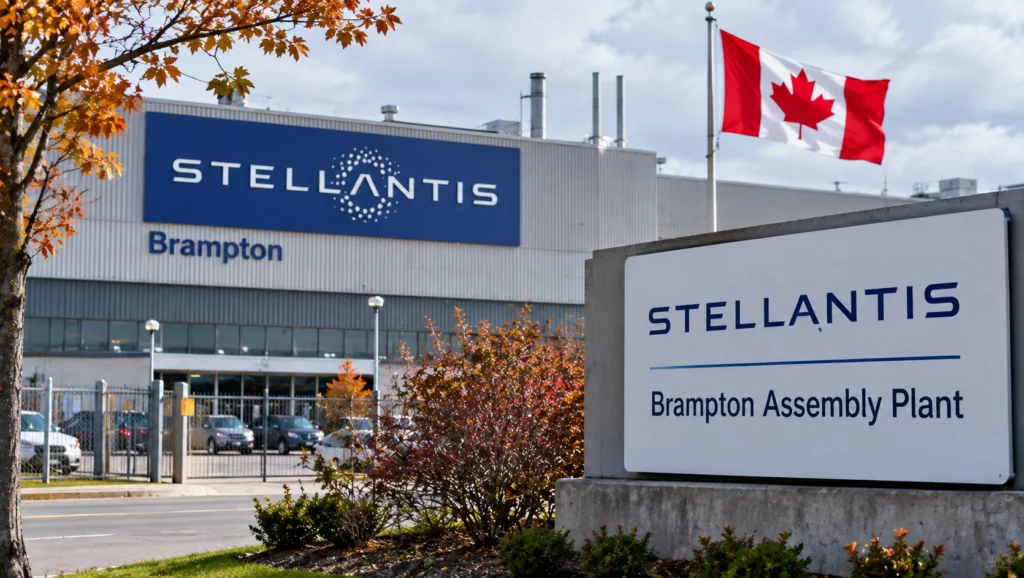
OTTAWA — Industry Minister Mélanie Joly is preparing for a new meeting with Stellantis next Friday in an effort to save the vehicle assembly plant in Brampton, Ont., after the company signed an agreement to sell it to a Canadian company that specializes in armoured vehicles.
The upcoming meeting comes amid a sharp dispute between the federal government and the automaker, after Ottawa accused it of failing to meet its commitments to maintain production and jobs in Canada.
The government, working with Ontario authorities and the union, is trying to find a solution that would prevent the deal from closing and preserve the future of the plant, which has been idle for years.
Government seeks to cancel the sale
Joly said Ottawa has not given up its efforts to prevent the sale of the plant to Roshel, a Canadian defence manufacturer.
She said the federal and provincial governments have offered Stellantis a new support package to persuade it to keep the facility and restart it.
The efforts include discussions with the company's global management, led by CEO Antonio Filosa.
The government hopes to reach an agreement that would allow vehicle manufacturing to resume, rather than the plant being permanently converted to other industrial uses.
Threat of legal action and recovery of funds
The Canadian government has sent Stellantis a formal notice accusing it of breaching the terms of a funding agreement signed in 2022.
Ottawa had pledged up to $529 million to help retool the Brampton and Windsor plants to build electric vehicles.
The minister gave the company 30 days to address the breaches, failing which it could face legal action to recover funds with interest.
Joly believes the company has not met its obligations after it halted plans to build the Jeep Compass in Brampton without offering a replacement project.
For its part, Stellantis offered to return $24 million in government support tied to the plant, an amount Ottawa considers insufficient.
More than 2,000 workers face an uncertain future
The halt in production at the Brampton plant has left more than 2,000 workers out of work, amid uncertainty about their careers.
The company began retooling the facility in 2024, before suspending plans to build the Jeep Compass in February 2025.
It later announced it was moving production of the vehicle to Illinois, amid trade tensions and tariffs imposed by the administration of Donald Trump.
The union Unifor considers the sale of the facility a blow to Canada's auto sector and is demanding concrete guarantees to protect workers.
Ontario government offers additional support
Vic Fedeli, Ontario's Minister of Economic Development, Job Creation and Trade, said the province is prepared to provide financial support to the company to keep the plant.
He said the government prefers to keep the facility ready to resume production, rather than see it sold permanently.
He cited the example of the General Motors plant in Oshawa, which had stopped production before resuming truck manufacturing.
Authorities believe that preserving existing industrial infrastructure gives Canada a better chance of attracting future investment.
What is Roshel planning for the plant?
Stellantis signed the agreement to sell the plant to Roshel on Nov. 9, without disclosing the value of the deal.
The Canadian company plans to turn the facility into an advanced manufacturing centre, focusing on vehicles and technologies related to the defence sector.
Roshel said the project could create more than 2,000 jobs as production expands, with priority consideration for hiring given to affected workers.
However, the deal remains subject to closing conditions and required approvals, and is expected to be completed before the end of 2026.
The upcoming meeting remains a test of the Canadian government's ability to protect the auto industry and jobs, amid rapid trade and industrial shifts in North America and around the world.
More from Hala Canada
- CN Rail train derails near Terrace, B.C.; two people taken to hospital
- IRCC cuts its backlog by more than 35,000 applications in September after processing 3 million
- Retraite Québec announces 2.7% pension increase for January 2027
- Toronto poll: 64% back Waymo testing with a driver, but 51% oppose driverless taxis
- Montreal police arrest 75 young people in crimes organized through social media
- 96% of Ontario public high school teachers vote in favour of strike mandate