
Toronto poll: 64% back Waymo testing with a driver, but 51% oppose driverless taxis
A Liaison Strategies poll finds most Toronto residents support testing Waymo's self-driving cars with a human at the wheel, while a majority oppose fully driverless taxi service.
Translated from Arabic. Read the original بالعربية
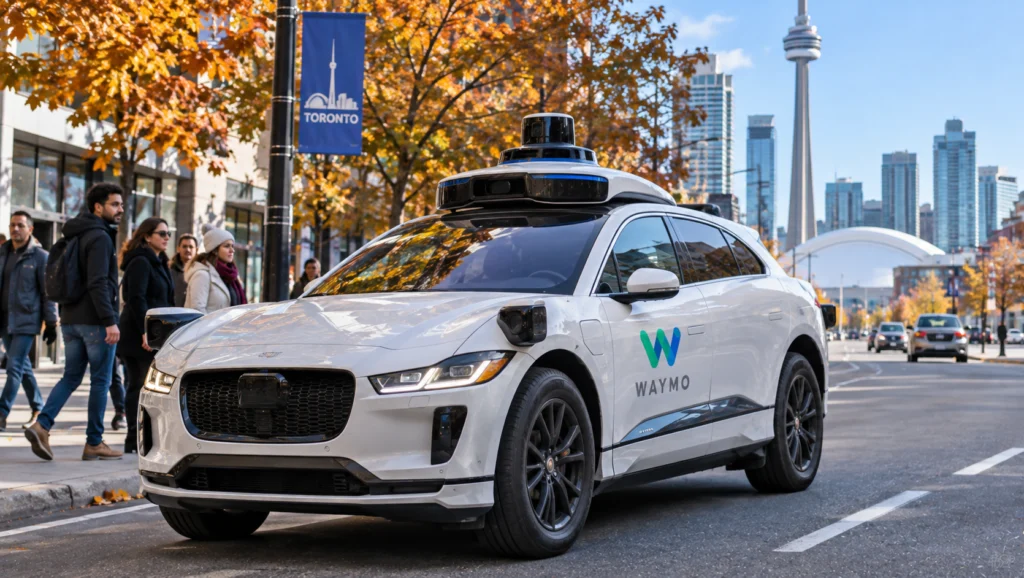
TORONTO — A new poll shows that most Toronto residents support allowing Waymo to test its self-driving cars on city streets as long as a human driver is behind the wheel, while more than half oppose paid driverless ride services.
The poll, conducted by Liaison Strategies, found that 64 per cent of respondents support testing self-driving cars with a safety driver.
Opposition rises to 51 per cent when it comes to allowing fully autonomous taxis, compared with 36 per cent who support the service.
The results reflect clear caution among residents about relying fully on technology for getting around, even though they are open to testing it gradually.
71% prefer traditional taxis
The poll showed that Toronto residents still prefer a human driver, even when the cost of the trip is the same.
When respondents were asked to choose between a traditional taxi and a Waymo vehicle, with both costing $20 and having the same arrival time, 71 per cent chose the car driven by a person.
By contrast, only 15 per cent chose a self-driving Waymo.
When the cost of the self-driving trip was reduced by five dollars, the share of those willing to use it rose to 27 per cent.
Even so, 59 per cent continued to prefer the traditional car, which suggests that lower prices alone may not be enough to change passengers' behaviour.
Concerns about the safety of pedestrians and cyclists
Road safety topped the list of concerns about operating self-driving cars in Toronto.
Forty-five per cent of respondents said these vehicles could make streets more dangerous for pedestrians and cyclists.
By contrast, 19 per cent said they could help improve road safety.
Another 24 per cent said snow and ice in winter are the biggest source of concern about the cars' ability to drive autonomously.
The safety of pedestrians and cyclists came second, at 22 per cent.
These concerns reflect the weather and traffic conditions that vehicles face in the city.
Younger residents more accepting of self-driving cars
The results revealed a clear difference between age groups in their acceptance of the new technology.
Forty-seven per cent of respondents aged 18 to 34 supported allowing driverless taxis to operate.
Support fell to only 22 per cent among residents aged 65 and older.
Despite the higher support among younger people, it did not reach a majority of respondents in that age group.
David Valentin of Liaison Strategies said Toronto residents are prepared to allow the cars to be tested, but are less prepared to give up the human driver.
What do Toronto residents want from Waymo?
Thirty-five per cent supported continuing trials with a safety driver, without allowing independent commercial rides for the public.
Another 30 per cent backed a limited pilot project operating driverless cars in certain areas.
By contrast, only 11 per cent supported allowing a permanent commercial service, while 18 per cent called for testing to stop entirely.
Waymo plans to launch self-driving ride services in Toronto in 2028. It began testing its vehicles and mapping the city's streets in October 2026.
Poll surveyed 1,000 people in Toronto
Liaison Strategies conducted the poll on November 14 and 15, 2026, with 1,000 Toronto residents taking part.
The firm used interactive voice response technology to collect the answers.
The stated margin of error is 3.1 percentage points, at a 95 per cent confidence level.
The results indicate that the success of self-driving cars in Toronto will require more than offering low-cost rides.
Building passenger trust and proving the technology's safety in winter conditions and on crowded streets may be key factors in determining the future of these services in the city.
More from Hala Canada
- CN Rail train derails near Terrace, B.C.; two people taken to hospital
- IRCC cuts its backlog by more than 35,000 applications in September after processing 3 million
- Retraite Québec announces 2.7% pension increase for January 2027
- Montreal police arrest 75 young people in crimes organized through social media
- 96% of Ontario public high school teachers vote in favour of strike mandate
- Indigenous group calls on Trump to drop 'Lake America' name for Lake Ontario