
Montreal police arrest 75 young people in crimes organized through social media
Montreal police say 75 young people have been arrested under Project Aurora, which targets crimes planned and promoted online, and that minors are being lured with false promises of money.
Translated from Arabic. Read the original بالعربية
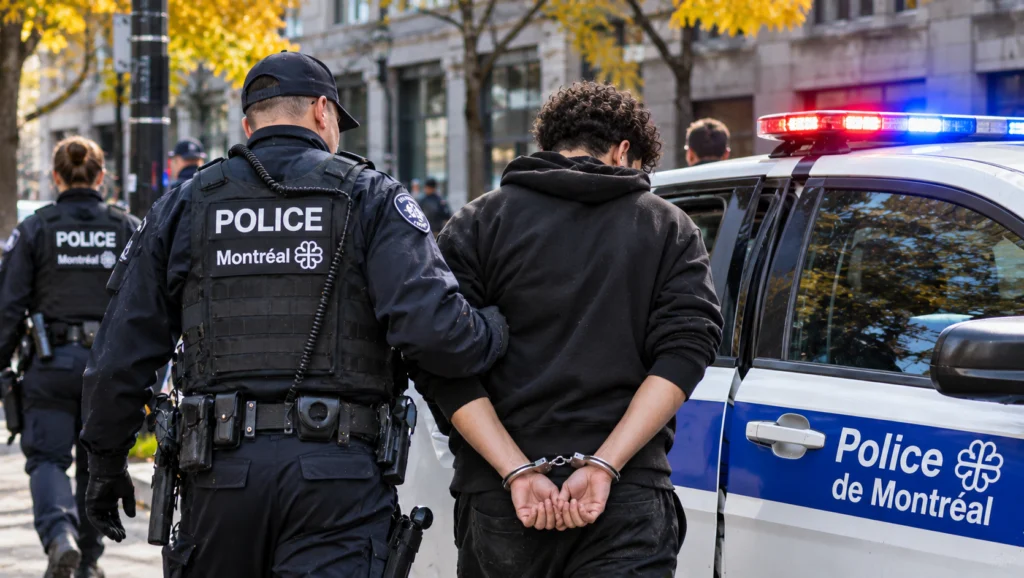
MONTREAL — Montreal police have announced the arrest of 75 young people since the launch of a specialized operation targeting crimes that are planned and promoted through social media, a development that highlights the growing exploitation of teenagers by criminal networks.
Police said the arrests were made under Project Aurora, which began in February 2026 with the aim of monitoring criminal offers posted on digital platforms and preventing violent crimes.
The cases targeted include shootings, arson and home invasions, as well as assaults linked to organized crime networks.
The data showed that those arrested range in age from 12 to 24, raising concerns that criminal recruitment methods are reaching younger age groups.
How do gangs lure young people online?
The phenomenon relies on posting offers to carry out criminal acts in exchange for money or rewards, often within chat groups on digital platforms.
Some of those behind the offers target teenagers who can be persuaded to take part in assaults or vandalism without fully understanding the consequences.
Francis Renaud, head of the organized crime division of the Montreal police, said that promises of quick money are a main way of drawing in young people.
He stressed, however, that many participants never receive the money or rewards they were promised.
Investigations indicate that recruitment is not limited to young people previously linked to gangs, but may include people from different social backgrounds.
Teenager offers $80,000 for a crime
Renaud described a notable case involving a person who posted an offer of $80,000 for carrying out a criminal act.
When investigators identified and arrested the person behind the offer, they found he was a 16-year-old living in the basement of his parents' home who did not have the money he had promised.
The case reflects the use of fictitious sums of money to lure others into dangerous activities.
The police official also pointed out that some young people seek social recognition within chat groups by claiming to have committed crimes or taken part in them.
Renaud believes the virtual recognition these individuals receive may encourage behaviour that puts their lives and futures at risk.
Project Aurora monitors threats around the clock
The operation relies on continuous monitoring of the digital spaces where offers to commit crimes circulate.
Specialized investigators analyze messages and threats and identify potential risks before they move into the real world.
Different police units also work together to share information and step in when they uncover plots targeting individuals or businesses.
Police had announced in March that 20 arrests were made during the first six weeks of the operation.
The number later rose to 75 arrests, according to the results announced Tuesday, reflecting the widening scope of the investigations.
Concerns over the exploitation of minors in serious crimes
The results come after operations targeting networks suspected of recruiting teenagers to carry out armed robberies of jewellery stores in Montreal.
Police announced last week the arrest of 14 people, including six minors aged 14 to 17, in a separate investigation into jewellery store robberies.
These developments underline the importance of confronting those who exploit the young age and inexperience of participants for criminal gain.
Police urge families to be vigilant
Montreal police continue their efforts to shut down chat groups used to recruit young people, in cooperation with technology companies.
They also urge families to watch for suspicious offers of money and for threats their children may receive online.
Authorities stress the need to report attempts at luring or threats, rather than treating them as passing electronic messages.
The operation reflects a shift in methods of fighting organized crime, with a focus on digital prevention and early intervention.
The goal remains to protect young people from exploitation and to keep false promises of money from turning into violent crimes that threaten community safety.
More from Hala Canada
- 96% of Ontario public high school teachers vote in favour of strike mandate
- Indigenous group calls on Trump to drop 'Lake America' name for Lake Ontario
- Trump adviser Navarro accuses Carney of using China to pressure the U.S.
- Wait times for medical treatment in Canada reach highest level on record, Fraser Institute study finds
- Canadian universities rank among world's best in 2027 QS sustainability ranking
- Mediacorp Canada announces its Canada's Top 100 Employers list for 2027