
Indigenous group calls on Trump to drop 'Lake America' name for Lake Ontario
The National Congress of American Indians urges President Donald Trump to reverse the renaming of Lake Ontario as 'Lake America', saying the change threatens historical heritage.
Translated from Arabic. Read the original بالعربية
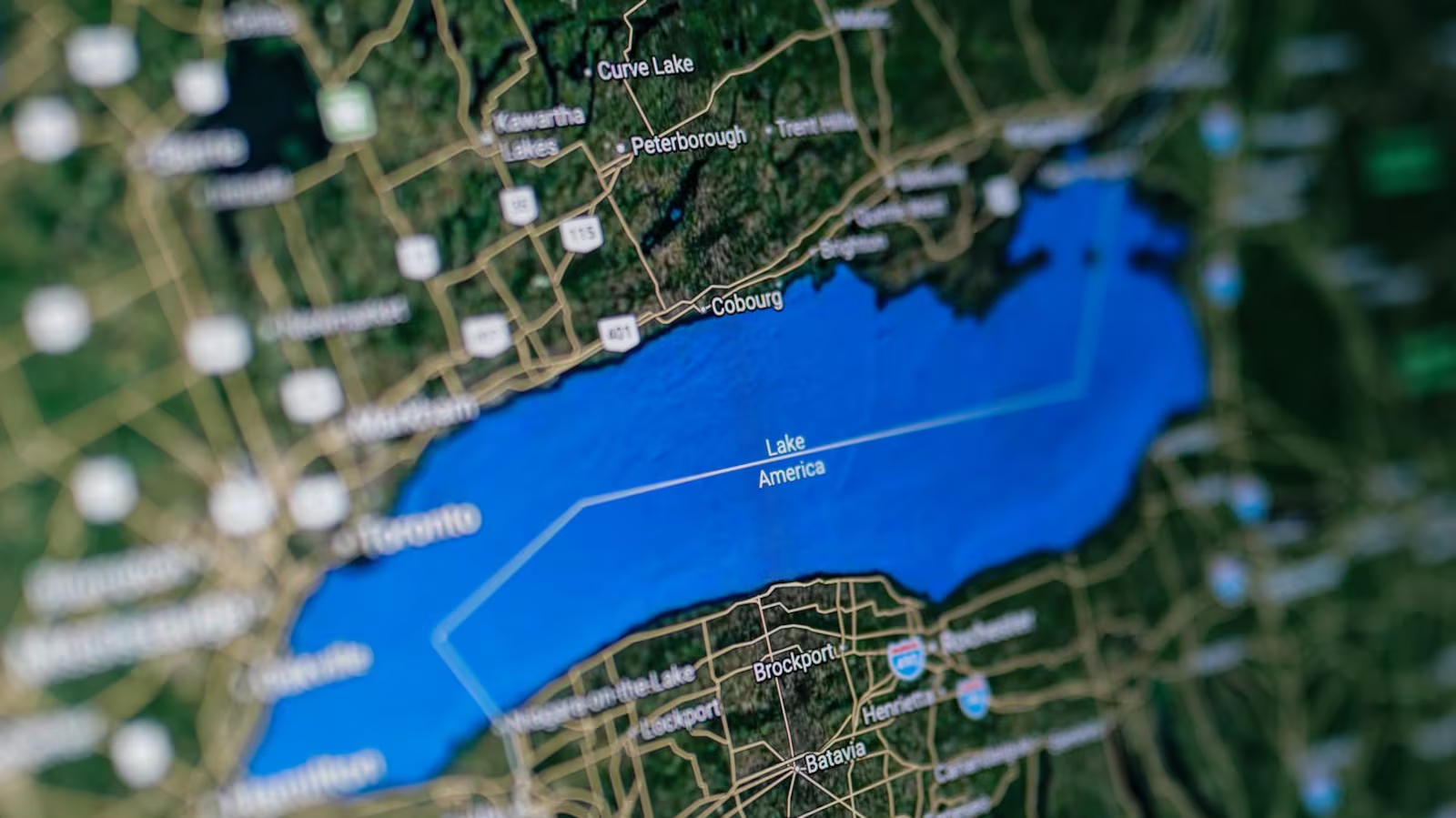
OTTAWA — A prominent U.S. organization representing Indigenous peoples has called on President Donald Trump to reverse his decision to rename Lake Ontario as "Lake America", saying the move disregards the history, culture and spiritual ties that connect Indigenous peoples to the lake.
The call came from the National Congress of American Indians, which represents tribal governments in the United States and Alaska.
The organization said that changing geographic names tied to Indigenous peoples without consulting them could erase an important part of their identity and history.
The development comes months after Trump signed an executive order in August 2026 requiring U.S. federal institutions to use the name "Lake America" instead of "Lake Ontario".
Formal resolution urges Trump to reverse course
The National Congress of American Indians passed a resolution rejecting the renaming of the lake at its annual meeting last October.
The proposal was brought forward by the Seneca Nation of Indians, an Indigenous community in western New York State.
The resolution called on the federal government to stop using the name "Lake America" and to preserve historical names that reflect Indigenous peoples' connection to geographic sites.
It also urged federal and local authorities, and the bodies responsible for naming sites, to consult the affected tribes before making any changes.
The organization stressed that protecting Indigenous names applies to lakes, rivers, mountains and other natural landmarks.
What does the name Ontario mean historically?
The organization said the name Lake Ontario comes from the languages of the Indigenous peoples who lived around the lake before Canada and the United States were founded.
In the Seneca language, the lake is known as "sga:nyodai:yoh", which means "the beautiful lake".
In the Wendat language, it is called "ontari:io", an expression referring to a beautiful, large lake.
These names are considered part of the cultural memory of Indigenous peoples and reflect their relationship with the waters and surrounding lands.
The resolution said the Seneca and other Haudenosaunee communities have used the lake since ancient times for travel, trade, diplomacy and sustaining their livelihoods.
Indigenous leader criticizes Trump
The Grand Chief of the Wendat Nation, Pierre Picard, said he was shocked by the U.S. president's decision to rename the lake.
He told The Canadian Press that the move is an attempt to erase his people's history in the region.
He explained that Wendat communities lived in parts of the St. Lawrence River valley and as far as the Great Lakes region.
Those areas contained important trade routes before and after the arrival of Europeans, reflecting the depth of the historical relationship between Indigenous peoples and the lake.
Opponents of the decision say that adopting a new name ignores these ties, which stretch back centuries.
Can Trump change the lake's name in Canada?
Trump signed an executive order on August 27, 2026, directing U.S. federal institutions to adopt the name "Lake America".
However, the scope of the order is limited to official use within the U.S. federal government.
The executive order does not give Washington the authority to require the Canadian government or international institutions to use the new name.
Lake Ontario lies on the border between Canada and the United States and is part of the Great Lakes system.
As a result, the name Lake Ontario continues to be used officially in Canada despite the U.S. decision.
Mark Carney holds to the name Lake Ontario
Prime Minister Mark Carney earlier rejected the change announced by Trump, saying the lake will remain known as Ontario in the past, present and future.
The decision also drew mocking reactions within the United States.
Wisconsin Democratic Governor Tony Evers posted a video of himself signing a napkin inside a McDonald's restaurant, satirically announcing that Lake Michigan would be renamed "Lake Wisconsin".
The ongoing controversy reflects the sensitivity of geographic names tied to cultural and historical identity, particularly for natural landmarks shared by two countries.
Indigenous organizations hope these calls will lead the U.S. administration to review its decision and respect historical names that predate the founding of modern states in North America.
More from Hala Canada
- Trump adviser Navarro accuses Carney of using China to pressure the U.S.
- Wait times for medical treatment in Canada reach highest level on record, Fraser Institute study finds
- Canadian universities rank among world's best in 2027 QS sustainability ranking
- Mediacorp Canada announces its Canada's Top 100 Employers list for 2027
- Quebecor's $31-billion bid for Telus raises concerns about phone bills and competition
- Canadian home sales fall 10.6% year over year in October; average price drops to $678,584