
Trillium College resumes classes for students who can pay, keeps others out of the classroom
Students at Ontario's Trillium College are upset after classes resumed only for those who can pay tuition without OSAP funding, amid fears of delayed graduation and lost job opportunities.
Translated from Arabic. Read the original بالعربية
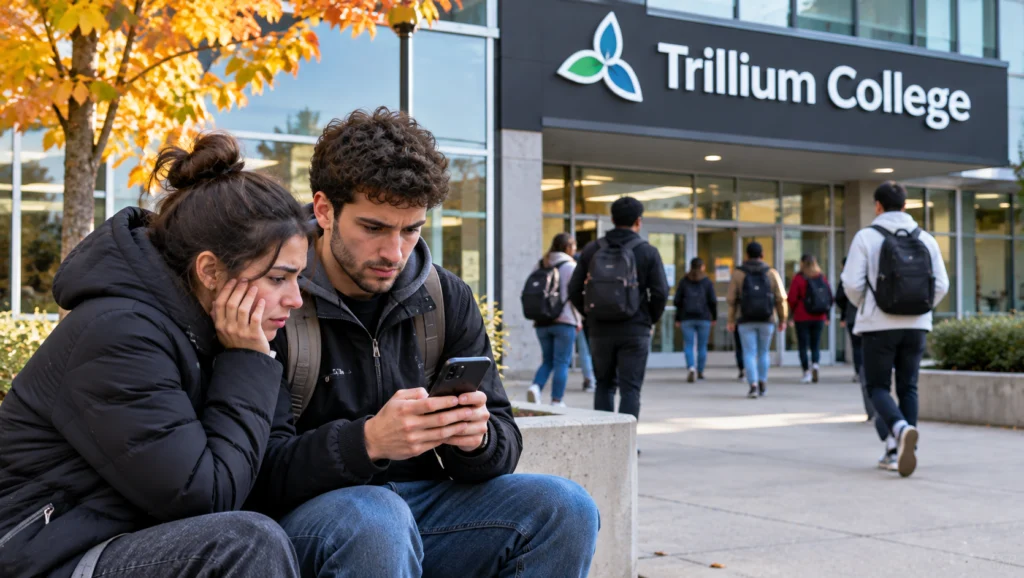
TORONTO — A decision by Trillium College in Ontario to resume classes selectively has angered a number of students. The institution allowed those who can pay fees out of pocket to return to class, while students who rely on government aid remain in a temporary suspension.
The developments come about a month after the college suspended its teaching activities. The Ontario government had halted Ontario Student Assistance Program (OSAP) payments to private post-secondary institutions while a broad review of the sector is completed.
Affected students said they can no longer continue their studies, even though some are close to graduating and have potential job offers.
The college, for its part, said it is trying to resume teaching gradually, with financial arrangements in place that would allow programs to be completed without another interruption.
Classes resume for those who can pay
Some groups of students at Trillium College returned to class last week, but the return did not include everyone.
According to a message the institution sent to students, those who cannot afford the payment plan without OSAP funding will remain in a temporary academic suspension.
Under the new payment system, fees must be paid weekly, in advance of the following week of classes.
The college also warned that missing a payment could lead to a student's attendance being suspended again.
The arrangement has drawn criticism, as students enrolled in the same program now face different situations depending on their financial means.
Trillium operates five campuses in Ontario and offers specialized career programs that help students enter the job market.
Student fears losing job opportunity after delayed graduation
Among those affected is Lauren Eaton, who is studying in Trillium College's law and security program.
She was due to graduate in January 2027, having lined up a job in security guard work.
However, she relies entirely on OSAP loans and cannot pay tuition directly from her own money.
Eaton said she felt deeply frustrated to learn that some of her classmates had returned to class while others remained out of the classroom.
She said the instructor now has a list of the students who are allowed to attend, and that a number of her classmates' names are no longer on it.
She fears that the continued suspension could delay her graduation and possibly cost her the job she was expecting.
Another student was preparing to graduate in February
Jennifer Coster, who is enrolled in the legal assistant program, faces a similar problem.
She was preparing to finish her studies in February 2027, but has been unable to return to class because of the new financial requirements.
She said she offered to pay smaller instalments than the amounts the college requested, but the institution did not accept her offer.
As a result, she remains suspended, while some of her classmates have been able to resume the program.
Coster believes students are bearing the consequences of a crisis they were not responsible for creating, and she called on the authorities concerned to find a quick solution that lets them complete their studies.
$6,000 threatens a student's graduation
Marina Whitehead, who is studying in a program in support services for people with developmental disabilities, faces other financial difficulties.
She is currently completing a field placement that requires 40 hours of unpaid work per week.
However, she still owes the college about $6,000 for an earlier part of the term, which was supposed to be covered by OSAP.
Whitehead fears she will not be able to graduate next February if the funding freeze continues.
Her case illustrates the pressure on students who combine study with practical training without having enough resources to pay overdue fees.
Why did the Ontario government halt OSAP funding?
The crisis began in early October 2026, when Ontario's Minister of Colleges and Universities, Nolan Quinn, announced a halt to OSAP payments for students at private post-secondary institutions.
The decision was part of a government investigation into suspected irregularities involving the use of student aid funds.
The government said its sector reviews had uncovered concerning indications, including allegations of improper funding applications and irregularities in enrolment and study procedures.
An external audit firm is overseeing the review of the sector, while some information has been referred to the Ontario Provincial Police.
However, these investigations do not mean that all private colleges have been found to have committed violations, or that the affected students took part in any unlawful activity.
Government promises to restore funding in the new year
Minister Nolan Quinn said the Ontario government is working to restore the flow of OSAP funding once the necessary steps to strengthen oversight are completed.
He noted that the government aims to restore funding by the new year, linking this step to progress in passing proposed legislative reforms.
The reforms include stricter verification of students' identity and enrolment, limits on growth in the number of students funded through OSAP, and greater oversight of online learning programs.
The government is also considering arrangements to provide low-interest bank loans to affected students.
However, those loans were not yet available at the time of reporting, and no specific date has been announced for the release of the suspended funding.
Trillium College explains its position
The college's spokesperson, Jennifer Miles, said the institution is working to resume teaching when financial and academic conditions allow.
She explained that groups of students not included in the first phases of the return will remain in a temporary suspension.
She stressed, however, that these students have not been automatically withdrawn from the college.
She added that the suspension of classes will continue until a suitable government funding solution is available, or until alternative payment arrangements are agreed that allow the program to be completed on a stable footing.
The college says its goal is to protect students' academic path and to avoid restarting programs that it might have to suspend again because of a lack of funding.
Fears that the private education crisis will widen
The effects of the OSAP freeze are not limited to Trillium College students.
Other private educational institutions have warned that the suspension of government payments is affecting their ability to cover operating costs and pay staff salaries.
Some institutions have also announced that they are scaling back their activities or considering alternative financial options.
A number of career college students depend on government aid to cover tuition and living expenses.
They fear that a prolonged crisis could delay graduation, force them to withdraw from their studies, or increase their debt.
While the Ontario government stresses the need to protect public money and combat fraud, students are calling for measures to ensure their educational and professional futures are not derailed.
The return of all Trillium students to class remains tied to resolving the funding problem or reaching financial arrangements that students can afford.
More from Hala Canada
- Quebecor's $31-billion bid for Telus raises concerns about phone bills and competition
- Canadian home sales fall 10.6% year over year in October; average price drops to $678,584
- Experts warn parliamentary committee that AI pricing could raise grocery costs for some Canadians
- 54% of Toronto residents want Sankofa Square's old name restored
- Canadians plan holiday spending despite financial pressure, CPA Canada survey finds
- Ontario real estate regulator issues guidance on AI-edited home photos in listings