
Canada's inflation rate holds at 3.1% in October as gasoline prices rise 30.9%
Statistics Canada says annual inflation was unchanged from September, with higher gasoline, transportation and grocery costs, as the Bank of Canada prepares for its Dec. 9 rate decision.
Translated from Arabic. Read the original بالعربية
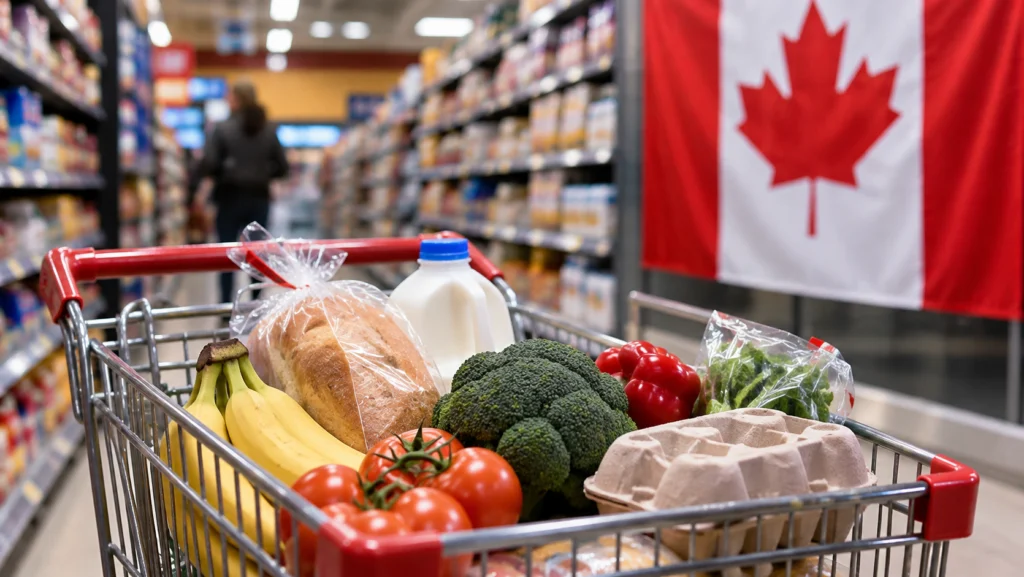
OTTAWA — Canada's annual inflation rate held at 3.1% in October 2026, unchanged from September, according to new economic data, as gasoline prices continued to climb sharply and pressure on household budgets grew.
Statistics Canada data released Monday showed gasoline prices rose 30.9% from a year earlier, remaining one of the main factors pushing up the cost of living.
The result was slightly lower than economists' expectations, who had forecast inflation would rise to 3.2%.
The consumer price index also rose 0.2% month over month in October, compared with expectations of a 0.3% increase.
The results point to the continuing effect of energy prices on the Canadian economy, even though most measures of core inflation remain close to 2%.
Gasoline prices up more than 30%
Fuel prices were the main factor keeping inflation relatively high.
Gasoline rose 30.9% year over year in October, compared with an increase of 27.8% in September.
The increase is linked to continued high global crude oil prices amid disruptions affecting energy markets.
Higher fuel prices have a direct effect on households that rely on private vehicles for daily travel.
They can also affect operating costs for businesses and for transportation and freight services.
According to the data, transportation costs in Canada rose 8.9% year over year in October.
That is faster than in September, when the increase was 8.4%.
Airfares up 21.6%
The increases were not limited to fuel for cars.
Prices for air transportation rose 21.6% in October, compared with an increase of 19.4% in September.
That means air travel is more expensive than in the same period last year, based on the average prices measured by the consumer price index.
The increase adds pressure to the budgets of households planning to travel, particularly as energy prices remain high.
However, the rate reflects an annual change in prices and does not mean that all flights or airlines raised their prices by the same amount.
Grocery prices accelerate again
The data also showed that inflation for food purchased from stores picked up again after four consecutive months of slowing increases.
Grocery prices rose 2% year over year in October, compared with an increase of 1.7% in September.
This comes even though the pace of food price increases remains lower than levels recorded earlier.
The acceleration in food inflation means consumers continue to pay higher prices on average than a year ago.
The slowdown in inflation in previous months also did not mean prices returned to their earlier levels.
Statistics Canada had reported that grocery prices rose about 33% between September 2020 and September 2026, which shows the scale of the cumulative increase facing households.
Clothing prices rise after falling in September
Price pressures also reached the clothing sector. Clothing prices rose 1.8% year over year in October, after falling 0.3% in September.
The shift reflects differing price movements across sectors, even though overall inflation was stable.
It also shows that some everyday expenses may be rising faster than the national average.
Inflation excluding energy eases to 2%
Despite higher gasoline and transportation prices, the data showed more moderate readings once energy is excluded.
Annual inflation excluding energy was 2% in October, compared with 2.1% in September.
The CPI-median measure of inflation was also unchanged at 2%.
By contrast, CPI-trim, which excludes the most extreme price changes, fell to 1.8% from 1.9% in September, according to revised data.
These measures are important to the Bank of Canada because they help it determine whether price pressures are spreading through the economy or are concentrated in specific sectors.
The October results indicate that energy remains the main factor behind higher headline inflation.
What the new figures mean for Canadian households
The data confirm that a stable inflation rate does not mean prices have stopped rising.
An inflation rate of 3.1% means the average price of the goods and services measured by the index is 3.1% higher than in October 2025.
The actual experience of households may differ depending on how they spend their money.
Families that rely on cars or travel by air may feel a larger increase in expenses than households that spend less on transportation.
Higher food prices also add pressure to household budgets, even when the annual increase is below the overall inflation rate.
Will the Bank of Canada raise interest rates again?
The October data come after the Bank of Canada raised its key interest rate last month, for the first time in more than three years.
The bank had indicated that further increases might be needed if inflationary pressures continue.
Monetary policy makers are watching in particular whether high energy costs lead to broader increases in the prices of goods and services.
Higher operating costs may lead some businesses to raise prices to offset additional expenses.
However, weak consumer demand may limit businesses' ability to pass those costs on to customers.
The Bank of Canada is scheduled to make its next interest rate decision on Dec. 9, 2026.
Although inflation holding at 3.1% was slightly better than market expectations, it does not by itself settle the direction of the next decision.
High prices continue to weigh on the Canadian economy
The October results show Canada facing a dual challenge of higher energy costs and continued pressure on purchasing power.
While core inflation measures point to a degree of stability, higher gasoline, transportation and food prices continue to affect households' daily expenses.
The key question in the coming months is whether these pressures will remain tied to energy or gradually spread to other sectors.
Upcoming data will be decisive in assessing the path of inflation and determining the steps the Bank of Canada may take to achieve economic stability.
More from Hala Canada
- Quebecor offers to acquire TELUS in a deal valued at about $31 billion
- Canada gives details of up to 200,000 additional permanent residence spaces for 2027
- Reports of AI-generated child sexual exploitation material top 400,000, up 8,411% in two years
- Carney says Canada could work with Chinese automakers if talks with Trump fail
- Canada, Australia, Italy and UK call on Israel to allow aid into Gaza
- Could all flights in Canada be halted? Expert explains the key difference with the U.S.