
Toronto ranks 20th in Oxford Economics index of world's top 1,000 cities, first in Canada
Toronto placed 20th globally and first in Canada in Oxford Economics' 2026 ranking of the world's top 1,000 cities, ahead of Vancouver, Montreal and Calgary.
Translated from Arabic. Read the original بالعربية
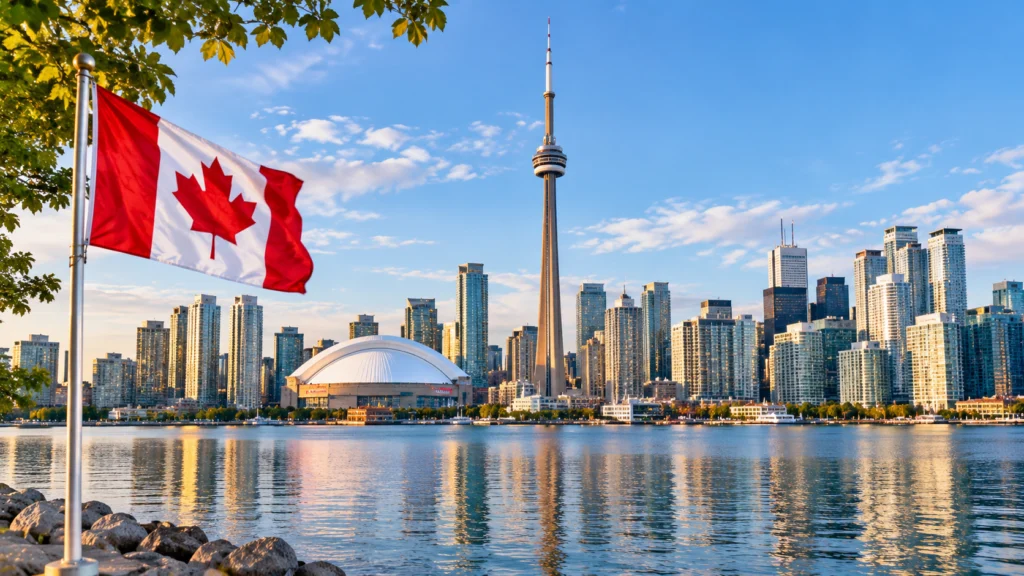
TORONTO — Toronto has achieved a new international distinction, ranking 20th in the world in the 2026 ranking of the top 1,000 cities, published by the global economic research firm Oxford Economics.
Toronto came first among Canadian cities, ahead of Vancouver, Montreal and Calgary, thanks to its strong performance in economy and human capital.
The city received an overall score of 84.9 points, placing it in the top 2 per cent of the cities covered by the index.
The ranking is based on five main criteria: economy, human capital, quality of life, environment and governance. It aims to assess cities' current performance and their future prospects.
Toronto ahead of Vancouver and Montreal
The report showed that Toronto led Canadian cities by four places over Vancouver, which ranked 24th in the world.
Vancouver received an overall score of 83.3 points, while Montreal came in 62nd, followed by Calgary in 69th place.
The Ottawa–Gatineau region ranked 104th in the world.
The results confirm the continued strong presence of Canadian cities in international indexes, despite challenges related to the cost of living, housing and services.
Ranking of major Canadian cities in 2026
- Toronto: 20
- Vancouver: 24
- Montreal: 62
- Calgary: 69
- Ottawa–Gatineau: 104
- Edmonton: 125
- Kitchener–Cambridge–Waterloo: 133
- Halifax: 151
- Quebec City: 161
- Winnipeg: 168
- Hamilton: 193
These rankings show the gaps between Canada's major cities in economic strength, environment, services and human resources.
Strong economy and education support Toronto's ranking
Toronto achieved outstanding results in two of the most important criteria in the ranking.
It ranked 14th in the world for human capital, with 79 points.
It also came 19th for economic performance, with a score of 77.7 points.
This performance reflects the city's standing as a major centre in Canada for business, financial services, higher education and innovation.
Toronto benefits from major universities and research institutions, along with a diverse job market that attracts skilled workers and international companies.
The results indicate that a strong economy and the availability of skilled people were among the main factors that helped the city enter the top 20.
Quality of life and environment lower Toronto's ranking
Despite the strong performance in economy and human resources, the index results revealed weaknesses in other criteria.
Toronto ranked 259th in the world for quality of life, and 292nd on the environmental criterion.
In governance, the city placed 61st in the world.
This disparity indicates that economic strength does not necessarily mean leading in all measures of daily life.
It also shows that the city has opportunities to improve its ranking by developing the quality of services, infrastructure and environmental sustainability.
New York leads the world, London second
New York took first place globally in the 2026 Oxford Economics index, followed by London and then Paris.
Seattle came fourth and San Francisco fifth, while Dublin ranked sixth.
The top 10 also included Boston, San Jose, Tokyo and Zurich.
Toronto ranked ahead of prominent global cities such as Amsterdam, Berlin, Geneva, Brussels and Singapore.
It came immediately after the German city of Munich, which ranked 19th.
What the ranking means for those who want to live in Canada
The ranking strengthens Toronto's standing as one of the world's leading economic and urban centres.
This international profile may help attract companies, investment, skilled workers and international students.
However, choosing the right city to live, study or work in also depends on personal factors, such as housing costs, income, job opportunities and available services.
The Oxford Economics index is not an independent ranking of the cheapest or most liveable cities, but a comprehensive assessment that combines five different criteria.
While Toronto remained at the top of Canadian cities, the results showed that other cities, such as Vancouver, Montreal and Calgary, continue to compete globally.
More from Hala Canada
- Quebec premier calls first meeting with Carney 'pleasant' after weeks of political tension
- A Canadian grandparent may make you a citizen and put your permanent residence application on hold
- Two Soup Time soups recalled in Canada over undeclared wheat
- Poll: Most Canadians oppose a U.S. trade deal that keeps tariffs on Canadian goods
- Carney announces up to $560 million to protect tropical forests worldwide
- Carney arrives in Cambodia for Francophonie summit ahead of meeting with Quebec premier