
Stelco to recall 175 laid-off workers at Hamilton plant on Dec. 1 and pay lost base wages
Stelco says it will bring back all 175 temporarily laid-off workers at its Hamilton, Ont., plant from Dec. 1, 2026, with retroactive pay, after weeks of tension with the federal government.
Translated from Arabic. Read the original بالعربية
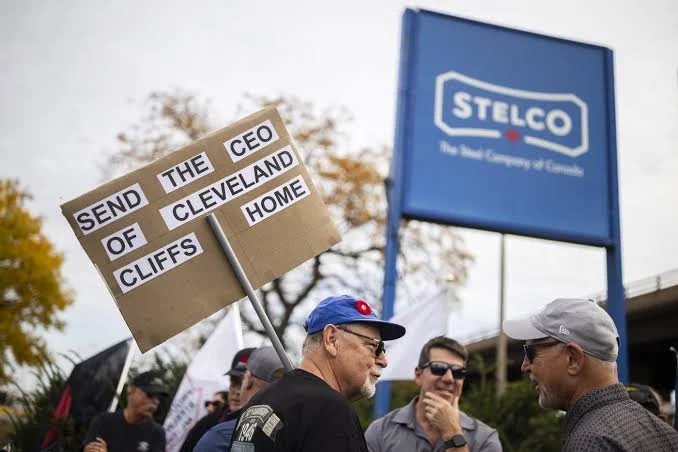
HAMILTON — Canadian steelmaker Stelco has announced that it will bring back all 175 workers it temporarily laid off at its plant in Hamilton, Ontario, starting Dec. 1. The move marks a significant breakthrough after weeks of tension between the company and the federal government.
The company, which is owned by U.S.-based Cleveland-Cliffs, said it has reached agreements with enough customers to resume steel finishing operations at the plant.
It also pledged to compensate workers for the base wages they lost during the temporary layoff, a decision that could ease the financial pressure faced by the affected families.
175 workers to return to their jobs in December
In an official statement issued on Friday, Nov. 13, Stelco said the workers' return will begin on Dec. 1, 2026.
The company had suspended finishing operations at the Hamilton plant on Sept. 28, citing worsening market conditions and weak demand for cold-rolled and coated steel products.
The decision led to the temporary layoff of 175 employees, amid earlier concerns that a larger number of workers could be affected.
Management said resuming industrial operations will take several weeks, but it decided to recall all employees on the set date without waiting for production lines to be fully restarted.
Workers to be compensated for the layoff period
The announcement included a commitment to repay the regular base wages workers would have received during their time off.
This means the affected employees will receive retroactive compensation for the temporary layoff period, according to the company's commitment.
However, the statement did not specify the total value of the compensation or details on when it will be paid.
Stelco president Paul Simon said the company values its customers' trust and the patience of its workers, and their ability to endure difficult conditions over the past weeks.
He said the new purchase agreements helped lead to the decision to restart.
U.S. tariffs behind the steel industry crisis
The crisis stems from pressures on the Canadian steel industry caused by U.S. tariffs and growing competition from foreign imports.
Stelco had said the market for galvanized and cold-rolled steel products no longer provided the level of demand needed to keep some of its operations running profitably.
The company accused the Canadian government of not taking enough action to address the flow of imported products and protect domestic manufacturers.
In its latest announcement, however, it said a number of customers have pledged to increase their purchases, which allowed activity to resume without waiting for new changes in trade policy.
Sharp dispute between the federal government and Stelco's owners
The earlier layoffs angered federal Industry Minister Mélanie Joly, who said the decisions could conflict with commitments Cleveland-Cliffs made when it acquired Stelco in 2024.
Ottawa had approved the deal after obtaining undertakings related to preserving jobs and industrial activity in Canada.
In October, Joly called on the company to bring the workers back and present a clear plan to deal with the crisis.
She also warned that legal action could be taken if the group was found to have breached its commitments.
For its part, Cleveland-Cliffs said it was complying with the agreed conditions, arguing that weak demand and foreign competition had pushed it to temporarily reduce operations.
Future of the Hamilton plant after production resumes
The decision to bring workers back is a positive development for the steel sector in Hamilton, one of the important industrial sectors for Ontario's economy.
The company had considered moving part of its operations to its Lake Erie facility in Nanticoke, with alternative jobs offered to some of the affected employees.
But increased customer orders allowed it to reverse the suspension of finishing operations in Hamilton.
Even so, the Canadian steel industry continues to face challenges related to trade with the United States, production costs and international competition.
The success of the restart and the stability of demand in the coming months will be important factors in determining the plant's ability to preserve jobs on a lasting basis.
More from Hala Canada
- Flu activity rising across Canada, with early start to 2026-2027 season
- Two children and a woman killed in collision in eastern Alberta
- PAL Airlines plane loses a wheel for second time in under two weeks, lands safely
- Several dead in boat incident in Squamish area amid B.C. flooding
- McGill researchers uncover network of 293 fake accounts posting AI videos aimed at Canadians
- More than 70,000 Quebec students authorized to strike over cost of living, education funding