
LMIA processing times rise to 102 business days for high-wage jobs in Canada
Employment and Social Development Canada data show average LMIA processing times rose in most categories in October 2026, with high-wage positions passing 100 business days for the first time this year.
Translated from Arabic. Read the original بالعربية
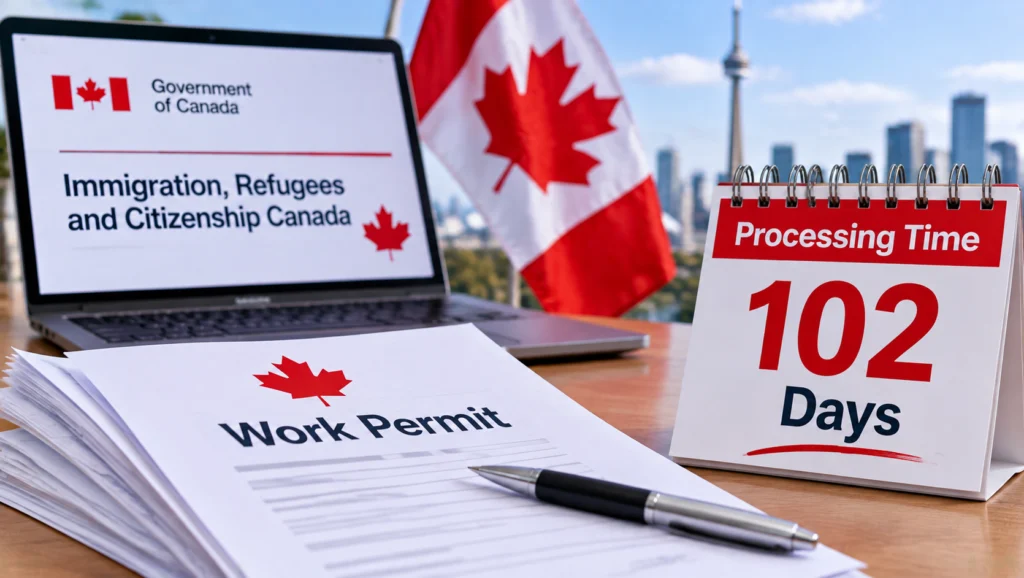
OTTAWA — The Canadian government has reported a further increase in processing times for Labour Market Impact Assessment (LMIA) applications, which are required to hire many foreign workers. The average wait exceeded 100 business days for the first time this year in the high-wage category.
Data published Thursday, Nov. 12, by Employment and Social Development Canada show that processing times rose in most categories of the Temporary Foreign Worker Program in October.
The permanent residence pathway recorded the largest increase, with the average processing time rising by 15 business days compared with September. This could delay the plans of some employers and of workers hoping to settle in Canada.
Latest LMIA processing times in Canada
Official figures show large differences between foreign worker hiring programs, with processing times ranging from 9 to 102 business days.
- Global talent: 9 days in September 2026; 9 days in October 2026
- Agricultural workers: 22 days in September 2026; 20 days in October 2026
- Seasonal agricultural workers: 7 days in September 2026; 11 days in October 2026
- High-wage positions: 98 days in September 2026; 102 days in October 2026
- Low-wage positions: 82 days in September 2026; 86 days in October 2026
- Permanent residence pathway: 79 days in September 2026; 94 days in October 2026
The figures are counted in business days, not calendar days, and they are processing averages rather than guaranteed timelines for each application.
The general agricultural program was the only one to improve, with a decrease of two days, while processing times for Global Talent applications held steady at nine days.
High-wage category has the longest wait
The average processing time for high-wage positions rose to 102 business days, compared with 98 days in September.
This is the highest figure recorded for the category in 2026, as the average wait passed the 100-day mark for the first time.
Processing times for low-wage positions also rose, to 86 days, an increase of four days from the previous month.
According to the report, the wait for this category is now 76 per cent higher than it was in January.
These developments reflect added pressure on employers who rely on foreign workers to fill shortages in some jobs.
Why LMIA approval matters for foreign workers
Many Canadian employers need a positive Labour Market Impact Assessment before hiring a foreign worker through the relevant program.
The assessment is intended to confirm that no suitable Canadian citizen or permanent resident is available to fill the job, and that hiring the foreign worker will not negatively affect the labour market.
Once approved, the employer gives the worker a copy of the decision and the LMIA number, along with the job offer and contract, to use in the work permit application.
The approval remains valid for a maximum of six months, and the work permit application must be submitted before it expires.
The average LMIA processing time does not include the period required to advertise the job, which can range from 14 days to eight weeks depending on the program.
New restrictions on low-wage jobs
The Canadian government continues to apply restrictions on processing LMIA applications for low-wage jobs in urban areas where the unemployment rate is 6 per cent or higher.
Some occupations are exempt, and the list was expanded on Nov. 6 to include early childhood education workers.
The list of areas affected by these restrictions is scheduled to be updated on Jan. 8, 2027.
Through these measures, the government aims to give priority to workers already in Canada, while keeping the option of hiring foreign workers in sectors facing genuine shortages.
Canada lowers targets for bringing in foreign workers
The longer processing times come as the federal government moves to reduce the number of temporary foreign workers.
Canada set a target of admitting 60,000 workers through the program in 2026, compared with 82,000 the previous year.
Between January and August, the program admitted 29,485 workers, a decrease of 31.6 per cent from the same period in 2025.
The government plans to lower the target to 50,000 workers a year for the period from 2027 to 2029.
It also aims to reduce the share of temporary residents to less than five per cent of the country's population by the end of 2027.
Despite these restrictions, Canada continues to provide pathways for qualified workers, giving priority to the needs of the domestic economy and to sectors facing labour shortages.
More from Hala Canada
- Nvidia shares fall more than 30% from peak after Jensen Huang resigns; analysts divided
- Canada to test national Alert Ready emergency system on Nov. 18
- Costco pulls Blue Moon drink from Canadian stores over possible metal pieces
- Savings squeeze hits Canadian millennials, with 55% citing too little income left over
- U.S. imposes new health declaration on air travellers from Canada over Ebola
- Teen sentenced for shooting at two synagogues in the Toronto area