
Nvidia shares fall more than 30% from peak after Jensen Huang resigns; analysts divided
Nvidia stock is down more than 30% from its high after the resignation of CEO Jensen Huang, and analysts are split over whether investors should sell or hold.
Translated from Arabic. Read the original بالعربية
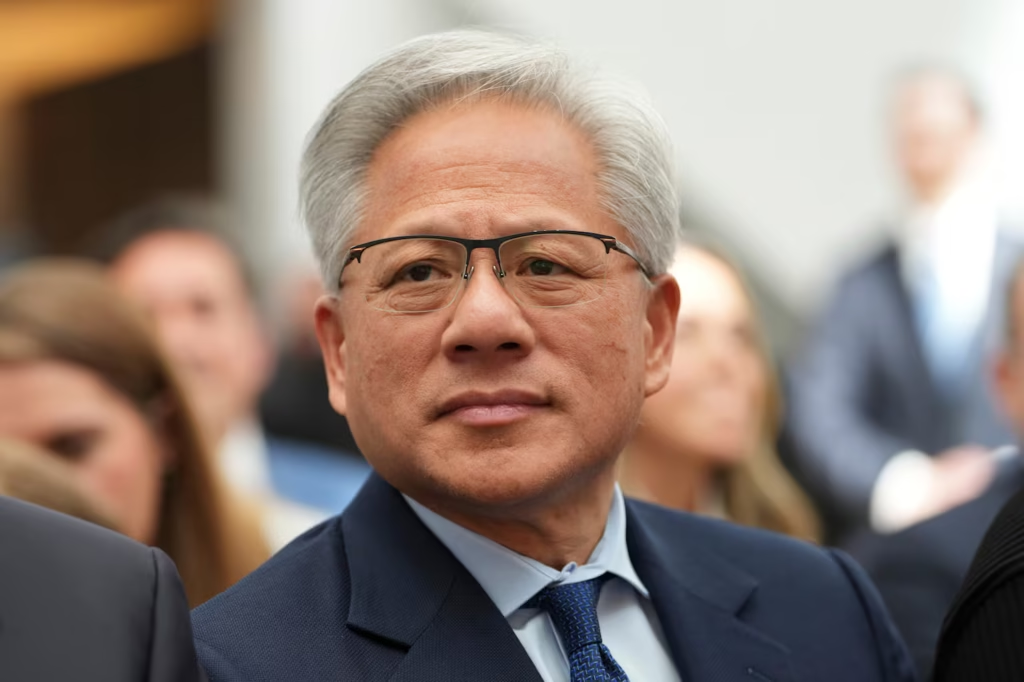
NEW YORK — Investors in U.S. chipmaker Nvidia face a difficult decision on whether to hold or sell their shares, after the company suffered a sharp decline that coincided with the sudden resignation of its chief executive and co-founder, Jensen Huang.
The developments have raised concerns about the future of the company that led the global artificial intelligence boom, particularly because Huang played a central role in building its relationships with major technology companies, customers and suppliers.
Despite the pressure, some investors see the lower prices as a buying opportunity, while analysts warn that the risks tied to the change in leadership are not yet fully clear.
Nvidia stock loses more than 30% of its value
Nvidia shares were highly volatile in trading on Thursday, Nov. 12, opening sharply lower after the announcement of Huang's resignation.
The stock fell to US$148.80 during the session before cutting its losses and closing at US$166.19.
The closing price is a decline of 4.34% from the previous session, when it ended trading at US$173.73.
The stock is also down about 30.5% from its peak on Oct. 6.
The selling wiped hundreds of billions of dollars from the company's market value, before later buying helped to narrow the losses.
Huang's resignation adds to investor concerns
Nvidia formally announced on Thursday that Huang was leaving his post as chief executive and his seat on the board, after leading the company since it was founded in 1993.
The resignation followed reports about personal relationships that prompted an internal investigation into whether Huang may have been the target of an attempt by foreign intelligence.
The board said earlier that it had no evidence that the company's secrets or U.S. national security had been compromised.
Nvidia named chief financial officer Colette Kress interim chief executive and has begun a search for a permanent successor.
Investors' concerns centre on whether the new leadership can maintain the growth strategy and business relationships that Huang established.
Analysts warn the decline could continue
Some analysts say the steep drop does not necessarily mean the stock has reached its lowest point.
Stacy Rasgon, an analyst at Bernstein, downgraded his rating on Nvidia stock because of the uncertainty surrounding the change in leadership.
Although he expects the company's revenue to keep growing, the concern is whether the new chief executive can make up for the role Huang played.
Technical analysis also points to the possibility of further pressure on the stock if it loses important support levels.
The range of US$135 to US$150 is among the scenarios some analysts are discussing, but it is not a confirmed forecast of the future price.
Some investors see the drop as a buying opportunity
Other investors, by contrast, are holding to their positive outlook on Nvidia, citing continued global demand for AI chips.
They argue that the departure of the chief executive, while significant, does not erase the company's technology or its relationships with customers.
Thursday's trading showed notable buying of the stock by retail investors after the decline.
That demand helped the price recover from its sharp losses at the start of the session.
But analysts warn that buying during a decline carries risks, particularly when the causes of the drop are tied to management changes whose outcome has not been settled.
Upcoming financial results could set Nvidia's direction
Markets are awaiting Nvidia's financial results for the third quarter of its 2027 fiscal year, scheduled for Tuesday, Nov. 17.
Investors are expected to focus on revenue growth, demand for AI processors and the company's outlook for coming periods.
Statements from the interim management on production and sales strategy and on the selection of a permanent chief executive will also draw attention.
Strong results could help ease concerns, while any signs of weakness or changes in guidance could add to volatility.
Is selling or holding the better choice?
There is no single decision that suits all investors, as the choice depends on the length of the investment, the ability to bear losses and the size of exposure to technology stocks.
Selling after a sharp decline can turn unrealized losses into actual losses, while holding the stock carries the possibility that the decline continues.
Buying more increases exposure to risk if the pressure on the company continues.
For that reason, following the Nov. 17 results and developments in the leadership change remain among the main factors that can help investors assess their options without being swept along by short-term market swings.
More from Hala Canada
- Canada to test national Alert Ready emergency system on Nov. 18
- Costco pulls Blue Moon drink from Canadian stores over possible metal pieces
- Savings squeeze hits Canadian millennials, with 55% citing too little income left over
- U.S. imposes new health declaration on air travellers from Canada over Ebola
- Teen sentenced for shooting at two synagogues in the Toronto area
- Ottawa adjusts value threshold for taxes on zero-emission vehicles