
Canada to test national Alert Ready emergency system on Nov. 18
The test on Nov. 18, 2026, will send sample alerts to phones, television and radio in all provinces and territories; officials say no action is needed when the message arrives.
Translated from Arabic. Read the original بالعربية
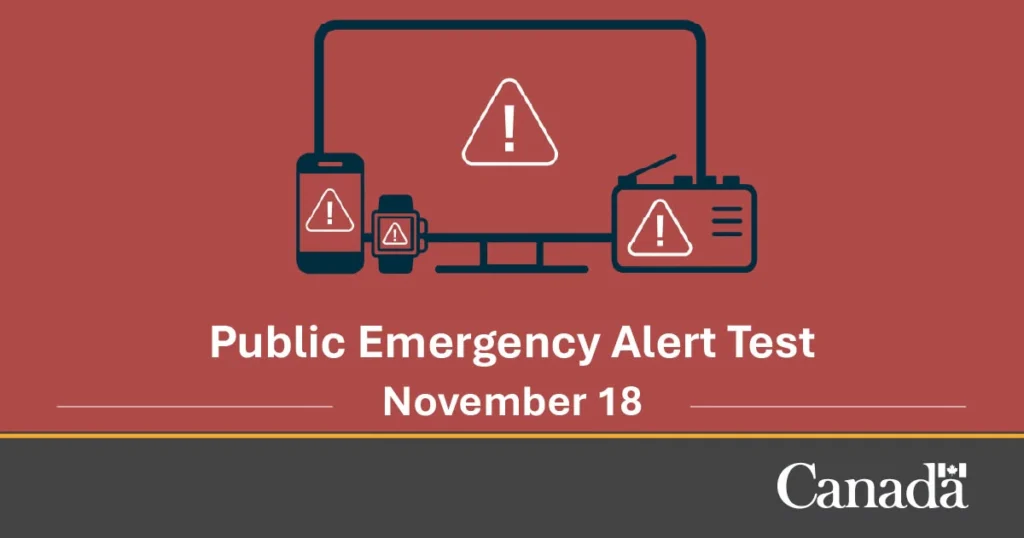
OTTAWA — The authorities responsible for Canada's national Alert Ready emergency alerting system have announced a large-scale test on Wednesday, Nov. 18, 2026. It will involve warning messages sent to mobile phones, television and radio in provinces and territories across the country.
The test is meant to confirm that the system can deliver urgent warnings to residents in real emergencies, such as floods, severe storms, wildfires and other hazards.
The organizers stressed that the messages will be tests only and do not signal any actual danger. They urged residents to become familiar with how the alerts look and how to respond to them.
When the emergency alert test will take place
The national test is scheduled for Nov. 18. Alerts will arrive at local times set by the authorities in each province or territory.
In Ontario, the test message is to be sent at 12:55 p.m. Eastern time, according to published information about the timing of the test.
Residents of other provinces can check the official schedule for the time set for their region. Some times may be updated before the test.
The exercise is intended to test how well telecommunications networks and media outlets can distribute messages within a short period, which can help identify any technical problems.
What will happen to phones on Nov. 18
When the test begins, mobile phones compatible with the system may sound a loud, distinctive alarm along with a message on the screen.
The message will state that the alert is only a test of the national emergency system and that no action is needed to protect people or property.
Similar alerts will also be broadcast on participating television and radio channels and may temporarily interrupt regular programming.
The distinctive sound is designed to get residents' attention quickly so that they can recognize it in an actual emergency.
The authorities say testing the system helps raise public awareness and improve preparedness for emergencies.
Can emergency alerts be turned off?
Alert Ready does not offer users a general option to opt out of receiving official alerts on compatible devices.
Messages are sent to eligible phones located in the targeted area over modern wireless networks, including LTE and 5G.
Not every phone will necessarily receive the message, however, as that depends on whether the device is compatible, its operating system updates and cellular coverage.
How the alert appears or sounds may also vary depending on the phone's settings and model.
Receiving the messages does not require signing up for a special service or downloading an additional app, because distribution is carried out through participating wireless networks.
When the system is used
Alert Ready is used to send urgent warnings about hazards that may threaten residents' lives or safety.
These include tornadoes, floods, wildfires and serious incidents, as well as child abduction alerts known as AMBER Alerts.
Authorized government and public safety agencies determine the nature of the hazard and the geographic area that an alert should reach.
Actual messages may include instructions to evacuate, take shelter indoors or avoid certain areas.
These differ from the Nov. 18 notice, which is meant only to test the system.
Important instructions for residents before the test
The authorities recommend reading the alert message when it arrives and checking that it includes wording indicating it is a test.
Residents do not need to call emergency services or 911 to ask about the test message, so that responders' ability to handle real calls is not affected.
People are also advised to make sure their mobile phones are up to date and to know the basic steps for preparing for emergencies at home.
The test is part of a regular program normally carried out twice a year, in May and November, to ensure the national system is ready.
Schedules and updates can be followed through the official Alert Ready testing schedule.
More from Hala Canada
- Nvidia shares fall more than 30% from peak after Jensen Huang resigns; analysts divided
- Costco pulls Blue Moon drink from Canadian stores over possible metal pieces
- Savings squeeze hits Canadian millennials, with 55% citing too little income left over
- U.S. imposes new health declaration on air travellers from Canada over Ebola
- Teen sentenced for shooting at two synagogues in the Toronto area
- Ottawa adjusts value threshold for taxes on zero-emission vehicles