
Canada proposes extending ban on foreign home purchases to 2029: what it means
Ottawa proposes extending the ban on foreign purchases of existing homes to January 2029, with an exception for Americans who hold Canadian citizenship by descent and an opening for new homes.
Translated from Arabic. Read the original بالعربية
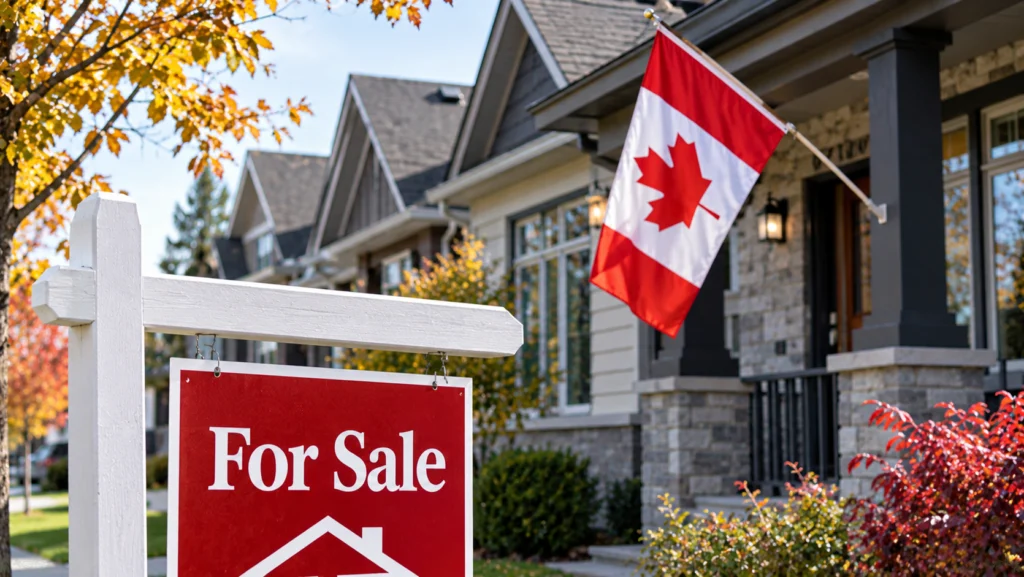
OTTAWA — The Canadian government has unveiled a proposal to extend the ban on purchases of existing residential properties by foreigners for two more years, to January 1, 2029, in a move aimed at protecting opportunities for citizens and permanent residents in the housing market.
The proposal is part of the 2026 federal budget, which the government tabled on November 5, amid continuing pressure from housing costs and affordability.
However, the expected changes could open the door to certain groups of buyers, especially Americans who are entitled to Canadian citizenship by descent, even if they have never lived in the country.
Ban on home purchases extended to 2029
The law banning purchases of residential property by non-Canadians came into force on January 1, 2023.
Its aim was to limit the effect of foreign investment on the housing market, especially in cities struggling with high property prices.
The ban was previously extended to January 1, 2027, before the government proposed extending it again to the start of 2029.
Under the new proposal, most foreign buyers who are not covered by exceptions would continue to be barred from buying existing residential properties and resale properties in the areas covered by the law.
At the same time, Ottawa proposes lifting the ban on newly built residential properties, which would allow foreign buyers to invest in them.
The proposed extension still needs to complete legislative and regulatory steps before it is formally adopted.
Exception for Americans with Canadian roots
Some American citizens may benefit from an important exception if they can show that they hold Canadian citizenship by descent.
Bill C-3 came into force on December 15, 2025, removing restrictions that had prevented Canadian citizenship from being passed on to certain generations born outside the country.
Because of the changes, some people born outside Canada before that date have become eligible to have their Canadian citizenship recognized through a parent, grandparent or earlier generations.
This does not mean that every American with Canadian ancestry automatically receives citizenship, as the legal requirements must be met and the qualifying line of descent must be proven.
Once citizenship is proven, the person is not treated as a foreign buyer under the federal ban, even if they live in the United States.
How can Canadian citizenship be proven?
Americans who believe they are eligible must apply for a proof of Canadian citizenship certificate from Immigration, Refugees and Citizenship Canada (IRCC).
Possible documents include birth and marriage certificates and family records that establish a direct link to a Canadian ancestor.
Historical records held in Quebec and in American regions that received Canadian emigrants may help trace family connections.
According to October 2026 data reported by CIC News, the processing time for proof of citizenship applications was about 34 months.
This differs from the process of granting citizenship to new immigrants, because the application concerns proof of a legal status that already exists.
Additional taxes on foreign buyers
Even with an exemption from the federal ban, buyers may be subject to property taxes that vary by province and by their legal status.
Ontario imposes a 25% tax on some foreign buyers, while Toronto applies an additional municipal tax of 10%.
British Columbia also imposes an additional 20% tax in certain areas, including Metro Vancouver and the Fraser Valley.
These foreign-buyer taxes generally do not apply to Canadian citizens whose citizenship is recognized, but Nova Scotia applies different rules to non-residents.
Its tax can reach 10% even for some Canadian citizens living abroad, unless they meet the conditions for an exemption.
Will the law allow foreigners to buy new homes?
The 2026 budget includes an important proposal that would allow non-Canadians to buy new residential properties, while restrictions on existing properties would remain.
This change could offer additional opportunities to invest in new real estate projects, without opening the market fully to purchases of used homes.
The government says the main goal is to preserve Canadians' opportunities to obtain housing, while encouraging investment that helps increase housing supply.
However, the change is not yet law, so buyers should review the rules currently in force before completing any transaction.
The measures highlight Ottawa's attempt to balance protecting the housing market with encouraging construction, while expanding the rights of people whose Canadian citizenship is established under the recent amendments.
More from Hala Canada
- Toronto police identify suspect, 19, in fatal Etobicoke shooting of 18-year-old
- Urgent Toronto meeting on Brampton Stellantis plant, where more than 2,000 jobs are at stake
- Federal budget proposes new tax credit for artists and $783.1 million for national cultural institutions
- Flooding hits Vancouver Island as heavy rain threatens homes and roads
- Driver charged after being found asleep at the wheel on Highway 417 in Ottawa
- Customer accused of assaulting restaurant employee over shawarma portion in Montreal