
Driver charged after being found asleep at the wheel on Highway 417 in Ottawa
Ontario Provincial Police charged a driver with careless driving after finding him asleep in a vehicle with automated driving features on Highway 417 in Ottawa.
Translated from Arabic. Read the original بالعربية
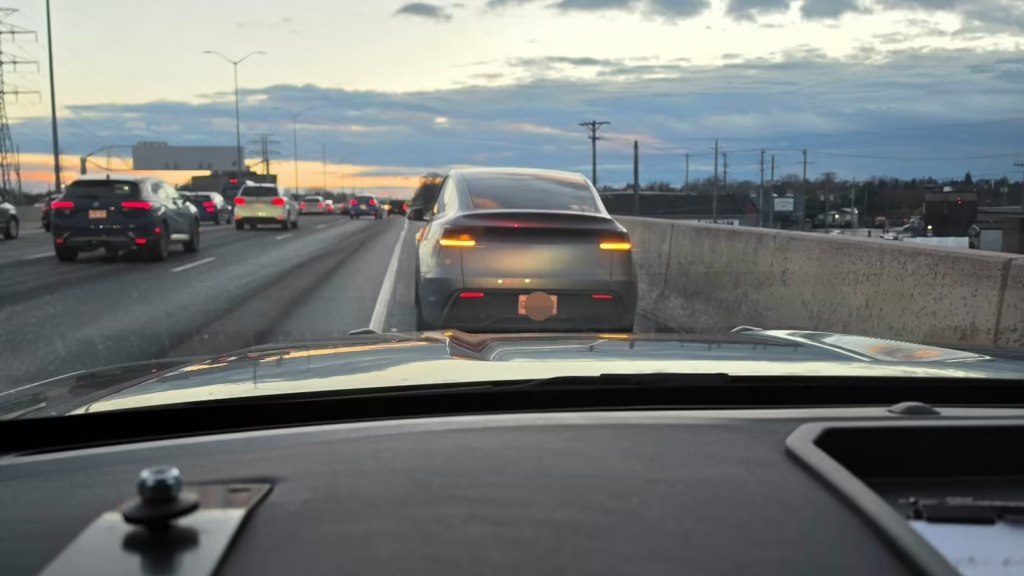
OTTAWA — The Ontario Provincial Police stopped a driver after spotting him asleep at the wheel of a vehicle equipped with automated driving technology while it travelled on Highway 417 in the capital during heavy traffic.
The incident raised concerns about over-reliance on driver-assistance systems, particularly when some users believe that turning on automated driving allows them to stop watching the road.
Police confirmed the driver was charged with careless driving. They stressed that electronic systems controlling a vehicle's movement do not relieve the person behind the wheel of their legal responsibilities.
Ontario police find driver asleep
The incident took place on Tuesday, Nov. 10, when a police officer noticed a vehicle moving on Highway 417 during rush hour while its driver appeared to be fast asleep.
According to details reported by Canadian media, the police cruiser approached the vehicle to check on the situation after the driver's behaviour raised concerns about his ability to react in an emergency.
Police officer Michael Fathy said the officer did not use sirens to wake the driver. Instead, the officer approached the vehicle to document the incident using the camera mounted on his uniform.
Fathy suggested that the cruiser's approach may have alerted the driver through one of the vehicle's systems, which helped wake him.
Police did not report a collision or any injuries connected to the incident.
Fine and six demerit points
Police charged the driver with careless driving, an offence related to failing to exercise the caution and attention needed to ensure the safety of other road users.
Reports indicated that the set penalty on the offence notice may be $490, along with six demerit points on the driver's licence if convicted.
Ontario legislation provides that court penalties for careless driving may be higher depending on the circumstances of the case, with legal fines generally ranging from $400 to $2,000.
A charge does not mean a final verdict has been reached. The driver retains the right to contest it and defend himself before the relevant authorities.
Another driver watching videos while driving
Ontario Provincial Police reported a separate incident the same day, in which they caught a driver watching videos on his mobile phone while driving.
The incident occurred shortly before 4 p.m. near Parkdale Avenue on Highway 417, while the vehicle was using an automated driving system.
Police charged him with distracted driving and careless driving after determining he was looking at his phone screen instead of watching the road.
A conviction for distracted driving may result in a set fine of $615, three demerit points and a three-day licence suspension.
The careless driving charge carries a separate penalty if proven.
Does Ontario allow self-driving without human intervention?
Ontario permits the use of driver-assistance technologies, but it distinguishes between systems that help steer a vehicle and control its speed and vehicles capable of operating without human intervention.
The Ontario Ministry of Transportation says the driver remains responsible for operating the vehicle safely, even when it is equipped with advanced technology to control steering, acceleration or braking.
It also stresses the need to keep eyes on the road and be ready to take back control immediately if an obstacle appears or a technical fault occurs.
Testing of fully self-driving vehicles is subject to special rules and permits. The availability of assistance systems to ordinary drivers does not mean they are allowed to sleep while driving.
Warning about the risks of relying on technology
The two incidents highlighted the gap between the actual capabilities of automated driving technology and some users' expectations.
Assistance systems may handle specific tasks, such as keeping a vehicle in its lane or controlling speed, but they do not guarantee that every traffic situation will be handled correctly.
Sudden conditions, such as stopped vehicles or obstacles on the road, may require quick human intervention to avoid collisions.
Police said sleeping or being preoccupied with a phone while driving is dangerous behaviour, regardless of the level of electronic equipment in the vehicle.
They stressed that responsibility for protecting passengers and other road users remains with the driver, and that the use of technology does not exempt a driver from Canadian traffic laws.
More from Hala Canada
- Customer accused of assaulting restaurant employee over shawarma portion in Montreal
- Prince Edward Island invites 192 candidates to apply for nomination in surprise immigration draw
- Carney and Quebec clash as St-Pierre Plamondon contacts 59 US officials on tariffs
- Canada raises Northwest Territories nominee allocation to a record 350 for 2026
- Canada details 100,000 additional permanent residence spaces for 2027 and who will benefit
- Petition on tipping in Canada amid wide anger over restaurant tip charges