
Federal budget proposes new tax credit for artists and $783.1 million for national cultural institutions
The federal government's 2026 budget proposes a tax credit for artists' creative income and funding for national museums and cultural institutions, though some arts groups say it falls short.
Translated from Arabic. Read the original بالعربية
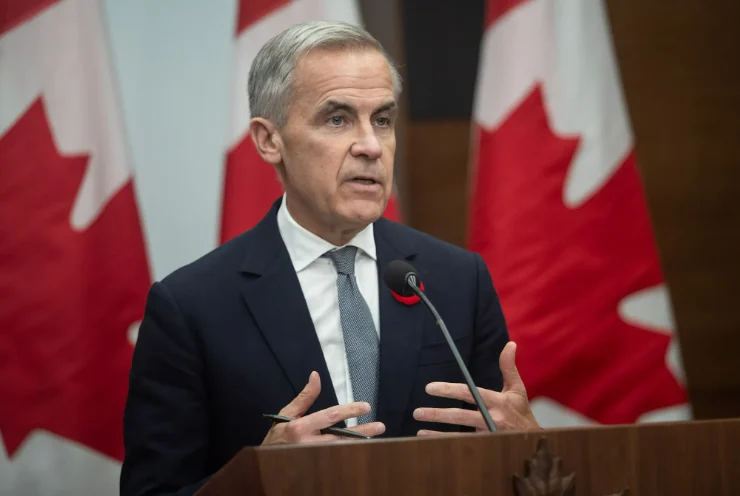
OTTAWA — The Canadian government has unveiled a broad package of financial and tax measures to support artists and cultural institutions as part of the 2026 federal budget. Prime Minister Mark Carney described it as the largest investment in culture in the country's history.
The measures include a proposal to reduce taxes on artists' income from their creative work, as well as hundreds of millions of dollars to develop national museums, protect historical collections and improve access to the arts.
The government says it aims to help creators earn a stable income from their work and to improve conditions for cultural institutions facing rising operating and maintenance costs.
Tax relief for artists on income of up to $45,000
The government plans to introduce a new tax credit called the Canada Creative Credit, aimed at artists who earn income from producing original artistic and creative work.
According to the budget, the proposed credit, combined with the basic personal amount exempt from tax, would provide preferential tax treatment on up to $45,000 of eligible annual net income.
The measure would cover creators in painting, music, writing, film, dance and other artistic fields.
The measure has not yet taken effect. The government will consult the cultural sector before announcing eligibility requirements and final details in the spring 2027 economic update.
The proposed credit is also non-refundable, meaning it reduces the tax owing but does not give an artist a cash payment beyond the amount of their tax liability.
$783.1 million to support national cultural institutions
The proposed budget allocates $783.1 million over five years, starting in the 2026-27 fiscal year, to support national cultural institutions.
The beneficiaries include national museums, the National Arts Centre, Library and Archives Canada and the National Battlefields Commission.
The funding will be used to renovate older buildings, maintain facilities and protect historical collections, and to ensure that exhibitions, activities and cultural services continue.
Through these investments, Ottawa aims to preserve Canadian heritage and make art collections and historical documents accessible to future generations.
Free admission to national museums for people under 25
The budget also includes a proposal to make admission to national museums free year-round for children and young people under 25.
The government has set aside $46.3 million over five years to fund the initiative, plus $11.5 million a year on an ongoing basis.
The measure is intended to remove financial barriers that may keep young people and families from visiting cultural institutions.
The government also plans to allocate $76 million in the 2027-28 fiscal year to renew the Canada Strong Pass program and expand access to it, including improved access to museums and cultural centres run by Indigenous communities.
Additional funding for theatre, music and the arts
The government announced $20 million over three years, starting in the 2027-28 fiscal year, for the Canada Council for the Arts.
The funding will go toward producing and presenting theatre, music and dance performances, as well as live artistic activities.
The budget also includes measures that would allow creative organizations to use investment incentives to buy equipment and technology used in production.
Eligible equipment includes cameras, lighting, sound systems, editing equipment and theatre infrastructure.
The government hopes these measures will strengthen the competitiveness of the creative industries and create new opportunities for creators and producers.
Artists voice criticism despite new incentives
Despite the scale of the announced investments, some arts organizations responded with reservations about whether the measures can address financial challenges.
Jenna Faye Powell, interim national executive director of the Canadian Artists' Representation (CARFAC), said the proposed funding does not meet all of the sector's actual needs.
She called for stable, long-term support, particularly for artists struggling financially because of rising costs and trade disruptions.
The budget also raised again the issue of artists' resale rights, legal reforms that are still awaiting adoption.
These demands underscore that the success of the government's package will depend on the details of its implementation and on whether it delivers a tangible improvement in artists' incomes and in the stability of cultural institutions.
More from Hala Canada
- Flooding hits Vancouver Island as heavy rain threatens homes and roads
- Driver charged after being found asleep at the wheel on Highway 417 in Ottawa
- Customer accused of assaulting restaurant employee over shawarma portion in Montreal
- Prince Edward Island invites 192 candidates to apply for nomination in surprise immigration draw
- Carney and Quebec clash as St-Pierre Plamondon contacts 59 US officials on tariffs
- Canada raises Northwest Territories nominee allocation to a record 350 for 2026