
Carney and Quebec clash as St-Pierre Plamondon contacts 59 US officials on tariffs
Tensions between Prime Minister Mark Carney and Quebec Premier Paul St-Pierre Plamondon have risen after Quebec wrote to 59 US officials about tariffs, amid a dispute over who may negotiate with Washington.
Translated from Arabic. Read the original بالعربية
QUEBEC — Political tensions have escalated between Prime Minister Mark Carney and Quebec Premier Paul St-Pierre Plamondon, after the premier took direct steps to contact US officials about trade relations and the tariffs imposed on Canadian products.
The moves drew objections from Carney, who stressed the need for a unified Canadian position in negotiations with the United States. St-Pierre Plamondon said his government will not give up its right to defend the province's economic interests.
The dispute comes as Canada faces growing trade challenges resulting from the tariff policies of US President Donald Trump's administration.
Quebec government writes to 59 US officials
St-Pierre Plamondon sent letters to 59 recently elected US officials, including governors and senators, from regions with economic and trade ties to Quebec.
The letters called for stronger direct co-operation with representatives of the provincial government in the United States, and for discussion of joint projects and initiatives that would benefit both sides.
Among the officials who received the letters were Michigan Senator-elect Abdul El-Sayed and New Hampshire Governor Kelly Ayotte.
The Quebec government views the step as the start of a broader diplomatic effort aimed at strengthening trade relations and helping ease US tariffs that affect important industrial sectors, particularly aluminum.
Carney rejects multiple negotiators with Washington
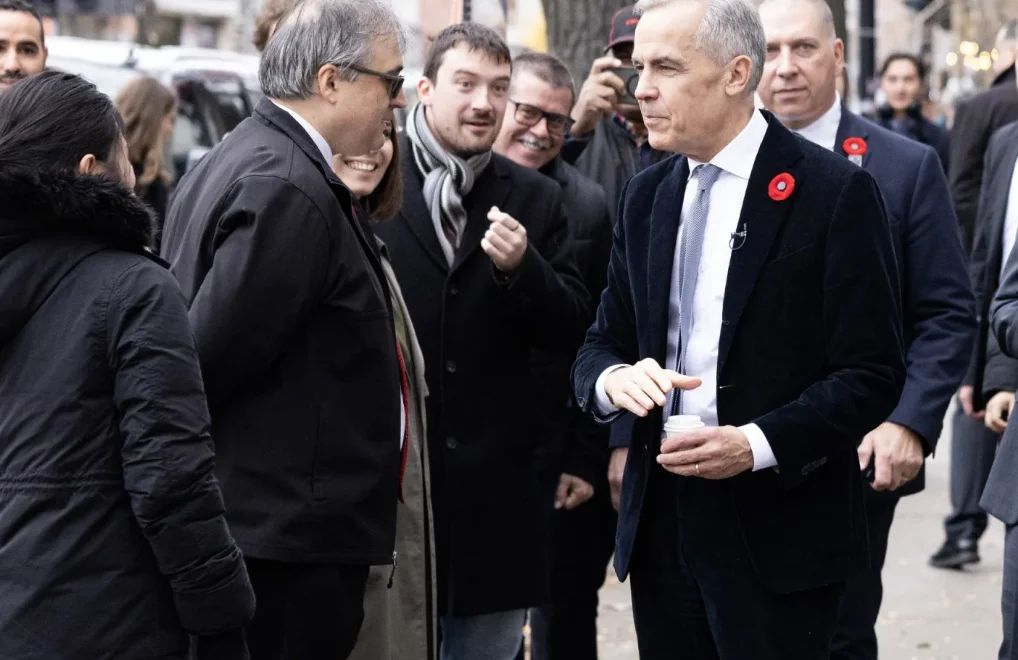
Carney expressed reservations about the initiative at a news conference in Montreal on Tuesday, Nov. 10, stressing that trade negotiations with the United States fall under federal jurisdiction.
He said that having a single negotiator representing Canada is the best way to manage complex trade talks with the US administration.
He also noted that the key decisions on trade agreements and initiatives come from the US executive branch, not from individual elected state officials.
Carney's position reflects concern that independent regional initiatives could weaken Canadian co-ordination in the face of US trade policy.
St-Pierre Plamondon responds: Carney is not my boss
The Quebec premier rejected the federal criticism, saying Carney has no authority to stop him from representing the province's economic interests internationally.
St-Pierre Plamondon used a hockey analogy, saying Carney wants to keep the playing surface to himself and not let Quebec take part.
He stressed that previous provincial governments maintained an international presence and direct relationships with economic partners, and that his government will continue that approach.
He also said residents will see broader efforts in the coming months to strengthen Quebec's presence on the international stage.
Joint strategy to counter US tariffs
St-Pierre Plamondon held a meeting lasting about an hour with Bloc Québécois Leader Yves-François Blanchet to discuss economic relations with the United States.
The meeting covered developing a joint strategy to gradually reduce tariffs and to make use of the results of the recent US midterm elections.
St-Pierre Plamondon believes the election results reflect a desire among American voters to move away from the current tariff policies.
The Quebec government is also preparing to launch a team specializing in trade relations with Washington, led by chief negotiator Pascal Paradis, to strengthen contact with American economic partners.
Repeated disagreements between Ottawa and Quebec
This dispute is not the first confrontation between Carney and St-Pierre Plamondon since the Parti Québécois came to power last October.
Relations were strained during the Canada–European Union summit in Montreal, after the federal government declined to give the Quebec premier an opportunity to deliver an official address.
That led St-Pierre Plamondon to boycott the summit and send a representative of his government to take part in its events.
Disagreements also emerged over the location of the first meeting between the two leaders, after St-Pierre Plamondon insisted that it be held in Quebec City rather than in Montreal or Ottawa.
The two officials are expected to meet at the Francophonie summit in Cambodia, from Nov. 14 to 16, before another possible meeting in Quebec City in December.
Future of trade relations at stake
The developments reveal a clear difference between the federal government's vision, which seeks to negotiate with a single Canadian voice, and the approach of the Quebec government, which wants to expand its role abroad.
While Ottawa holds to its constitutional powers, Quebec believes direct contact with US states is necessary to protect its industries and the jobs of its residents.
The success of these efforts will depend on the two sides' ability to co-ordinate, without letting the political dispute become an additional obstacle to resolving the trade crisis with Washington.
More from Hala Canada
- Canada raises Northwest Territories nominee allocation to a record 350 for 2026
- Canada details 100,000 additional permanent residence spaces for 2027 and who will benefit
- Petition on tipping in Canada amid wide anger over restaurant tip charges
- Canada among countries with most demanding travel requirements, report finds
- Poll: 51% of Quebecers dissatisfied with new government one month after it took office
- Man found dead in Toronto in 1992 identified after 34-year mystery