
Man found dead in Toronto in 1992 identified after 34-year mystery
Toronto Police Service says DNA analysis, genetic genealogy and fingerprints identified a man found dead near a downtown church in 1992 as Derek, a British-born man who moved to Toronto in the 1970s.
Translated from Arabic. Read the original بالعربية
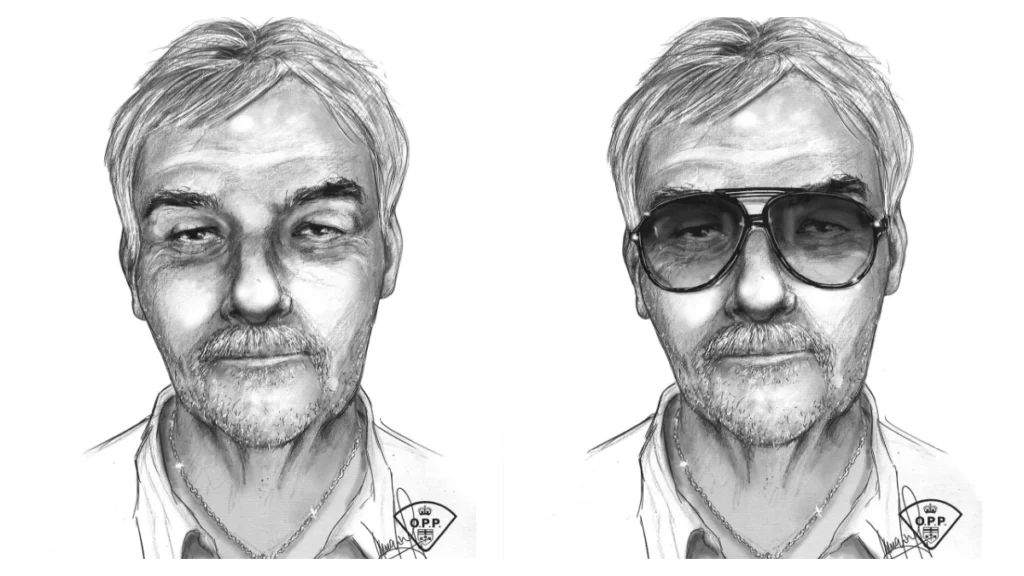
TORONTO — Toronto Police Service has announced that it has identified a man found dead near a downtown church in 1992, ending a mystery that lasted more than 34 years. Investigators used advanced DNA analysis and genetic genealogy.
Police said the man was named Derek. He was born in Britain and moved to Toronto in the 1970s. His identity remained unknown for decades despite repeated attempts to identify him.
The development came under a humanitarian initiative launched by police to identify deceased people whose identities were never established, and to inform their families of their fate after years of uncertainty.
Unidentified man found dead in 1992
The case dates to September 15, 1992, when emergency services received a report of an unconscious man on church property near the intersection of Queen Street East and Church Street in downtown Toronto.
Police, fire and paramedic crews went to the scene. Paramedics tried to save the man but pronounced him dead despite efforts to resuscitate him.
Investigators at the time concluded that the death was not suspicious, and there were no indications that warranted a criminal investigation into the circumstances.
The main problem was the absence of any documents proving his identity. Traditional investigative methods failed to identify him, and his file remained open for many years.
DNA reveals new leads
In 2025, Toronto Police Service decided to review the case under an initiative called Project 31, which aims to identify unidentified deceased people using modern forensic techniques.
Investigators were able to extract a genetic profile of the man, and in January 2026 his data was uploaded to genetic genealogy databases available for searching.
Initial comparison results revealed only distant relatives, but the analysis showed family links to the United Kingdom.
Genealogy experts and investigators began building a possible family tree and tracing the relationships between people linked to the DNA. After several months they arrived at the name Derek as the closest candidate for the man's identity.
A surprise in the missing person report
The investigation uncovered an unexpected detail: Derek was not reported missing until December 1993, about 15 months after the man's body was found.
His lawyer had filed the missing person report, but authorities were unable at the time to link it to the unidentified man who died in Toronto.
Years later, the missing person file was closed after police received information indicating that Derek had died on a specific date.
The new investigation, however, established that this information resulted from a misunderstanding. The man had been declared legally dead after years of lost contact and no response to correspondence.
There was no official record specifying where he died or the actual date of his death.
Fingerprints settle the case
The case was settled when Toronto investigators found Derek's fingerprints on file in another country.
Police compared those fingerprints with the ones recorded for the unidentified man found in 1992. The results confirmed a match and established his identity.
Authorities notified Derek's family in the United Kingdom of the investigation's findings, ending a long search for the truth about his disappearance and fate.
A Canadian project resolving cold cases
Derek became the 14th person Toronto Police Service has identified under Project 31, which was launched in 2022 to address 31 cases of unidentified deceased people.
The project focuses on cases where genetic samples suitable for analysis are available. It uses genetic genealogy databases along with traditional methods to verify results.
The case highlights the growing role of these techniques in helping Canadian police services reopen old files and provide answers to families who spent decades not knowing what happened to their relatives.
It also shows that scientific progress is not limited to solving crimes, but can play an important humanitarian role in restoring the identities of the dead and ending the uncertainty surrounding their disappearance.
More from Hala Canada
- Poll: 51% of Quebecers dissatisfied with new government one month after it took office
- Union report finds staffing shortages in all 72 Ontario school boards, with fewer supports for students
- Ford sends urgent letter to Carney warning against assembling Chinese vehicles at Brampton plant
- Pilot dies in small plane crash near Saint-Georges, Quebec, on Remembrance Day
- Federal budget proposes $50-billion emergency insurance facility for a catastrophic earthquake
- Young man sentenced to 5½ years in prison for shooting at Montreal Jewish school