
Bank of Canada warns of possible further rate hikes as inflation could reach 3.5%
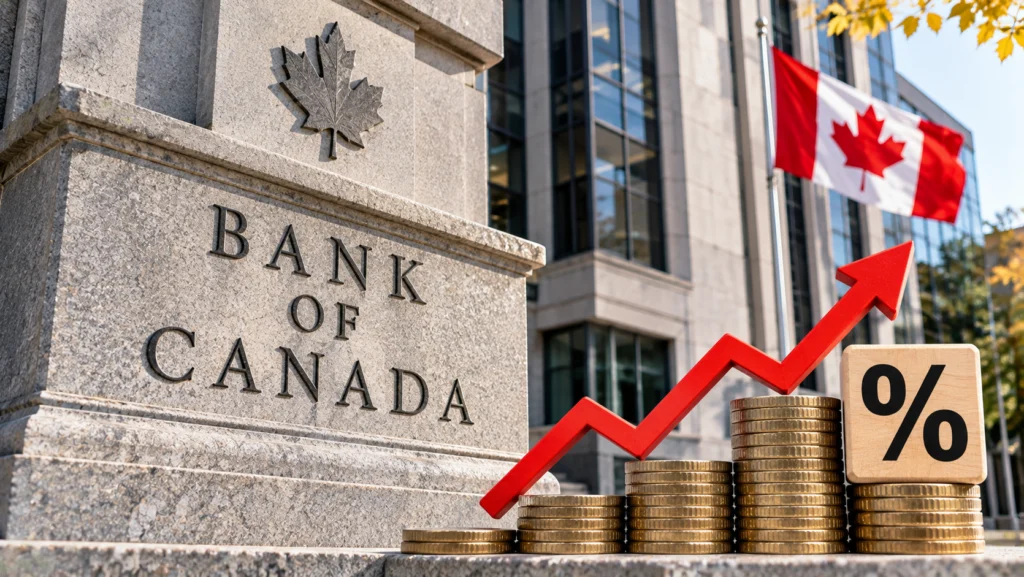
The Bank of Canada has not ruled out raising interest rates again after lifting its key rate to 2.5%, and it expects inflation to reach 3.5% by the end of 2026 and stay elevated through 2027.
Translated from Arabic. Read the original بالعربية
OTTAWA — The Bank of Canada says interest rates could rise further in the coming months as energy costs remain high and there are concerns that inflationary pressures could spread to the prices of other goods and services.
The warning came in the summary of deliberations of the bank's Governing Council, published Tuesday, Nov. 10. It detailed the discussions that preceded the decision on Oct. 28 to raise the key interest rate.
Council members said they would approach upcoming decisions with caution, without ruling out acting again if there are signs that rising prices are turning into broad-based inflation that is difficult to contain.
Why did the Bank of Canada raise its rate to 2.5%?
On Oct. 28, the bank raised its key rate by a quarter of a percentage point, from 2.25% to 2.5%, its first increase in more than three years.
The summary said officials discussed two main options: holding the previous rate or raising it to counter growing inflation risks.
Those in favour of holding argued that most of the rise in prices was linked to fuel and to services directly affected by energy costs, while measures of core inflation remained close to the bank's 2% target.
However, most of the considerations favoured a rate increase, because of concerns that businesses would begin passing higher production and transportation costs on to consumers.
The council noted that monetary policy cannot lower global oil prices, but it can limit the extent to which higher energy prices turn into a sustained wave of inflation.
Worrying inflation outlook through mid-2028
The Bank of Canada significantly raised its inflation forecast compared with its July estimates. It now expects the annual rate to reach 3.5% by the end of 2026.
It also expects inflation to stay above 3% for most of 2027, before gradually falling back to the official 2% target by mid-2028.
The report said higher energy prices have pushed headline inflation to about 3% since April, while inflation excluding gasoline stood at 2.2%.
Monetary authorities fear that continued increases in the prices of fuel and imported materials could push up the cost of food, transportation, manufactured goods and various services.
The bank's surveys indicate that many companies expect to pass a larger share of these costs on to their customers over the coming year.
Canadian economy shows resilience despite U.S. pressure
Data discussed by the council showed stronger-than-expected economic growth in the middle of the year.
Gross domestic product expanded at an annual rate of 3.3% in the second quarter, while estimates pointed to growth of about 2% in the third quarter.
But the bank cautioned that escalating trade tensions with the United States and the imposition of new tariffs could weaken economic activity in the last quarter of 2026.
Officials also pointed to continued weakness in the labour market, although several council members assessed that hiring in the private sector has improved.
These conditions make monetary policy decisions more difficult, because raising interest rates can help curb inflation but also increases borrowing costs for households and businesses.
What could further increases mean for borrowers?
Any new increase in the key interest rate could raise the cost of some variable-rate mortgages, lines of credit and loans tied to commercial banks' prime rate.
Holders of fixed-rate mortgages will not necessarily see their payments change immediately after a decision, but they may face different financing terms when they renew.
Some savings accounts and deposits may benefit from higher returns, depending on the policies of financial institutions.
For this reason, borrowers and investors are watching the bank's upcoming decisions to assess their effect on their budgets and financial plans.
Date of the Bank of Canada's next decision
The bank is scheduled to announce its next interest rate decision on Dec. 9, 2026.
The council said it will make each decision based on the latest data on inflation, employment and economic growth, along with developments in energy prices and trade relations with the United States.
The bank has not announced a specific date for a new increase, nor has it confirmed that a rate hike in December is certain.
More from Hala Canada
- Young man sentenced to 5½ years in prison for shooting at Montreal Jewish school
- Budget 2026 omits pledge to double home building as Ottawa sets new non-market housing target
- Dunkin' returns to Canada after eight years; building permits reveal Toronto location
- Poll: most Toronto-area residents say their communities offer enough support to newcomers
- Toronto traveller faces possible 15-year prison term in Albania over baggage tag case
- China says it has no interest in interfering in Canada's affairs ahead of Carney-Xi meeting