
University of Waterloo student pleads not guilty in U.S. court in case tied to suspected spying for China
A Chinese student at the University of Waterloo has pleaded not guilty to making false statements, amid an investigation into photos of facilities at the Toronto and Chicago airports for an unidentified Chinese contact.
Translated from Arabic. Read the original بالعربية
TORONTO — A student at the University of Waterloo in Ontario has pleaded not guilty in a U.S. court to a charge of making false statements to border officials. The case has raised questions about photographs of facilities at the Toronto and Chicago airports and his alleged links to a person he believed was working for the Chinese government.
Weiheng Zeng, a Chinese citizen studying in Canada, appeared before a court in Michigan on Monday, Nov. 9, and declared that he was not pleading guilty to the charge against him.
Reports stress that the allegations have not yet been proven in court.
How did the suspicions begin at the Chicago airport?
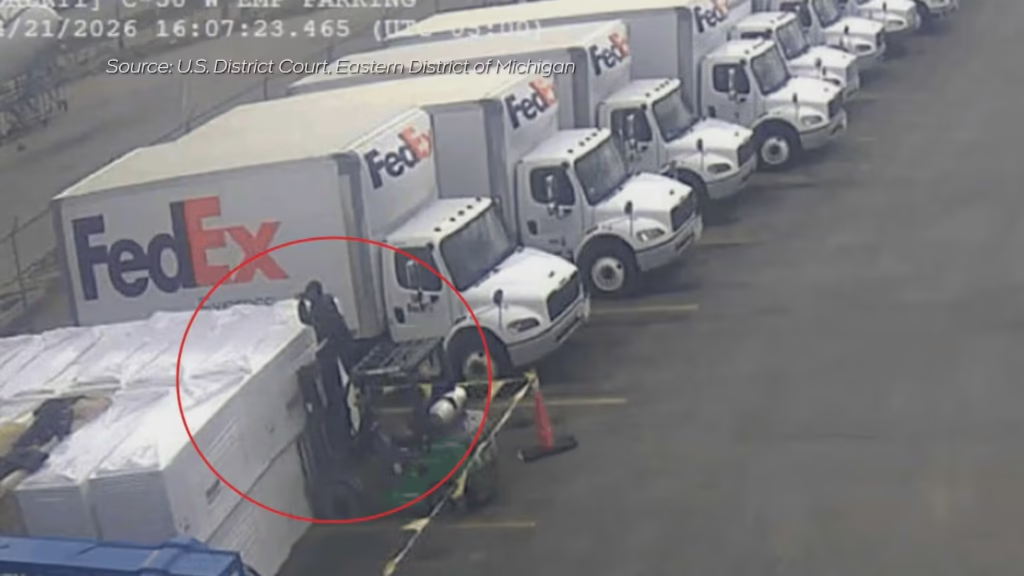
The case began with an incident on April 21, 2026, in an area belonging to the shipping company FedEx near O'Hare International Airport in Chicago.
According to an affidavit submitted by an FBI agent, a man was seen taking photos of aircraft, climbing onto a forklift and trying to open locked trailers or containers.
Investigators later linked the incident to a vehicle with Ontario licence plates that was reportedly at the site.
According to investigation documents, Zeng had entered the United States via the Ambassador Bridge about ten days before the incident.
The details of the incident currently rest on the prosecution's account and on evidence that has not been tested at trial.
Questioning at the border in August
On Aug. 23, the student tried to cross the border into Michigan in the same vehicle. U.S. border officers stopped him and put him through a series of interviews.
The FBI affidavit says Zeng gave differing explanations for why he was near shipping facilities.
At first he described himself as interested in photographing aircraft and said he took pictures from a public parking area. According to investigators, he then admitted climbing onto a forklift inside a FedEx site.
The documents also say he spoke of having previously entered a similar facility near Toronto Pearson International Airport, where he said he was detected.
Who is the unidentified Chinese contact?
According to the affidavit, during his third interview Zeng said he had received photo requests from a person he met online and later came to believe was linked to a Chinese security agency.
Investigators allege the assignments included photographing specific aircraft and their registration numbers, as well as sites linked to shipping and transport, in exchange for payments of between US$20 and US$30 per photo.
The documents add that communication took place through phone SIM cards sent to him periodically, and that he was instructed to delete messages and photos and destroy the SIM cards he had used.
Investigators also referred to money transfers linked to these assignments, according to statements attributed to the student.
These remain allegations contained in the investigation file, not final judicial findings.
Does he face a spying charge?
Although a prosecutor described some of the alleged activities as resembling espionage, the current indictment concerns a single charge: making false statements to U.S. Customs and Border Protection officials.
A grand jury issued the indictment in the week before the court appearance.
The student has been in custody since his arrest. A hearing on his release on bail has been set for next week, and the trial is expected to begin in January 2027.
His lawyer declined to comment on the details of the case in an earlier statement.
His sister has denied that he knowingly took part in spying, and the Chinese embassy in Ottawa rejected what it described as unfounded speculation about a Chinese threat.
A case raising security questions between Canada and the U.S.
The case reflects how sensitive the photographing of airport infrastructure and transport facilities can be when allegations involve unidentified external contacts.
However, suspicion of a link to a foreign entity is not sufficient evidence that espionage was committed.
The formal charge of making false statements differs from a charge of spying, both in the legal elements required for proof and in the potential penalties.
The published documents do not show that a separate spying charge has been laid against the student.
More from Hala Canada
- Montreal police arrest about 15 in jewellery theft crackdown; teens as young as 13 recruited
- Ticket sold in Mississauga wins $38-million Lotto 6/49 Gold Ball jackpot
- Canada proposes extending ban on foreign home purchases to 2029: what it means
- Toronto police identify suspect, 19, in fatal Etobicoke shooting of 18-year-old
- Urgent Toronto meeting on Brampton Stellantis plant, where more than 2,000 jobs are at stake
- Federal budget proposes new tax credit for artists and $783.1 million for national cultural institutions