
B.C. votes in early provincial election as Eby's government faces NDP-Conservative race
The New Democratic Party and the Conservatives are competing to form government in British Columbia, while the Greens hope to play a decisive role in the legislature.
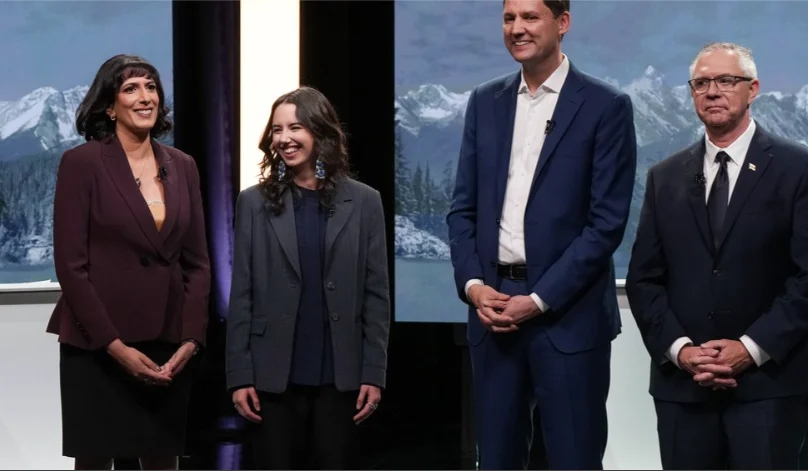
VANCOUVER — Attention turns to British Columbia as voting day begins in the early 2026 provincial election, which comes after weeks of political sparring, campaign promises and missteps by some candidates during the campaign.
Questions remain over whether the New Democratic Party under David Eby can hold on to power, or whether the Conservative Party can make a historic return to government.
The election gives voters political choices that could redraw the province's party landscape, as Eby seeks a new mandate to continue leading the government.
The Conservatives, meanwhile, hope to take power for the first time in nearly a century.
The election carries added significance because the results in a small number of ridings could decide which party forms the next government.
That would echo the 2024 election, when the race was so close that some results were in doubt until the last moments.
Another possibility is that the Green Party makes gains that give it the ability to influence the balance of power in the legislature.
That is what happened in the 2017 election, when the party played a decisive role in determining the shape of the government despite winning a limited number of seats.
Canadian media are following the voting and the announcement of results, with particular attention to ridings where the race is close.
Smaller parties could also have influence if no party wins a clear majority.
David Eby bets on renewed mandate for the NDP
The early election comes as B.C. Premier David Eby seeks to persuade voters to give his New Democratic Party another chance to govern.
The party faces competition from the Conservatives, who hope to capitalize on dissatisfaction among some voters with the current government.
The Green Party, meanwhile, is trying to attract voters interested in environmental and social policies, as well as those looking for alternatives to the main parties.
The weeks before the vote featured a campaign marked by an exchange of criticisms and a focus on political promises, along with controversy sparked by some statements and mistakes during the campaign.
With voting day here, the contest moves from opinion polls and campaign rallies to the ballot box, where the actual results will determine the distribution of seats in the provincial Legislative Assembly.
The importance of the results goes beyond which party wins the most seats. It also includes whether the winner can form a stable government, or whether close results will make understandings between parties a factor in the next phase.
Surrey-Guildford riding in the spotlight
The riding of Surrey-Guildford is one of the main battlegrounds drawing the attention of observers, after it produced one of the narrowest results in the province in the 2024 election.
In that election, NDP candidate Garry Begg defeated Conservative candidate Honveer Singh Randhawa by only 22 votes.
The slim margin reflects how sensitive the race in the riding is, and makes it a focus of particular attention in the current vote.
This time, the Conservatives are running a new candidate, Gary Thind, vice-chair of the Surrey school board and a local real estate agent, while the NDP is represented by Garry Begg, according to the information about the previous contest in the coverage.
The Green Party is running Jody Murphy, a small business owner.
The riding is important because undecided voters could influence the final result.
In a riding that was previously won by a margin of 22 votes, a small number of votes could change the outcome, which explains the strong interest in following the count and the announcement of official results.
However, the 2024 result cannot be considered a decisive indicator of the outcome of the current vote, as campaigns, candidates and political circumstances differ from one election to the next.
Greens seek to repeat 2017 experience
The Green Party, for its part, hopes to turn its electoral presence into greater political influence in the legislature, especially if the results are close between the NDP and the Conservatives.
Emily Lowan, leader of the B.C. Green Party, stands out in this race. The coverage describes her as the youngest leader of a party with an elected member in Canadian history.
Lowan is seeking to lead the party to a result that would give it an influential role in determining the balance of power in the Legislative Assembly, as in 2017, when the Greens gained considerable influence through their position in the legislature and their ability to affect arrangements for forming a government.
This scenario depends on the distribution of seats, not only on the total votes each party receives. If the NDP or the Conservatives cannot win a sufficient majority, the Greens' positions and their conditions on public policy could become important in political negotiations.
But the party's ability to play this role will depend on the number of seats it wins, the gap between the main parties, and the nature of the understandings that may emerge after the results are announced.
The Greens hope to attract voters who want the party to have a bigger role in decisions affecting the province, but the actual size of their influence will not be clear until the count is complete and the final seat distribution is known.
New party tries to attract dissatisfied voters
The election also includes Centre BC, led by Elenore Sturko, who became leader on the day the early election was called.
Sturko hopes that, together with the new party's members, she can attract voters who feel disappointed with the NDP and the Conservatives, and offer a different political option in the province.
The main challenge for emerging parties remains turning interest in the campaign into actual votes and seats in the legislature, especially in an election where media coverage typically focuses on the main parties and the ridings where they compete directly.
The published material does not include final results or official turnout figures, so the prospects of the various parties remain tied to what the count reveals, rather than to conclusions based on the campaigns or past contests.
More Vancouver


Latest from Hala Canada
- Canada gives provinces 139 days to nominate tens of thousands of workers for permanent residence
- Newfoundland and Labrador issues 98 new immigration invitations in Nov. 19 round
- Trump administration weighs targeting Iranian leaders to end war, with divisions in Washington over risks
- Report: 82% of Canadian grandparents give financial help to children and grandchildren
- Former London, Ont., councillor Mariam Hamou sentenced to probation in case involving mayor
- Canada to pay $5,000 bonuses to eligible trades workers: eligibility and how to apply