
Up to 25 cm of snow forecast in Alberta and Saskatchewan as Ontario stays unseasonably warm
Snowfall warnings cover southern Alberta and parts of Saskatchewan, while Toronto and other Ontario cities are seeing temperatures above seasonal averages.
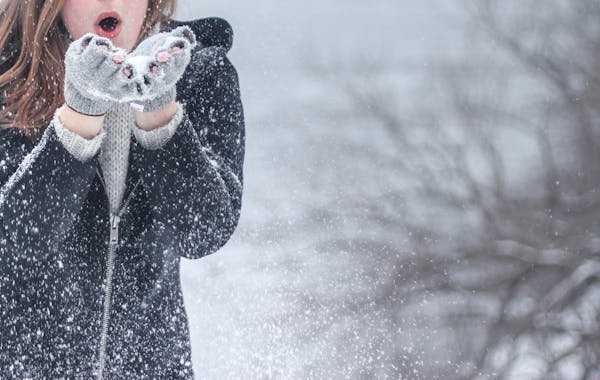
TORONTO — Large parts of Canada are seeing sharply different weather as winter approaches. Parts of Alberta and Saskatchewan are preparing for heavy snow, while Toronto and other Ontario cities are enjoying temperatures above seasonal averages.
Environment and Climate Change Canada has issued snowfall warnings for southern Alberta, with accumulations of up to 25 centimetres possible in some areas.
In contrast, the forecast calls for mild, sunny conditions to continue in the Greater Toronto Area for most of the week, with no sign of significant snowfall.
The difference reflects contrasting weather systems moving across the country, bringing winter conditions in the West and weather closer to autumn in the southeast.
Alberta braces for heavy snow
Canada's weather service has issued a yellow snowfall warning covering large areas of southern Alberta, following a period of relatively warm and dry weather.
Precipitation is expected to begin as rain or a mix of rain and snow before gradually turning to snow as temperatures drop.
The eastern foothills of the Rocky Mountains, the Cypress Hills and rural areas between Brooks, Medicine Hat and Lethbridge could see accumulations approaching 25 centimetres.
Calgary lies near the area covered by the warnings, and conditions are expected to change as the winter system advances.
Saskatchewan faces first significant snowfall
The effects of the disturbance extend toward southwestern Saskatchewan, where authorities have issued an alert about the first significant snowfall of the season.
Environment Canada said areas near the Alberta border may see rain at first, which later turns to heavy snow.
Changing temperatures could cause accumulations to vary from one area to another, particularly during the evening and overnight hours.
Authorities advise drivers to follow road condition updates, as visibility may drop and slippery stretches may develop as snow accumulates.
These developments follow an autumn with higher-than-usual temperatures in parts of the Canadian Prairies.
Toronto enjoys unusual November warmth
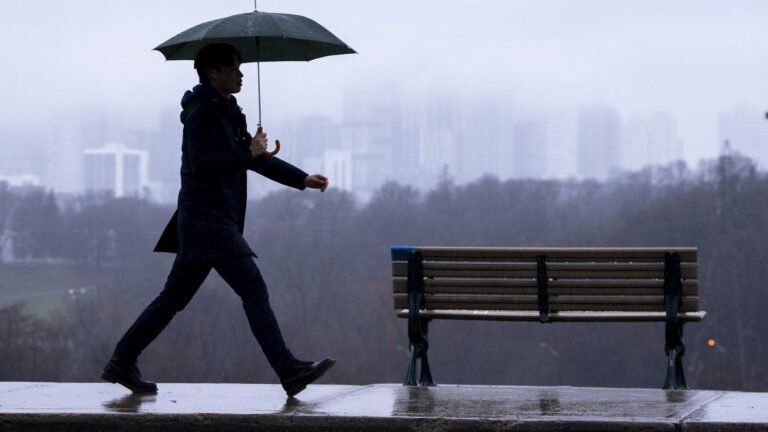
In contrast to the weather in the West, relatively high temperatures continue in Toronto and surrounding areas.
Forecasts indicate daytime highs of about 14 C from Tuesday through Friday.
The mild conditions come with sunny periods, giving residents a chance to enjoy outdoor activities before winter cold returns.
These temperatures remain above normal for mid-November, when temperatures typically begin to fall gradually as December approaches.
However, the forecast indicates temperatures may drop over the weekend, bringing conditions more typical of the season.
Will winter arrive late in Ontario?
The continued warmth raises questions about when Toronto will see its first snowfall, particularly since mid-November usually marks the start of snowfall.
However, a delay in snow does not mean mild weather will last all winter, as weather systems can change quickly.
Seasonal forecasts also do not pinpoint the timing of each storm. They offer general indications of temperatures and precipitation over longer periods.
Residents are advised not to use the current warmth as a reason to delay winter preparations, especially vehicle maintenance and fitting suitable tires.
Warnings for travellers and drivers
Authorities stress the importance of following official alerts, particularly in areas covered by snowfall warnings.
Precipitation may affect traffic on highways and rural roads, and conditions may change quickly as rain turns to snow.
Travellers are advised to check road conditions before setting out and to keep warm clothing and emergency supplies in their vehicles.
This weather pattern shows how much conditions can differ between Canadian provinces, where hundreds of kilometres may separate warm autumn weather from winter conditions that call for caution.
More Weather



Latest from Hala Canada
- Cadbury chocolates recalled across Canada over possible undeclared pistachios
- Montreal's 2027 draft budget proposes average 9.8% residential property tax increase
- Nvidia reinstates Jensen Huang as CEO after Trump intervenes, surprising tech markets
- Snow squall watch for Barrie area in Ontario, with up to 15 cm of snow and near-zero visibility
- Jensen Huang reinstated as Nvidia CEO; shares up about 30% before market open
- Canada and Qatar to hold first strategic dialogue in Ottawa on security, investment and Gulf developments