
Health Canada warns of online radon detectors that may give inaccurate readings
Health Canada says some radon detectors sold online can give misleading readings that may leave residents exposed to lung cancer risk, and urges Canadians to test their homes with approved devices.
Translated from Arabic. Read the original بالعربية
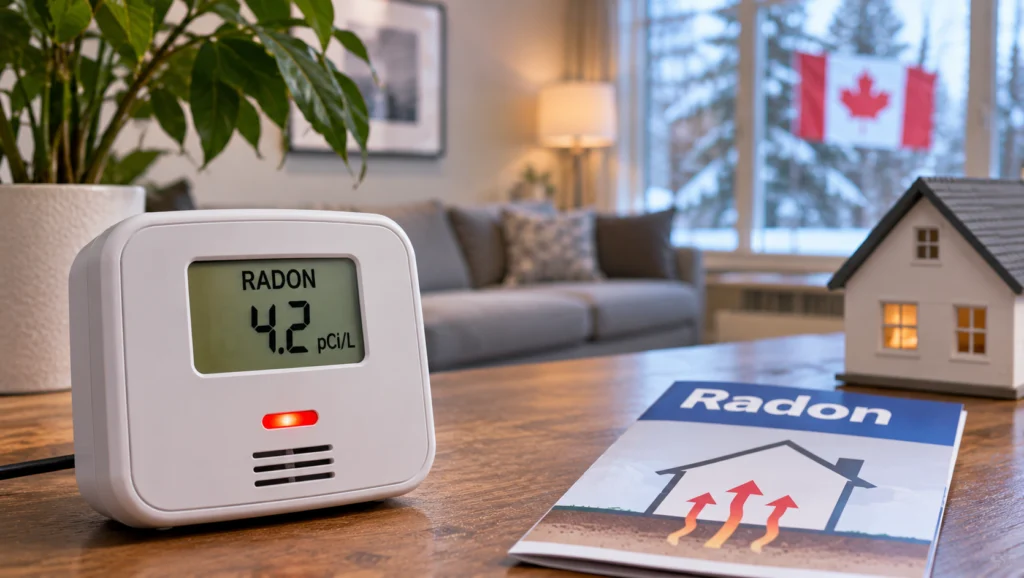
OTTAWA — Health Canada has issued a new warning about electronic devices sold online to measure radon levels inside homes, after earlier testing found that some of these devices give inaccurate results that could expose residents to serious health risks.
The department said the problem is not only the quality of the devices. Homeowners may also get low, misleading readings that lead them to believe their homes are safe even though levels of the radioactive gas are high.
Long-term exposure to high levels of radon is the second leading cause of lung cancer in Canada after smoking.
The official warning, issued Monday, November 16, coincides with radon awareness month, which includes campaigns encouraging Canadians to test their homes.
What is radon and why is it a risk?
Radon is a radioactive gas that forms naturally from the decay of uranium in soil and rock.
It cannot be detected by the human senses because it is colourless, odourless and tasteless.
It can seep into homes through cracks in foundations and floors and through openings around pipes.
When it builds up in enclosed spaces, its levels can rise high enough to pose a health risk.
Exposure to radon does not necessarily cause immediate symptoms, but breathing it in over long periods increases the likelihood of developing lung cancer.
Health Canada says that measuring the concentration of the gas inside the home is the reliable way to find out the level of exposure.
Detectors that give incorrect results
The department said that over the past several years it has issued a number of warnings and recalls for electronic devices after errors were found in their radon measurements.
The problem is that the devices may show concentrations lower or higher than the true level.
A falsely low reading may leave residents exposed to the gas without realizing the problem needs to be addressed.
A falsely high reading, on the other hand, may cause unwarranted worry and lead homeowners to take costly steps that are not based on accurate measurements.
The department stressed the need to confirm that measuring devices are approved before buying them, especially products offered through online stores.
Devices previously recalled or flagged
The government warning refers to a number of products that have previously raised concerns about the accuracy of their results.
Brand or device, and date of warning or recall:
- InkBird WiFi Radon Detector RD-2: May 30, 2025
- Life Basis devices: May 30, 2025
- Hanchen Home Radon Detector: May 15, 2025
- Spolehli Radon Detector: May 1, 2025
- Various devices sold through Amazon.ca: May 7, 2025
- Air Steward Portable Radon Monitor: September 13, 2022
- Elifecity Portable Radon Meter: September 7, 2022
The department said the list covers products that have previously been the subject of a warning or recall, and does not mean that all devices on the market are unsafe.
Consumers can review the official government notice and the list of affected devices to check the details of their products.
Why testing is recommended in winter
Health Canada said winter is a suitable time to test for radon.
During the cold months, windows and doors are often closed and homes become more airtight.
This can cause the gas to build up inside some buildings at higher levels than at other times of the year.
The department recommends a long-term test lasting at least three months, to get a more accurate estimate of the average radon level in the home.
It advises against relying on a measurement lasting a few hours or days to make a final decision about the safety of a home.
Radon levels can change with the weather, ventilation and conditions around the building.
How to choose a reliable device
Health Canada advises buying devices that have passed the performance tests of the Canadian National Radon Proficiency Program (C-NRPP).
The program keeps a list of electronic devices that have been tested and meet performance standards.
Approved long-term test kits can also be used, or certified professionals can be hired to carry out the measurements.
The guidelines recommend placing the test device on the lowest level of the home that residents use regularly, such as a bedroom, a living room or a basement used as living space.
It should not be placed near windows, vents or heat sources, because this can affect the accuracy of the results.
What happens if radon exceeds the allowed level?
Canada's guideline level is 200 becquerels per cubic metre of air.
If a long-term test shows that the average radon concentration exceeds this level, Health Canada recommends taking steps to reduce it.
It is best to hire a certified professional to determine the right solution for the home.
Solutions may include installing systems that draw the gas from beneath the building's foundation before it enters living spaces.
The department says some mitigation systems can reduce radon concentrations by more than 90 per cent.
It also recommends addressing levels above the guideline within one year.
What to do if you bought a recalled device
Health Canada urged owners of devices covered by recalls to stop using them.
It also recommended disposing of them in line with municipal rules for electronic waste.
Earlier readings from these devices should not be relied on to assess the safety of a home.
A new test can be done with an approved device, following the recommended duration and instructions.
The department said it continues to monitor radon detectors on the Canadian market and will take the necessary action when it identifies products that may put consumers' health at risk.
A warning for all homeowners in Canada
The risk from radon is not limited to a particular province or city, as the gas can be found in buildings across Canada.
The radon level inside a home also cannot be determined from its appearance, age or location alone.
For this reason, regular testing with reliable devices is a basic step in protecting residents.
Health Canada stresses that the aim of the warning is not to raise alarm about all measuring devices, but to ensure that Canadians get accurate results that help them make sound decisions about their families' health.
More from Hala Canada
- Gasoline and diesel prices fall again in Ontario: what to know
- Former Canada Revenue Agency employee receives conditional sentence for fraud
- Montreal ranks ahead of London and Las Vegas in global hotel ranking
- Several senior staff leaving Poilievre's office as Conservatives face tough by-election
- Emergency alert test to sound on phones across Canada on Wednesday, Nov. 18
- Canadian salaries expected to rise about 3% to 3.4% in 2027, reports say