
Trump urges Congress to fund air traffic control upgrade after nationwide flight halt
Trump has asked Congress for urgent funding to modernize U.S. air traffic control after an outage halted flights across the country, with investigators focusing on two network devices in Texas and Arkansas.
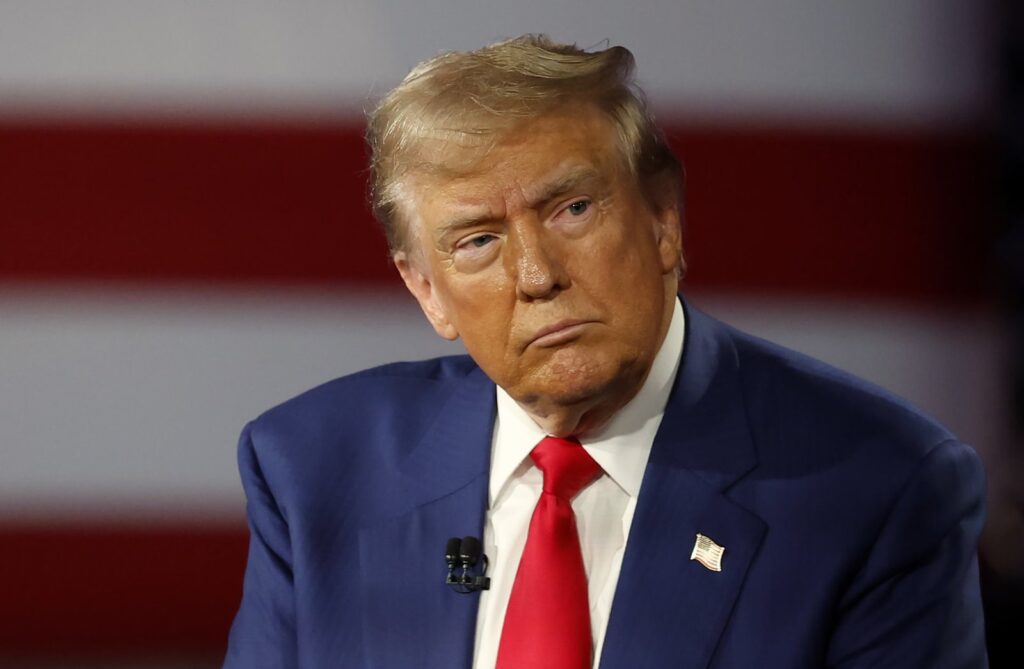
WASHINGTON — U.S. President Donald Trump has broken his silence on the technical failure that paralyzed air traffic in the United States, calling on Congress to provide additional funding to modernize air traffic control systems after widespread disruptions led to cancelled and delayed flights over the weekend.
Trump's remarks on Sunday came as U.S. Transportation Secretary Sean Duffy announced expanded investigations to determine the root cause of the problem, which led the Federal Aviation Administration (FAA) to halt takeoffs nationwide on Friday.
The investigations are currently focused on two network devices recently installed at two FAA facilities in Arkansas and Texas.
Preliminary information indicates the problem emerged during upgrade work on communications infrastructure, but authorities have not yet announced a final technical cause for the failure.
Trump asks Congress for urgent funding
The president urged lawmakers to allocate the money needed for a comprehensive modernization of the air traffic control system, rather than carrying out piecemeal repairs.
In a post on his social media platform, he said his administration has already begun upgrading the system, but stressed the need to speed up the project and secure enough funding to complete it.
Trump criticized the age of parts of U.S. infrastructure, noting that some air traffic control systems are about 50 years old.
He also criticized former president Joe Biden's administration, accusing it of failing to properly address long-standing problems.
His comments came two days after the disruptions that left travellers stranded in airports and raised questions about the ability of U.S. systems to cope with sudden technical failures.
Two devices in Arkansas and Texas at the centre of the investigation
Transportation Secretary Sean Duffy said L3Harris Technologies, a U.S. government contractor, is carrying out in-depth technical examinations of two devices that direct data traffic, known as "routers."
The devices were located at two FAA facilities in Arkansas and Texas.
According to information provided by the secretary, the problem began while some old copper wiring was being replaced with modern fibre-optic cables.
After work was completed at a facility in El Dorado, Arkansas, and one of the devices was switched on, a problem appeared at another facility in Amarillo, Texas.
The effects of the fault then spread to other parts of the communications network, prompting the decision to halt takeoffs nationwide.
Duffy said investigators are trying to determine how the problem moved between sites and why the systems were unable to contain it before it spread.
Transportation secretary pledges to find root cause
Appearing on several U.S. television programs on Sunday, Duffy stressed the importance of finding the true cause of the failure before carrying out broad repairs.
He said that replacing old equipment is not enough on its own to ensure the safety of the systems if the reasons a limited technical fault developed into a national disruption are not understood.
Technical teams are analyzing the devices involved and reviewing the changes made to the communications network.
These steps come amid concerns that other weak points could cause similar failures during future upgrades.
Authorities have not announced final results of the investigation, and have not provided evidence indicating that the problem was caused by a deliberate cyberattack.
US$12.5 billion not enough to modernize the aviation network
The U.S. Congress approved US$12.5 billion for the FAA in 2025 as part of a broader legislative package passed by the Republican majority.
But the transportation secretary believes that amount represents only an initial phase of a massive modernization project that requires billions of dollars more.
The administration is seeking to replace old communications networks and upgrade the equipment used to guide aircraft and monitor airspace.
For its part, the Biden administration had passed an infrastructure law that allocated US$25 billion to improve airports and control towers and modernize parts of the aviation system.
The current debate reflects a political dispute over the responsibility of previous administrations for the ageing of the systems, and over the best way to fund their modernization.
When will air traffic return to normal?
Duffy expected airlines to be able to restore full operating capacity by Monday, Nov. 16, although some delays were continuing on Sunday.
He explained that the takeoff halt left aircraft and crews in locations different from their original schedules, which requires time to reorganize flights.
Although the nationwide halt has been lifted, that does not automatically cancel postponed bookings or accumulated delays.
Some disruptions may continue on international flights linked to U.S. airports, including flights to and from Canada.
Effects of the crisis extend beyond the United States
The U.S. aviation crisis affected travel between Canada and the United States, after flights were cancelled at airports in Toronto, Montreal and other Canadian cities.
Canadian authorities had confirmed that the country's air traffic control systems are operating normally, and that they are ready to assist the U.S. side if needed.
But restoring regular cross-border flights also depends on the ability of U.S. and Canadian airlines to reorganize their schedules.
The crisis underscores the importance of co-operation between the two countries, given the close links between aviation networks and airports in North America.
While awaiting the final results of the investigation, the challenge facing the Trump administration is to ensure that work to upgrade old infrastructure does not cause new disruptions that threaten the regularity of travel.
More World


Latest from Hala Canada
- Canada gives provinces 139 days to nominate tens of thousands of workers for permanent residence
- Newfoundland and Labrador issues 98 new immigration invitations in Nov. 19 round
- Trump administration weighs targeting Iranian leaders to end war, with divisions in Washington over risks
- Report: 82% of Canadian grandparents give financial help to children and grandchildren
- Former London, Ont., councillor Mariam Hamou sentenced to probation in case involving mayor
- Canada to pay $5,000 bonuses to eligible trades workers: eligibility and how to apply