
New Brunswick to change fees for historical records used to prove citizenship by descent from December
New Brunswick will change the fees for historical records needed to prove Canadian citizenship by descent starting Dec. 1, 2026, as demand rises and processing waits exceed six months.
Translated from Arabic. Read the original بالعربية
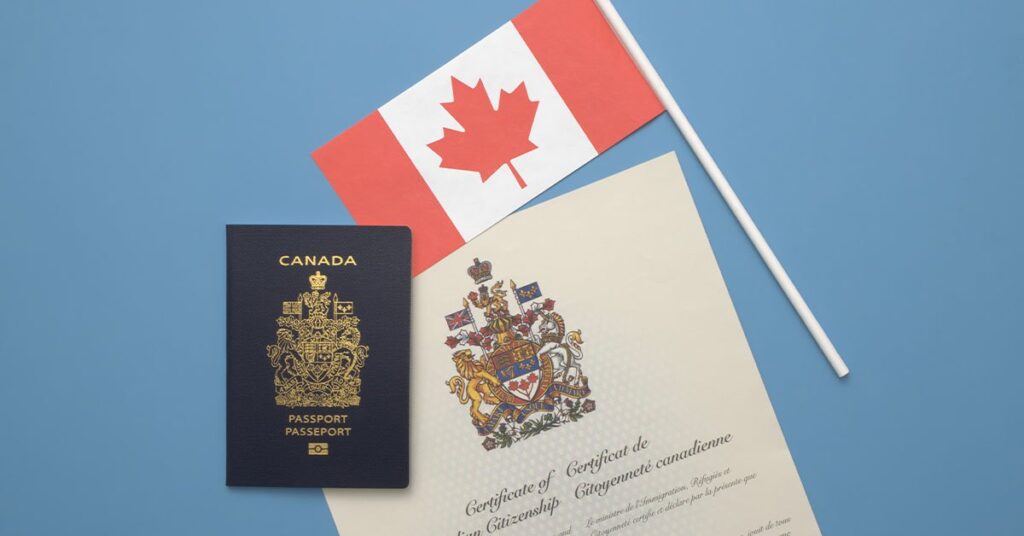
FREDERICTON — The province of New Brunswick has announced upcoming changes to the fees for obtaining official historical records, which thousands of people need to prove their eligibility for Canadian citizenship by descent.
The new fees are to take effect on Dec. 1, 2026, according to the Provincial Archives, which has not yet disclosed the final amounts.
The decision comes amid a sharp rise in demand for birth, marriage and death certificates, particularly from American citizens seeking to establish a link to Canadian grandparents following the amendment of the Citizenship Act in December 2025.
According to a report by CIC News, the changes could particularly affect residents of Maine, Massachusetts, Michigan, Wisconsin and Minnesota, states that have historically received large numbers of immigrants from New Brunswick.
What are the current fees for obtaining records?
Official figures show that a certified copy of a historical record currently costs $11, including postage.
The Provincial Archives also charges an additional $1 for each extra page in the requested record.
These fees are under review, but authorities have not announced the new amounts or whether they will apply to requests submitted before December that are still awaiting processing.
It is important to distinguish between the Provincial Archives' fees and the fee for applying for a proof of citizenship certificate from Immigration, Refugees and Citizenship Canada (IRCC). The announced change concerns obtaining historical records, not the federal citizenship fees themselves.
Bill C-3 opens the door to descendants of Canadians
Demand for records rose after the federal Bill C-3 came into force on Dec. 15, 2025.
The law removed earlier restrictions that limited the passing of citizenship by descent to the first generation born outside Canada, allowing additional groups to establish their citizenship through their parents and grandparents.
For people born outside Canada before that date, citizenship may have been granted automatically under the amendments if they meet the legal requirements.
Different conditions apply to those born on or after Dec. 15, 2025, when the Canadian parent was born outside the country, including proof that the parent was physically present in Canada for 1,095 days before the child's birth.
Canadian ancestry alone does not guarantee eligibility in every case.
Requests have quadrupled
The Provincial Archives received about 100 genealogy research requests a month in 2025, but the number rose to about 400 citizenship-related requests a month by spring 2026.
More than 1,000 files have accumulated, according to Provincial Archivist Joanna Aiton Kerr, leading to a marked increase in waiting times.
Whereas an initial response took six to eight weeks in May, current estimates indicate a wait of at least six months before an archives staff member begins reviewing a request.
This period does not include the actual search for the records, nor the mailing time, which usually takes two to four weeks after the fees are paid.
More than a million records available to search
The province has expanded its digital database by adding birth records dating back to 1929 and marriage and death records dating back to 1975.
The number of listed records reached about 1.17 million as of the Nov. 6 update.
Birth certificates registered before 1930, and marriage and death records registered before 1976, can be searched online.
More recent records must be requested through the Vital Statistics office of Service New Brunswick, subject to the rules on access to personal documents.
How can applicants avoid further delays?
The Provincial Archives advises applicants to search the online databases before submitting a request, and to gather ancestors' names, approximate dates and the places where the births, marriages or deaths occurred.
Church records and historical directories may also help identify the correct document, especially when family information is incomplete.
Archives staff arrange payment by Visa or Mastercard and then send the documents by regular mail without tracking.
The developments show that expanded opportunities to prove Canadian citizenship have come with growing pressure on archives services, while the amount of the new fees and how they will apply to pending files have yet to be announced.
More from Hala Canada
- Young man sentenced to 5½ years in prison for shooting at Montreal Jewish school
- Budget 2026 omits pledge to double home building as Ottawa sets new non-market housing target
- Dunkin' returns to Canada after eight years; building permits reveal Toronto location
- Poll: most Toronto-area residents say their communities offer enough support to newcomers
- Toronto traveller faces possible 15-year prison term in Albania over baggage tag case
- China says it has no interest in interfering in Canada's affairs ahead of Carney-Xi meeting