
Ontario appoints eight new regional chairs with expanded powers
Doug Ford's government has named chairs for eight major regions, including Steven Del Duca, and given them wider powers over budgets, staffing and housing, drawing criticism over local democracy.
Translated from Arabic. Read the original بالعربية
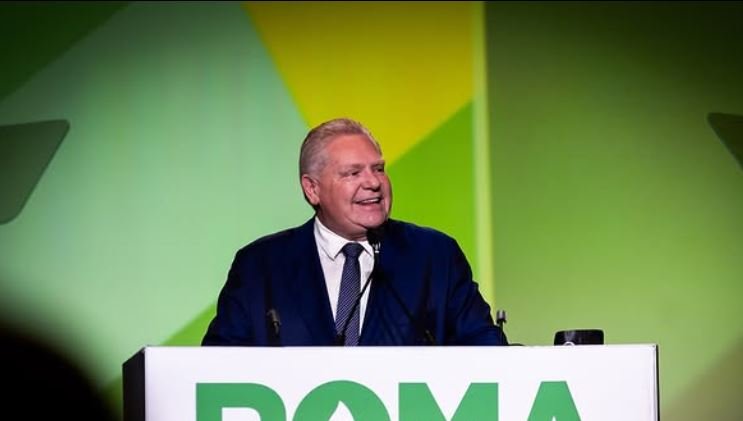
TORONTO — The Ontario government, led by Premier Doug Ford, has announced the appointment of eight new regional chairs across the province and given them expanded executive powers. The government says the move is meant to speed up housing projects and infrastructure development.
The appointments cover the regions of Durham, Halton, Niagara, Peel, Waterloo and York, as well as the District of Muskoka and Simcoe County.
The decision extends the so-called "strong mayor" powers to regional officials who are chosen by the provincial government rather than directly by voters.
The announcement drew criticism from politicians and municipal organizations, which warned of reduced democratic accountability and a concentration of power in the hands of appointed officials.
Who are the eight chairs Ontario has appointed?
The Ontario Ministry of Municipal Affairs and Housing announced the names of the officials who will lead the eight regions:
- Durham: Kevin Ashe
- Halton: Ann Mulvale
- Niagara: Frank Campion
- Peel: Nando Iannicca
- Waterloo: Scott Davey
- York: Steven Del Duca
- Muskoka: Scott Aitchison
- Simcoe: Don McIsaac
The group includes current and former mayors, along with figures who have worked in regional and federal politics, reflecting the varied political and administrative backgrounds of the new officials.
Steven Del Duca returns to a prominent regional post
Steven Del Duca stands out among the appointees. He is currently mayor of Vaughan and previously led the Ontario Liberal Party.
He also held cabinet posts in the provincial government, including transportation and economic development, before being chosen as chair of York Region.
In Durham, the choice was Kevin Ashe, who has been mayor of Pickering since 2022, while Nando Iannicca was reappointed as chair of Peel Region, a post he has held since 2018.
In Niagara, the government chose Frank Campion, mayor of Welland since 2014, while the leadership of Waterloo went to Kitchener city councillor Scott Davey.
Conservative MP leaves Parliament for new post
The appointments also include Conservative MP Scott Aitchison, who has represented Parry Sound—Muskoka in the House of Commons since 2019.
The government said he intends to resign his seat before the end of November and will take over as chair of Muskoka on December 1, 2026.
Ann Mulvale, who served six terms as mayor of Oakville, was chosen to chair Halton.
Don McIsaac, mayor of Orillia since 2022, was named chair of Simcoe County.
Broad powers over budgets and staff
The new powers give regional chairs a larger role in preparing local budgets and in hiring or dismissing senior administrative staff.
They also give chairs additional authority to direct administrative work and influence some municipal decisions, including vetoing certain by-laws under legal conditions.
The Ford government says the aim is to reduce delays in delivering housing, roads and public services, especially in areas experiencing rapid population growth.
The responsibilities of these councils include water and wastewater systems, regional roads, public health and long-term care.
Criticism and warnings of weakened democracy
NDP MPP Jeff Burch criticized the decision, arguing that residents should have the say in choosing the officials who make decisions on their behalf.
The Association of Municipalities of Ontario expressed similar concerns, having previously urged the government to allow regional chairs to be elected or chosen by local councils.
The association warned that giving strong powers to appointed officials could weaken the link between local decisions and the will of voters.
It nevertheless said it is ready to work with the new chairs to serve local communities.
What does the decision mean for Ontarians?
The change could affect how budgets are prepared and how priorities are set for housing, infrastructure and regional services.
However, the decision does not abolish local councils or transfer all municipal powers to the provincial government.
The challenge for the new chairs will be to meet development goals and speed up projects while maintaining transparency and the involvement of elected councils in decisions that affect residents.
More from Hala Canada
- Young man sentenced to 5½ years in prison for shooting at Montreal Jewish school
- Budget 2026 omits pledge to double home building as Ottawa sets new non-market housing target
- Dunkin' returns to Canada after eight years; building permits reveal Toronto location
- Poll: most Toronto-area residents say their communities offer enough support to newcomers
- Toronto traveller faces possible 15-year prison term in Albania over baggage tag case
- China says it has no interest in interfering in Canada's affairs ahead of Carney-Xi meeting