
Leaving Canada for long stays can cost you provincial health coverage, financial expert warns
Canadians who spend long periods abroad may lose eligibility for OHIP, RAMQ or MSP, and could face very large hospital bills if their travel insurance falls short.
Translated from Arabic. Read the original بالعربية
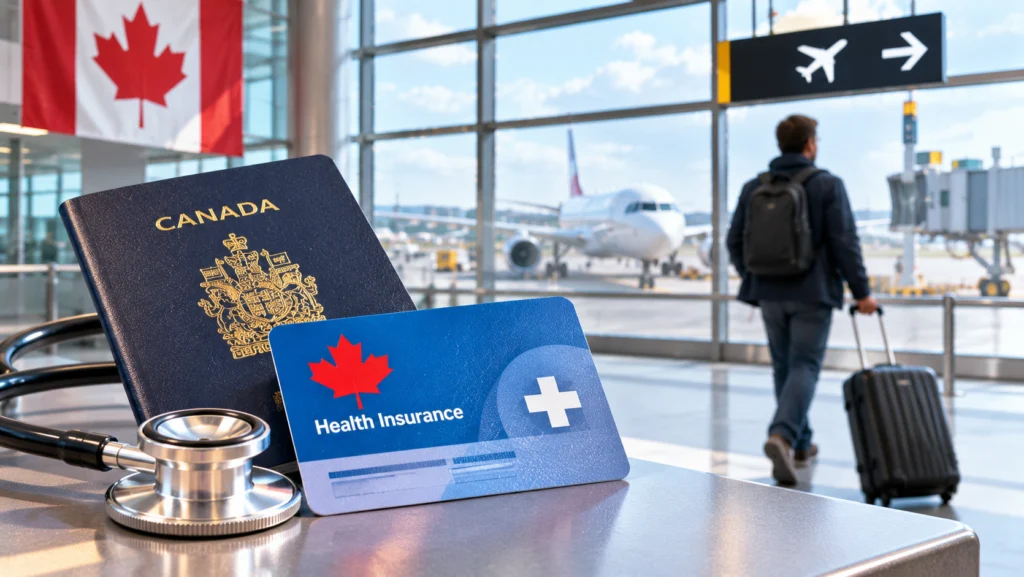
TORONTO — Canadians who spend long periods outside the country may be surprised to find they are no longer eligible for provincial health insurance, even if they hold Canadian citizenship and a valid health card, because of residency requirements set by the provinces.
Financial expert Christopher Liu highlighted the issue, warning that moving abroad or exceeding the permitted length of absence could leave people without coverage when they need treatment.
The rules differ from province to province. Keeping eligibility also does not mean all medical costs outside Canada are covered, particularly in emergencies and hospital stays.
Ontario: when do you lose OHIP coverage?
Ontario allows eligible residents to travel outside Canada for up to seven months in any 12-month period and keep their OHIP coverage, as long as the province remains their primary place of residence.
For longer absences, people can apply to keep their coverage for up to two years, provided they have a valid health card and have lived in Ontario for at least 153 days in each of the two years before leaving.
Special arrangements exist for temporary study or work abroad. They require supporting documents and contact with ServiceOntario before travel.
A permanent move to another country is different from temporary travel, and people should not assume their coverage will continue automatically after changing their place of residence.
Quebec: the 183-day rule
In ordinary cases, Quebec requires residents to be absent for fewer than 183 days in a calendar year in order to keep their RAMQ coverage.
Absences of less than 21 consecutive days are usually not counted. There are exceptions for workers, students and some other cases.
The province's health insurance board advises residents to notify it in advance when planning a long stay outside Quebec, because losing eligibility can lead to the repayment of the cost of medical services that were previously covered.
British Columbia and Alberta: exceptions for long stays
British Columbia usually requires residents to be in the province at least six months a year, though longer absences may be allowed for some travellers.
An eligible resident may keep their MSP coverage during an absence of up to 24 consecutive months, once in a five-year period, if they meet the conditions and obtain the necessary approval.
In Alberta, AHCIP coverage can be kept while travelling outside Canada for fewer than six consecutive months, with exceptions for repeated absences, work, study and extended stays.
Both governments stress the need to contact health authorities before leaving for a long period.
Hospital bills can reach hundreds of thousands of dollars
Liu warned against relying entirely on government insurance while travelling, citing the case of a Canadian who faced a medical bill of nearly US$950,000 after a premature birth during a visit to Hawaii.
The story illustrates the scale of the possible risk when private coverage is inadequate or contains exclusions tied to pre-existing medical conditions.
In Ontario, coverage for some emergency hospital services outside Canada is limited to C$400 a day for intensive care, or C$200 for lower levels of care, under the approved terms.
OHIP also does not cover the cost of medically transporting a patient back to Ontario, which makes private insurance important even for short trips.
Is coverage restored as soon as you return to Canada?
Restoring coverage depends on the province a person returns to and the requirements for proof of residency.
Ontario currently does not impose a general waiting period once OHIP requirements are met, while British Columbia and Quebec may apply waiting periods of up to about three months in some cases of registration or re-registration.
Holding a Canadian passport is not enough to restore coverage automatically. Actual residency must be proven and the required documents submitted.
Steps to take before travelling
Experts advise contacting the provincial health insurance authority, confirming the permitted length of absence, and obtaining written approval where necessary.
Travellers should also buy medical insurance that suits the length and nature of the trip, and that covers pre-existing conditions where possible, as well as emergency treatment and medical evacuation.
In short, Canadian citizenship alone does not guarantee continued health coverage while living abroad, and planning ahead may protect travellers from major financial losses.
More from Hala Canada
- Young man sentenced to 5½ years in prison for shooting at Montreal Jewish school
- Budget 2026 omits pledge to double home building as Ottawa sets new non-market housing target
- Dunkin' returns to Canada after eight years; building permits reveal Toronto location
- Poll: most Toronto-area residents say their communities offer enough support to newcomers
- Toronto traveller faces possible 15-year prison term in Albania over baggage tag case
- China says it has no interest in interfering in Canada's affairs ahead of Carney-Xi meeting