
9.8 million litres of untreated sewage spill into Red River after Winnipeg plant malfunction
Manitoba authorities are investigating a spill at Winnipeg's North End treatment plant, amid concerns for Lake Winnipeg and for Indigenous communities downstream.
Translated from Arabic. Read the original بالعربية
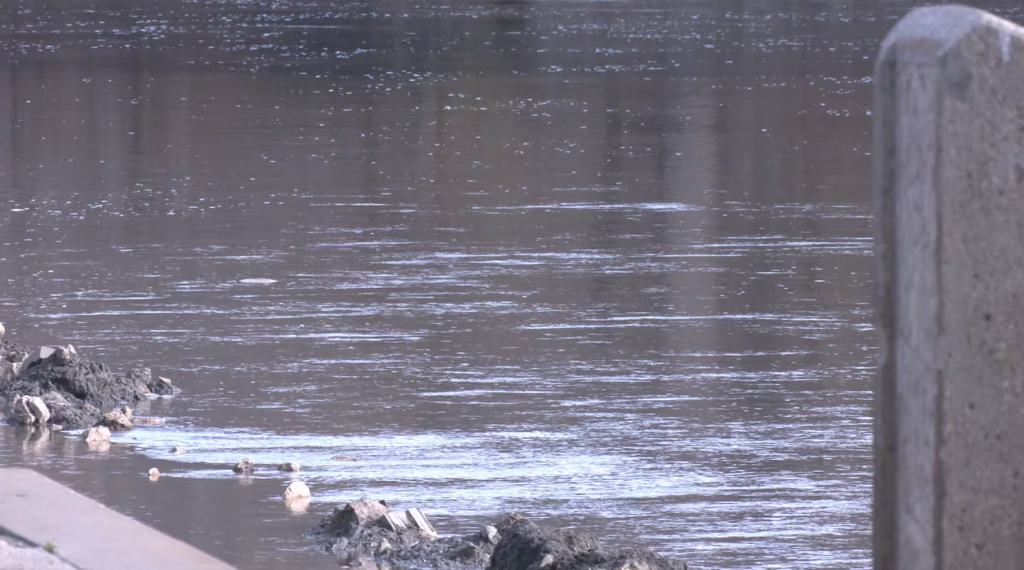
WINNIPEG — Canadian authorities have opened an investigation into the release of about 9.8 million litres of untreated sewage into the Red River in Manitoba. A malfunction at a treatment plant in Winnipeg sent contaminated water directly into the river for more than two and a half hours.
The incident has raised environmental concerns about water quality and aquatic life, and about the possibility that contaminants could reach Lake Winnipeg, one of the largest freshwater lakes in the world.
The City of Winnipeg said it took immediate steps to prevent the malfunction from happening again. The provincial and federal governments are following the investigations to determine responsibility and the measures required.
How did millions of litres reach the river?
The incident happened early on Monday, Nov. 2, at the North End Water Pollution Control Centre in north Winnipeg.
The city said two automated gates used to divert the flow of water opened unexpectedly at 1:10 a.m., allowing untreated sewage to be discharged into the Red River.
More seriously, the alarm system did not activate when the gates opened. Staff became aware of the problem only after a separate alert triggered by a change in water flow inside the plant.
The gates were later closed, and the flow returned to normal at 3:47 a.m., after the spill had lasted two hours and 37 minutes.
The volume released is roughly equal to four Olympic-size swimming pools.
Settings fault at the new plant
Tim Shanks, manager of Winnipeg's water and waste department, said the gates were supposed to be in manual mode but had been set to operate automatically.
He said the plant is undergoing upgrades and test operations, and that the investigation is focusing on why the gate settings were changed and why the required alarm did not sound.
Shanks said physical locks have been installed on the two gates to prevent them from opening automatically, and that work is under way to improve monitoring and alarm systems.
He said the city has notified federal and provincial authorities and will cooperate with any investigations or corrective orders they issue.
Concern that contamination could reach Lake Winnipeg
Chengjin Wang, an assistant professor of environmental engineering at the University of Manitoba, cautioned against rushing to rule out environmental effects from the incident.
He said the extent of the damage depends on the volume released, the strength of the river's flow and its ability to dilute the contaminants, and how they break down as they travel.
Sewage contains bacteria, organic matter and excess nutrients, which can affect water quality, fish and other aquatic life, and increase risks linked to recreational activities.
Concern is heightened because the Red River flows directly into Lake Winnipeg, which already faces problems linked to pollution and nutrient build-up.
Indigenous leaders call for accountability
The Assembly of Manitoba Chiefs called for an independent and transparent investigation, saying about 15 Indigenous communities are located downstream of the spill site.
Grand Chief Kyra Wilson said protecting water is tied to the health of local communities, their food sources and their economic activities, and that the incident cannot be treated as an isolated technical failure.
The assembly called for affected communities to be involved in water quality monitoring and in planning repairs, and for test results and environmental assessments to be published clearly.
Earlier incident released 230 million litres
This is not the first time the area has seen a major spill. In February 2024, a failure in sewage pipes led to the release of about 230 million litres into the Red River.
Armand Belanger, manager of the East Interlake Conservation District, said such incidents hinder efforts to protect Lake Winnipeg.
He said local organizations are working to restore wetlands, plant trees and cooperate with farmers to limit the amount of contaminants reaching waterways.
Are there long-term risks?
The City of Winnipeg says it does not expect a long-term effect on river water quality, but experts stress that test results should be awaited before any final conclusion is reached.
Manitoba Environment Minister Mike Moyes said the province will review the city's report to determine whether the incident calls for regulatory action or penalties.
The spill comes as a project to upgrade the treatment plant, costing more than $3 billion, is under way to improve wastewater treatment and reduce pollution.
More from Hala Canada
- Young man sentenced to 5½ years in prison for shooting at Montreal Jewish school
- Budget 2026 omits pledge to double home building as Ottawa sets new non-market housing target
- Dunkin' returns to Canada after eight years; building permits reveal Toronto location
- Poll: most Toronto-area residents say their communities offer enough support to newcomers
- Toronto traveller faces possible 15-year prison term in Albania over baggage tag case
- China says it has no interest in interfering in Canada's affairs ahead of Carney-Xi meeting