
Canada bars Russia and Belarus from 2027 world junior hockey championship
Prime Minister Mark Carney says Russia's team will not be at the Alberta tournament, despite a ruling that opens the way for its return to international competition, as European countries threaten to boycott.
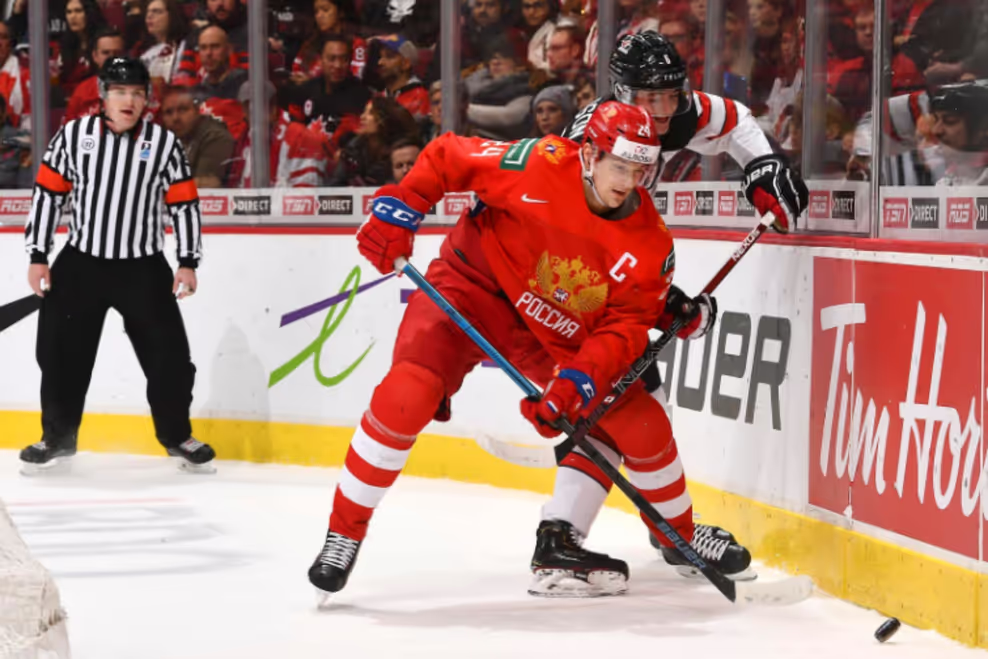
OTTAWA — Prime Minister Mark Carney has announced that Russia will not be able to take part in the world junior ice hockey championship, scheduled to begin in Alberta next December, despite a recent ruling by the Court of Arbitration for Sport that opens the door for the Russian team to return to international competition.
Carney made the comments on Tuesday, Nov. 3, saying Canada will not allow Russian and Belarusian athletes to represent their countries in international competitions held on Canadian soil for as long as Russia's war in Ukraine continues.
The decision comes days after a ruling by the Court of Arbitration for Sport (CAS) requiring the International Ice Hockey Federation (IIHF) to allow Russia's return to its tournaments, after years of exclusion that began in 2022.
The cities of Edmonton and Red Deer in Alberta are hosting the 2027 world junior championship, which begins on Dec. 26, 2026, amid growing questions about how to handle the court's decision and the position of the Canadian government.
Carney: Russian team will not be at the tournament
Carney settled the Canadian government's position in remarks on the sidelines of the Commonwealth summit in Antigua, when he was asked whether the Russian team could take part in the upcoming tournament.
He said Canada's position is tied to the continuing war in Ukraine, and that allowing Russia and Belarus to take part under their flags in tournaments held in Canada is unacceptable under current circumstances.
Carney said his country will not allow these athletes to compete in the name of their countries as long as the situation linked to the war continues.
In a direct reference to the world junior championship, he added that the Russian team will not be present at the competition.
The remarks reflect a clear government position, despite the legal and sporting complications raised by the CAS decision.
Canada has been among the countries supporting Ukraine since Russia's full-scale invasion began in February 2022, and it has maintained its opposition to the return of official Russian sporting representation in international competitions while the war continues.
Sports court issues ruling allowing Russia's return
The latest controversy began after the Court of Arbitration for Sport issued its ruling on Friday, Oct. 30, 2026.
The ruling overturned the IIHF's decision to keep Russia excluded from competitions for the 2026-2027 season.
Under the ruling, the IIHF is now required to take steps to allow the Russian team to be reinstated in tournaments under its oversight.
The consequences extend to the world junior championship scheduled in Canada, which was among the first competitions that could see the Russian team return.
Russia has been excluded from IIHF competitions since 2022, following its invasion of Ukraine.
The new ruling has drawn widespread objections, particularly from European countries that refuse to face Russian teams while the war continues.
The IIHF now faces the challenge of how to carry out the court's decision without causing a crisis with host countries and participating national federations.
International hockey federation faces organizational crisis
The IIHF has expressed its opposition to the CAS decision, but acknowledged the need to deal with the obligations the ruling imposes.
The problem is that returning Russia to tournaments is not only a legal matter, but also requires extensive organizational arrangements.
These arrangements include team participation and entry procedures for host countries, as well as security, game schedules and the rules governing the competitions.
Adding a new team after a tournament schedule has been drawn up could also require changes to how teams and matchups are distributed.
The complications are growing as the Alberta tournament approaches, with only a few weeks left before it begins.
The IIHF said it is holding consultations with national federations, host authorities and organizers to examine how to handle the new situation.
These developments indicate that a ruling allowing Russia's return does not necessarily mean its participation has become possible in practice.
Hockey Canada supports government's position
Hockey Canada welcomed the position announced by Prime Minister Mark Carney.
In an official statement, the organization thanked the federal government for confirming its intention to bar Russian and Belarusian athletes and officials from taking part under their countries' symbols in international sporting events hosted by Canada.
Hockey Canada said it continues to communicate with the IIHF and other relevant parties to understand the potential consequences of the sports court's ruling.
It also noted that the Canadian government's position will be among the key factors to be considered in determining next steps.
The statement reflects agreement between the federal government and Hockey Canada in rejecting official Russian participation in the tournament.
Six European countries refuse to face Russia
Opposition has not been limited to Canada, as European sports federations have announced their refusal to face the Russian team in international competitions.
The countries that announced opposing positions include Sweden, Finland, the Czech Republic, Latvia, Norway and Denmark.
Several federations said they will not play games against Russia if it returns to international tournaments under current circumstances.
This position raises concerns about the IIHF's ability to run competitions normally, particularly when tournament schedules require matchups between teams that refuse to play each other.
The effects of the crisis could also extend to tournaments other than the world junior championship in Canada.
These include the 2027 men's world championship, hosted by Germany, where Russia's possible return has prompted objections from multiple European federations.
The issue has thus become a broad international sporting dispute that goes beyond the upcoming Canadian tournament.
Russia criticizes Canada's position
For its part, Moscow criticized the Canadian decision, saying the government is bringing political considerations into sports competitions.
Russia's ambassador to Canada, Oleg Stepanov, called the position regrettable.
The ambassador said youth hockey should bring athletes together rather than become a means of division.
The response reflects the continuing dispute between the Russian position, which calls for its teams to return to competitions, and the positions of Canada and several European countries, which link official participation to developments in the war in Ukraine.
More Canada


Latest from Hala Canada
- Canada gives provinces 139 days to nominate tens of thousands of workers for permanent residence
- Newfoundland and Labrador issues 98 new immigration invitations in Nov. 19 round
- Trump administration weighs targeting Iranian leaders to end war, with divisions in Washington over risks
- Report: 82% of Canadian grandparents give financial help to children and grandchildren
- Former London, Ont., councillor Mariam Hamou sentenced to probation in case involving mayor
- Canada to pay $5,000 bonuses to eligible trades workers: eligibility and how to apply