
Pentagon criticizes Canada's military spending and questions readiness to defend North America
The U.S. Department of Defense has accused Canada of falling short on military spending and modernization, and questioned its ability to meet its North American defence commitments.
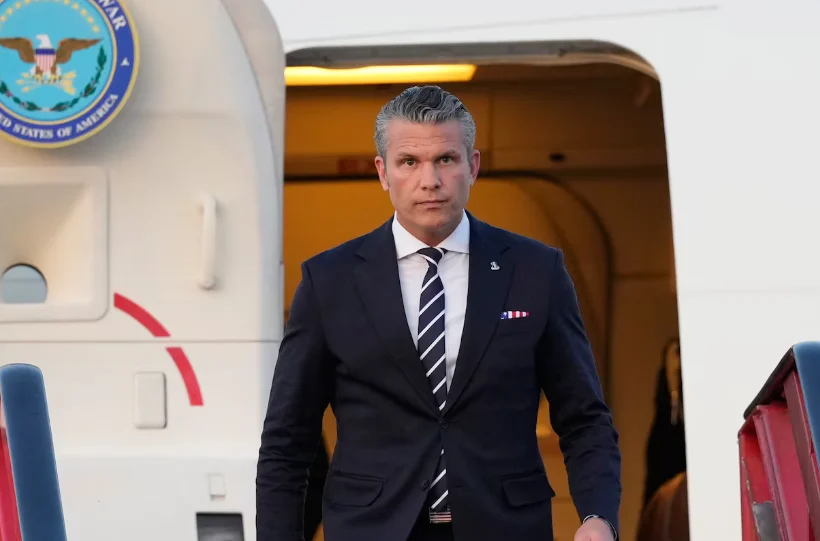
OTTAWA — Tensions between Canada and the United States have risen after the U.S. Department of Defense published an official document criticizing Canadian military spending and accusing Ottawa of being slow to modernize its armed forces and meet its defence commitments.
The document, which the Pentagon described as a fact sheet, was released on Monday, Nov. 23. It followed a confidential memo issued by U.S. Defense Secretary Pete Hegseth restricting some forms of communication between U.S. military personnel and their Canadian counterparts.
The Pentagon said Canada has not made the decisions needed to become a reliable defence partner in protecting the continent, based on its assessment of military readiness and spending.
U.S. criticism of Canadian military capabilities
The U.S. document included figures questioning the readiness of the Canadian Armed Forces to carry out their air, naval and land missions.
According to the Pentagon's assessment, the share of usable aircraft in the Royal Canadian Air Force was 41.9 per cent in fiscal year 2025-2026.
The figure was 53.9 per cent for the naval fleet, while the readiness of land forces was estimated at about 48 per cent.
The department used these indicators to justify its call on Ottawa to speed up the modernization of equipment and address personnel shortages.
Dispute over F-35 purchase
The U.S. fighter jet deal featured prominently in the new criticism, after Prime Minister Mark Carney's government decided to review the plan to buy 88 F-35 aircraft.
Ottawa is studying alternatives, including Sweden's Gripen fighters, amid interest in the industrial opportunities and jobs that defence contracts could provide.
The Pentagon believes that operating a mixed fleet could add complexity to training and maintenance and worsen personnel shortages.
U.S. officials accused Canada of putting domestic economic interests ahead of the requirements of military effectiveness.
Confidential memo restricts military co-operation
The publication of the document was preceded by directives from Hegseth restricting the participation of some U.S. military officials in Canadian conferences, social events and think tanks.
However, Republican Senator Mike Rounds said the restrictions do not target joint military operations.
Pentagon spokesperson Sean Parnell also said that intelligence co-operation and operations within NATO and the North American Aerospace Defense Command (NORAD) will not be affected by the measures.
This means the announced restrictions do not amount to a complete severing of defence relations.
Canada says co-operation continues
Canada's Defence Minister, David McGuinty, said at the Halifax International Security Forum on Saturday that military co-operation between the two countries is continuing as normal.
He said co-ordination on defence and security files and the sharing of intelligence are continuing.
His office had not issued an immediate detailed comment on the new Pentagon document at the time the report was published.
For his part, former Conservative defence minister Erin O'Toole said the U.S. assessment ignores the changes and investments Canada has made in recent months.
Billions of dollars in defence investment
Canada spent about $63.4 billion on national defence in 2025, reaching the previous NATO target of two per cent of gross domestic product.
The government has pledged to contribute to meeting the new NATO target of five per cent by 2035, including related defence and security spending.
Canadian plans include buying new submarines and airborne early warning aircraft and modernizing the capabilities of the armed forces.
However, the Pentagon questions whether the financial details and the timeline for carrying out these commitments are adequate.
Tensions extend beyond the military sphere
The criticism comes amid continuing trade and political disputes between the Carney and Trump governments, including tariffs, Canadian sovereignty and the future of economic relations.
In May, Washington suspended U.S. participation in a joint defence advisory board established in 1940.
Observers say the dispute over weapons procurement further complicates bilateral relations, without cancelling shared security interests.
Decisions on fighter jets and military spending remain under review in Canada, while institutional co-operation between the two countries in protecting North American airspace continues.
More Canada


Latest from Hala Canada
- Montreal sets new record for latest first snowfall since records began
- 88% of Ontario hospital nurses report burnout, survey finds
- Canadian return trips from the U.S. rise for sixth straight month, Statistics Canada says
- Parole Board of Canada launches online portal for record suspension applications
- Union warns of food safety risks as CFIA ends daily inspections at some meat plants
- Ontario extends deadline for $1,394 compensation claims over retained DNA samples