
Ontario municipal elections today: Chow and Bradford in tight race for Toronto mayor
About 11.9 million people are eligible to vote for mayors, councillors and school board trustees across Ontario, with attention focused on the Toronto mayoral race.
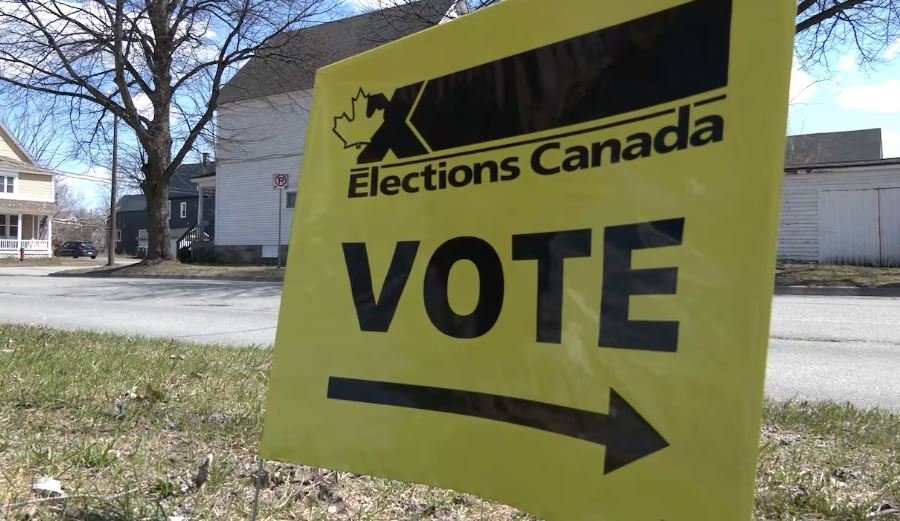
TORONTO — Voters across Ontario head to the polls today, Monday, to elect mayors, municipal councillors and school board trustees.
The local elections cover the whole province, with a prominent contest for mayor of Toronto between incumbent Olivia Chow and challenger Brad Bradford.
According to the Association of Municipalities of Ontario, about 11.9 million people are eligible to vote in the 2026 municipal elections, choosing officeholders for about 2,800 seats contested by 6,670 candidates.
The elections are an important moment in setting the priorities of cities and municipalities for the coming term. Campaigns have addressed issues that touch residents' daily lives, from housing costs and taxes to public transit, traffic congestion, public safety and local services.
In Toronto, attention is focused on the race between Chow and Bradford, even though 53 candidates are running for mayor. Opinion polls published during the campaign show the two clearly ahead of the other candidates, while the contest between them appears very close.
Tight race for Toronto mayor
The most recent poll by Nanos Research, with results published last week, found that 49.8 per cent of decided voters support Olivia Chow, compared with 46.6 per cent for Brad Bradford.
The gap between the candidates was 3.2 percentage points, which falls within the poll's margin of error. This indicates a statistical tie, with neither candidate holding a decisive lead according to these results.
Chow has served as mayor of Toronto for three years, after winning an early by-election held to choose a successor to John Tory, the former mayor.
Her political experience goes back much further. She was first elected as a trustee of the Toronto board of education in 1985, then served three terms on city council, and later represented the Trinity–Spadina riding in central Toronto in the House of Commons for the New Democratic Party over four terms.
Bradford is currently a Toronto city councillor for Beaches–East York. He previously ran in the 2023 mayoral by-election, finishing eighth, well behind the leaders at the time.
Bradford began his political career in 2018, when he ran for city council in the same ward. He was among a small number of candidates who received the endorsement of John Tory, who was then mayor.
Bradford won that election by a narrow margin, then won more decisively in 2022.
Transit and congestion at the top of the promises
The candidates' priorities differ on a number of issues, although both offer solutions on transportation and the cost of living.
Chow has centred her campaign largely on affordability, while Bradford has made what he calls the "three Cs" the focus of his campaign: congestion, crime and cost of living.
On public transit, Chow has pledged to introduce a system that would let riders travel free on the Toronto Transit Commission (TTC) network after paying for ten trips in one week.
Under the proposal, riders would not have to pay additional fares for the rest of their trips during the same week once they reach that limit.
She has also promised to freeze transit fares for a fourth consecutive year and to move ahead with the Scarborough East LRT project.
Bradford has pledged to address slow zones on subway lines and to make building the Eglinton East LRT one of his top transit priorities.
His plan also includes removing the bike lanes on Bloor Street West, on the stretch from South Kingsway to Resurrection Road, and cancelling some of the red bus lanes in Scarborough, with the aim of speeding up traffic.
These promises reflect different approaches to getting around the city. Chow focuses on reducing the cost of using public transit and expanding some of its projects, while Bradford proposes changes aimed at reducing traffic delays and redistributing the space allocated to different modes of transportation.
Taxes and cost of living at the heart of the contest
Affordability holds a central place in both campaigns, with differing proposals on taxes and basic services.
Chow has pledged to keep property tax increases at or near the rate of inflation. She has also promised free lunches in schools and a ban on surveillance pricing in grocery stores.
Surveillance pricing refers to the use of consumer data and behaviour to set different prices. Chow has put it forward as part of her proposals on consumer protection and easing financial pressure on families.
Bradford, for his part, has promised a complete property tax freeze in his first year in office if he wins.
He has also pledged to cut water bills by 25 per cent a year and to eliminate the municipal land transfer tax on the first $1.1 million of the value of homes purchased in Toronto.
These proposals relate directly to household budgets, but their implementation would depend on the details of the plans the winning candidate presents, the city's financial resources and the decisions that can be made within the municipality's powers.
Important contests for council seats
Electoral interest is not limited to the mayor's race. Several wards have contests worth watching because the incumbent is not seeking re-election or because prominent candidates have entered the race.
There are four wards where the incumbent is not running for re-election: Ward 4 Parkdale–High Park, Ward 11 University–Rosedale, Ward 14 Toronto–Danforth and Ward 19 Beaches–East York.
According to election coverage, there are also five other council races worth following because well-known figures are running in them.
The results in these wards will shape the next city council, which will debate local budgets, major projects and decisions on public services.
The balance of power within council may play an important role in determining how far the elected mayor can deliver on their promises.
Voting hours and eligibility
Polling stations in Toronto and most other areas open at 10 a.m. and close at 8 p.m. In Mississauga, polling stations open at 9 a.m. and also close at 8 p.m.
A person is eligible to vote in Ontario's 2026 municipal elections if they are at least 18 years old, are a Canadian citizen and live in the municipality where they want to vote.
In Toronto, non-resident property owners and tenants of property within the city may also vote, as may their spouses, under the conditions set out in the election rules.
Eligible voters in Toronto can use the city's MyVote service to find their assigned polling place, see the candidates in their ward, check the accessibility of their voting location, and download or print their voter information card.
Voters must show an election official an acceptable piece of identification that includes their name and their qualifying address in the city. The voter information card is not proof of identity, and a passport is not accepted for this purpose because it does not show a residential address.
Accepted documents include a driver's licence, an Ontario photo card, a property tax assessment, a utility bill such as electricity or water, a T4 tax slip, a mortgage statement and certain documents issued by Indigenous councils in the province.
Some documents can be shown on a phone if they were issued electronically by the relevant authority, but a photograph or scanned copy of a paper document is not accepted as a substitute for the original electronic document. Bringing the voter information card may speed up the voting process, but it is not required in order to vote.
More Greater Toronto


Latest from Hala Canada
- Canada gives provinces 139 days to nominate tens of thousands of workers for permanent residence
- Newfoundland and Labrador issues 98 new immigration invitations in Nov. 19 round
- Trump administration weighs targeting Iranian leaders to end war, with divisions in Washington over risks
- Report: 82% of Canadian grandparents give financial help to children and grandchildren
- Former London, Ont., councillor Mariam Hamou sentenced to probation in case involving mayor
- Canada to pay $5,000 bonuses to eligible trades workers: eligibility and how to apply