
Toronto mayoral race tightens between Olivia Chow and Brad Bradford ahead of election
A new poll puts the two candidates just 3.2 points apart, with Chow's lead narrowing as voters head to the polls on October 26.
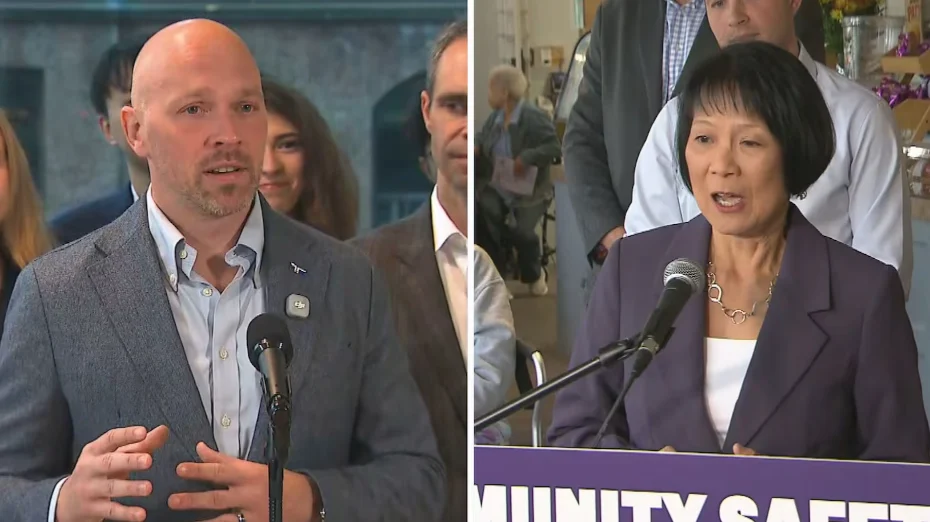
TORONTO — A new poll shows the race for Toronto mayor has become very close between incumbent Olivia Chow and her challenger Brad Bradford, less than a week before the municipal election scheduled for October 26.
According to a poll by Nanos Research, Chow has the support of 49.8 per cent of decided voters, compared with 46.6 per cent for Bradford.
About four per cent of respondents said they prefer another candidate, while the poll indicated that a large share of voters have not yet made a final decision.
The poll surveyed 762 adult Toronto residents between October 15 and 18.
The margin of error is 3.6 percentage points, 19 times out of 20. This means the gap between the candidates falls within the statistical margin of error, making the race so close that it is hard to say with certainty who will win based on these figures alone.
The results reflect a notable shift in the course of the campaign, as Chow had held a larger lead in earlier polls. They also suggest that the last days before the vote could play a decisive role in determining the outcome.
Chow's lead narrows as Bradford gains
The new poll showed Chow's support fell by about one percentage point compared with an earlier Nanos Research poll published last week, while support for Bradford rose by roughly one point.
Chow had led by about 10 percentage points in a poll released on October 6, but that gap has narrowed since then.
The decline came after former federal cabinet minister Chris Alexander suspended his campaign on the same day the previous poll results were published.
The numbers alone do not show how much that development affected the movement of votes between the candidates, but they make clear that the map of the race has changed in the final weeks of the campaign.
The two candidates now face a decisive stage, as each tries to win over voters who have not yet decided whom to support.
Nik Nanos, chief data scientist, said the candidates' performance in debates and the ability of their campaigns to mobilize supporters will be decisive factors in determining the outcome.
He added that the upcoming debate, along with the campaigns' activity on the ground in the final days, could affect the course of the race before voting day.
The debate comes just four days before the election, giving the candidates a last chance to present their positions to voters and try to shift voting intentions.
Chow leads downtown and in Scarborough
The poll's geographic results reveal clear differences in levels of support across Toronto.
In Scarborough, Chow had the support of 50.9 per cent of the voters surveyed, while her support downtown reached 58.2 per cent.
Bradford, for his part, led in North York with 54.1 per cent and had 52.9 per cent in Etobicoke.
These figures indicate that the contest is not evenly spread across the city, as each candidate has a stronger base of support in particular areas.
These differences could matter in determining the final result, especially if the campaigns succeed in turning the support expressed in polls into actual votes on election day.
Leading in one area is not enough to guarantee a citywide win, as the final result depends on the total votes each candidate receives across all wards and areas.
For that reason, the two candidates are expected to focus in the final days on the areas that could help them improve their chances of winning, while also trying to persuade undecided voters.
Support varies by age group
The poll also showed differences in voters' preferences by age.
Chow had the support of more than 55 per cent of respondents aged 18 to 34, indicating strong backing among younger voters.
Bradford led among those aged 35 to 54, with 52.2 per cent support.
He also had the support of 49.7 per cent of respondents aged 55 and over.
These results show that the contest is partly linked to differences in voters' priorities between generations, although the poll does not provide enough detail to identify the issues that explain these differences.
The candidates' ability to reach different groups of voters remains an important factor in the final days, particularly given how close the overall results are.
Undecided voters could settle the outcome
Despite Chow's lead in the overall results, a large number of Toronto residents are still unsure which candidate they will support.
Sixteen per cent of poll respondents said they have not yet made up their minds.
However, this is a decline from the October 6 poll, when undecided voters made up 22 per cent.
The drop in the share of undecided voters means some voters have begun to settle on a choice, but the continued presence of a notable share of them leaves room for the results to change over the remaining days.
The poll also asked respondents how likely they are to actually vote, not only which candidate they prefer.
The results showed Chow leading by four percentage points among those most likely to vote in the election.
Bradford, in turn, leads by four points among respondents who are less certain they will go to the polls.
These results highlight the importance of actual turnout on election day. Support shown in an opinion poll does not necessarily translate into votes if supporters do not take part in the vote.
As a result, the challenge for the two campaigns will not be limited to persuading voters of their platforms, but will also include mobilizing supporters and ensuring they vote.
How Torontonians see their city
The poll also looked at residents' views of the city they live in, an indicator that may help in understanding the general climate in which the campaign is taking place.
Fifty-seven per cent of respondents said Toronto faces some problems but is still the place they prefer to live.
This share is up five percentage points from earlier polls.
By contrast, the share of those who described Toronto as a great city and said they would not want to live anywhere else fell from 26 per cent in the October 6 poll to 20 per cent in the latest one.
The share of respondents who said they are thinking of leaving the city also rose, from six per cent to eight per cent over the same period.
These figures do not mean that everyone who is thinking of leaving will actually do so, but they reflect concerns among some residents about living conditions in Toronto.
Issues such as affordability, the level of services and quality of life may become an important part of the election debate, particularly as the candidates try to convince residents that their policies can meet their aspirations.
Bradford calls for change, Chow defends her record
Bradford's campaign focuses on the argument that the election is an opportunity to bring change to the way the city is run.
Speaking to reporters on Monday, he criticized the incumbent mayor, saying she did not put forward enough new initiatives during the campaign.
He added that Chow may appear to be declaring her mission complete, pointing to his belief that the city needs a different direction in the next term.
Chow, for her part, is seeking to defend her record in running Toronto, focusing on measures she says have helped make life less expensive for residents.
She described the election as a clear choice between continuing to work on easing the cost-of-living burden on city residents or risking a reversal of the progress made.
This contrast reflects a difference in the political message each candidate is offering. Bradford is trying to convince voters that the city needs new leadership, while Chow is betting on continuing her approach and highlighting what she considers the positive results of her work.
As voting day approaches, attention will turn to the upcoming debate and to how well each candidate can win the trust of undecided voters and turn support into actual turnout.
More Greater Toronto




Latest from Hala Canada
- Canada gives provinces 139 days to nominate tens of thousands of workers for permanent residence
- Newfoundland and Labrador issues 98 new immigration invitations in Nov. 19 round
- Trump administration weighs targeting Iranian leaders to end war, with divisions in Washington over risks
- Report: 82% of Canadian grandparents give financial help to children and grandchildren
- Former London, Ont., councillor Mariam Hamou sentenced to probation in case involving mayor
- Canada to pay $5,000 bonuses to eligible trades workers: eligibility and how to apply