
Canadians' debt hits record $2.66 trillion ahead of 2027 mortgage renewal wave
A TransUnion report says non-mortgage debt is growing fastest and budget pressure is showing among some homeowners, while mortgage delinquencies are rising.

TORONTO — Total outstanding consumer credit debt in Canada rose to a record $2.66 trillion in the third quarter of 2026, up 3.8 per cent from the same period last year, according to a TransUnion report released Wednesday. The increase comes ahead of a wave of mortgage renewals expected to peak in 2027.
In its third-quarter credit industry report, the company said financial pressure has begun to build among some homeowners, particularly as higher borrowing costs and larger mortgage balances continue to weigh on household budgets. It added that some are now less able to absorb higher housing costs.
What the numbers say
Mortgage debt makes up about three-quarters of the total, or 74 per cent. Non-mortgage debt, which includes credit cards, lines of credit, auto loans and personal loans, rose 3.6 per cent year over year, and the report described it as the fastest-growing category.
The average Canadian consumer owed $136,024 across all credit products, up 2.9 per cent from last year. Average non-mortgage debt per person was $28,083, up 3.63 per cent year over year.
British Columbia and Ontario recorded the fastest growth in non-mortgage debt among the provinces and territories. In British Columbia, the average balance was $30,492, up 3.87 per cent, and in Ontario it was $29,197, up 3.2 per cent.
A shift in the distribution of borrowers
The number of credit-active consumers reached 32.8 million in the third quarter, a total increase of 1.1 per cent. The growth was concentrated at both ends of the credit score spectrum. The number of consumers in the Super Prime category, the highest-rated and lowest-risk group, rose 4 per cent year over year. The number in the Prime category, the middle tier, fell 3.7 per cent. The number of borrowers in the Subprime category rose 1.5 per cent.
The pattern reflects what is known as a K-shaped economy, in which higher-income households grow financially stronger while lower-income households lose some of their spending power. TransUnion says rising debt may not be a major problem for all households, but for many it points to a difficult situation.
Matt Fabian, senior director of financial services research and consulting at TransUnion Canada, said in the report: "In some provinces, balances have grown under relatively strong economic and credit conditions, while in other provinces debt has risen under tougher conditions for households." He added: "Understanding how debt levels, borrowing behaviour and local economic conditions interact with affordability and repayment trends will become increasingly important for assessing regional credit trends."
Mortgage delinquencies and insolvencies
TransUnion says the risk of mortgage delinquency is also elevated as debt and household pressure increase. A separate Equifax report released earlier this week showed that the national rate of delinquencies of 90 days or more, meaning payments missed for three consecutive months, reached 0.32 per cent. That is the highest level since the company began tracking the measure in 2013, up 31.1 per cent year over year, mainly because of missed mortgage payments in Ontario and British Columbia.
According to the Canadian Association of Insolvency and Restructuring Professionals, 36,797 Canadians filed for insolvency in July, August and September. Consumer insolvency measures the number of Canadians who sought relief under the Bankruptcy and Insolvency Act.
What could happen in 2027
Many Canadian households will renew their mortgages in 2027 and are expected to face a significant financial challenge, as economists expect interest rates to rise in the coming months. Holders of mortgages taken out during or shortly after the pandemic may have obtained relatively lower rates. Home prices have also fallen from their post-pandemic peak, when interest rates were historically low.
TransUnion says this will lead to a higher loan-to-value ratio than at the time of purchase. That is, many homeowners will owe a larger share of their homes' current value, reducing their equity and weakening their financial position at renewal.
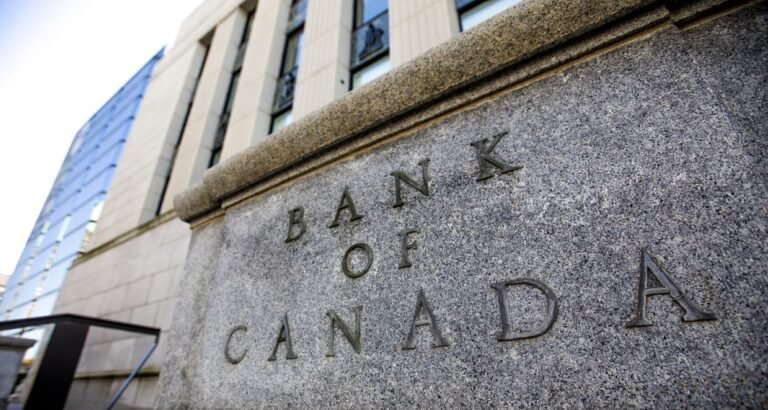
Information in the report indicates that interest rates are rising because of volatility in global bond markets and because the Bank of Canada raised its key interest rate to curb inflation.
TransUnion expects most households to be able to make their mortgage payments on time in 2027, but says that will not be easy for many. The report said: "Mortgage delinquency rates have remained low, and most homeowners have continued to pay on time. But some borrowers may need to adjust household spending or reallocate other financial obligations to manage higher payments at renewal."
What does this mean for the Arab community in Canada?
- If your mortgage is due for renewal in 2027, check the renewal date and your current terms early rather than waiting until the final months.
- You can contact your lender or mortgage broker before the renewal date to find out what your payments would be at current interest rates.
- It is advisable to review your monthly budget and identify which obligations could be adjusted if your payment rises, and to avoid missing any payment.
- Residents of Ontario and British Columbia are the most affected, according to the report, as the two provinces recorded the fastest growth in non-mortgage debt and the highest levels of missed mortgage payments.
Follow Hala Canada for the latest news from Canada, every day.
More Economy



Latest from Hala Canada
- Supreme Court of Canada prepares to rule on Quebec's secularism law, Bill 21
- Canada plans to restrict hiring of low-wage temporary foreign workers from March 2027
- New Brunswick named one of Travel + Leisure's 50 best places to travel in 2027
- Violent robbery at Toronto jewellery store as suspects ram vehicle into storefront; two injured
- Report finds 96% of Jewish students surveyed experienced or witnessed antisemitism on campus
- Conservatives seek to summon Diana Fox Carney to appear before parliamentary committee